
Trees
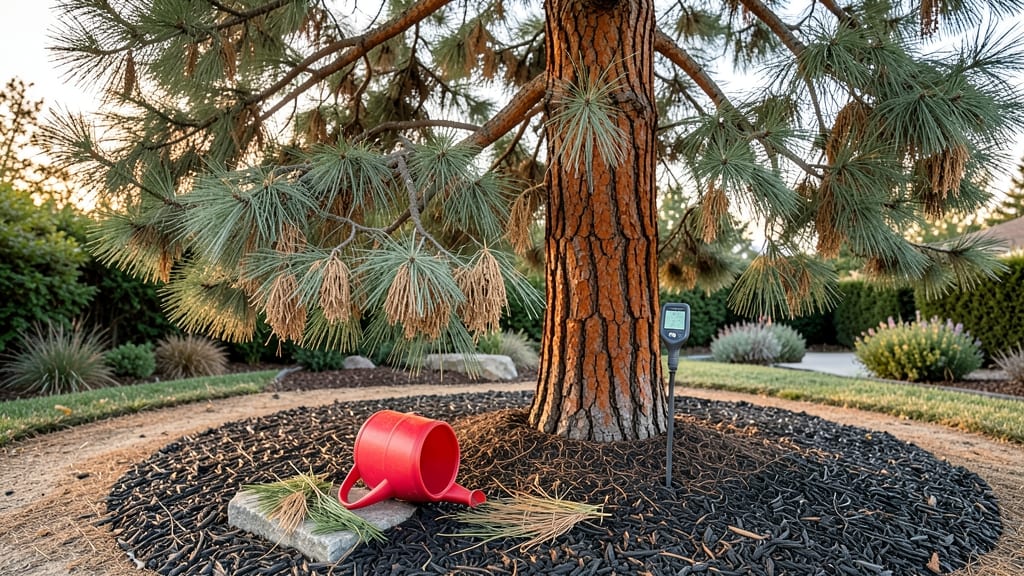
Your pine tree’s drooping needles and stunted growth aren’t just summer fatigue—they’re a cry for help. 🌲 Pine tree drought stress happens when roots can’t reach moisture deep enough, and the damage often starts before you even notice.
The good news? With the right techniques, you can revive even severely stressed trees and prevent future struggles.
Most people water too little, too often, which only encourages shallow roots. Instead, focus on deep, infrequent watering—think 1-2 inches per week during dry spells, delivered slowly so it soaks past the topsoil.
A 3-4 inch layer of mulch keeps moisture locked in while shielding roots from extreme heat. I’ve seen pines bounce back in just a few weeks with this approach.
Long-term resilience starts with soil. Amend compacted areas with compost or organic matter to improve drainage and moisture retention. Drought-tolerant varieties like Ponderosa or Jack Pine handle dry conditions better, but even sensitive types recover faster with proper care. The key is consistency—stressed pines need patience, not quick fixes.
Watch for needle browning at the tips (early stress) or completely dry branches (severe). Prune dead growth in late winter or early spring, but avoid heavy cuts—healthy foliage is your tree’s lifeline. With the right habits, your pine will regain its vibrant green and stand strong for years.
Root Causes Of Tree Water Stress
Drought stress in pine trees isn’t just about a lack of rain—it’s a complex interplay of environmental, biological, and even human factors that disrupt their ability to access and retain moisture.
Understanding these root causes is key to reviving your thirsty trees before permanent damage sets in. Let’s break down the science behind why pine trees struggle during dry spells.
Pine trees rely on deep, consistent soil moisture to survive, but when drought hits, the ground can dry out faster than roots can replenish water reserves. Here’s how it happens:
- Shallow Root Systems in Young Trees 🌱 Younger pine trees (especially container-grown or recently transplanted ones) often develop shallow root networks that can’t reach deep water tables. Without deep roots, they’re the first to show drought stress symptoms like needle browning or stunted growth.
- Compacted or Sandy Soils 🏗️💨
- Clay-heavy soils hold water but suffocate roots, preventing oxygen flow—even when moisture is present.
- Sandy soils drain too quickly, offering no moisture buffer during dry spells.
- Solution: Amend soil with organic matter (compost, mulch) to improve water retention and aeration.
- Evaporative Loss Outpaces Replenishment 🌞💦 Pine needles have a high surface area, which increases transpiration (water loss through leaves). During droughts, trees may transpire more water than their roots can absorb, leading to wilting or needle scorch.
Pine trees aren’t just drying out—they’re cooking under prolonged heatwaves. High temperatures accelerate moisture loss and disrupt critical physiological processes:
- Photosynthesis Shutdown 🌿➡️🚫 When soil moisture drops below 30-40% field capacity, pine trees close stomata (pores on needles) to conserve water. This halts photosynthesis, starving the tree of energy to produce new growth or repair damage.
- Heat Stress in Needles 🔥🍃 Needles act like tiny solar panels, absorbing heat. During droughts, needle temperatures can exceed 120°F (49°C), causing protein denaturation (cell damage) and premature needle drop.
- Root Zone Overheating 🌱🔥 Bare or mulch-free soil heats up rapidly, cooking shallow roots and killing beneficial microbes that help with water uptake.
Not all droughts are created equal—some are chronic (long-term dry conditions), while others are acute (sudden water cutoff). Both can cripple pine trees:
- Groundwater Depletion 💧📉 Over-reliance on groundwater (common in urban or agricultural areas) can lower the water table, leaving deep-rooted pines high and dry. Solution: Test soil moisture at 12–18 inches deep—if it’s dry, irrigation is critical.
- Irrigation Failures 💦❌
- Broken driplines or clogged emitters can leave trees without water.
- Overhead sprinklers waste water through evaporation and fungal risks.
- Solution: Use deep root watering systems (soaker hoses, drip irrigation) to deliver moisture directly to root zones.
- Urban & Agricultural Water Restrictions 🏙️🚰 Cities and farms often impose water rationing during droughts, forcing homeowners to cut back on tree irrigation—even when pines need it most.
Stressed pines are weakened pines, and that’s an open invitation for pests and pathogens to move in:
- Bark Beetles & Borers 🪲🔪 Drought-stressed pines produce less resin (their natural pest repellent), making them prime targets for bark beetles. These insects block water transport in the tree’s vascular system, leading to sudden death.
- Fungal Infections 🍄💀
- Armillaria root rot thrives in dry, compacted soil, attacking roots and cutting off water supply.
- Needle blight (e.g., Lophodermium species) spreads faster in heat-stressed trees.
- Weed Competition 🌿🚫 Invasive grasses and weeds compete for the same shallow water, leaving pines with even less access to moisture.
Sometimes, the problem isn’t nature—it’s us. Poor landscaping choices can turn drought stress into a self-fulfilling prophecy:
- Improper Mulching 🪴❌
- Too little mulch = soil dries out fast.
- Too much mulch (piled against the trunk) = volcano mulching, which traps heat and suffocates roots.
- Over-Pruning ⏰✂️ Removing too many needles or branches reduces the tree’s ability to photosynthesize and regulate moisture.
- Construction & Soil Disturbance 🏗️💥 Heavy machinery or foot traffic can sever fine roots, limiting the tree’s ability to absorb water even if moisture is available.
Drought stress in pines isn’t just about not enough water—it’s about how water moves through the tree’s system. By addressing soil health, heat exposure, pest pressure, and human impacts, you can help your pines weather the storm and bounce back stronger.
Next up: How to Diagnose Stress Early (so you can act before it’s too late!).
Reviving Your Pine Trees: Step-by-Step Solutions
Drought-stressed pine trees can bounce back with the right care—let’s tackle the problem head-on with practical, actionable steps. Below, we’ve mapped common causes to fixes, plus prevention tips to keep your pines thriving long-term. Think of this as your pine tree first-aid kit!
Cause: Shallow watering leads to weak roots that can’t reach moisture deep in the soil.
Solution:
- Water deeply but infrequently—aim for 1–1.5 inches per week (more in extreme heat). Use a soaker hose or drip irrigation to deliver water slowly to the root zone (about 12–18 inches deep).
- Morning watering (before 10 AM) reduces evaporation and fungal risks.
- Check soil moisture with your finger: If the top 2–3 inches are dry, it’s time to water.
Pro Tip: 🌡️ Test your soil’s moisture retention—if water pools on the surface, your soil may be too compacted. Amend with compost or organic matter to improve drainage and water-holding capacity.
Cause: Dry, exposed soil loses moisture quickly, stressing roots.
Solution:
- Apply 2–4 inches of organic mulch (pine straw, wood chips, or shredded bark) around the drip line (the edge of the tree’s canopy). Keep mulch 6 inches away from the trunk to prevent rot.
- Refresh mulch annually—it breaks down and loses effectiveness over time.
- Avoid plastic or inorganic mulches, which trap heat and suffocate roots.
Pro Tip: ✨ Double up in summer! A thicker layer (3–4 inches) in peak drought months helps lock in moisture. Just remember: Less is more near the trunk!
Cause: Overcrowded branches compete for water, worsening stress.
Solution:
- Remove dead, diseased, or crossing branches to improve airflow and reduce water loss.
- Thin the canopy by 20–30% to let sunlight reach inner branches (this encourages deeper root growth).
- Avoid heavy pruning during drought—stick to light maintenance to minimize stress.
Pro Tip: 🔪 Prune at the right time! Late winter or early spring (before new growth) is ideal. Never top pine trees—it creates weak, drought-vulnerable growth.
Cause: Poor soil structure limits root access to water and nutrients.
Solution:
- Amend clay or compacted soil with compost, peat moss, or coconut coir to improve aeration and water retention.
- Avoid heavy fertilizers during drought—they can burn roots and increase water needs. Instead, use a slow-release, balanced fertilizer (like 10-10-10) in early spring.
- Top-dress with organic matter (like worm castings or aged manure) to feed beneficial microbes that help roots absorb water.
Pro Tip: 📊 Test your soil’s pH—pines prefer acidic soil (pH 4.5–6.0). If your soil is too alkaline, amend with sulfur or pine needles to lower pH gradually.
Cause: Severe drought leads to wilting, needle drop, or bark splitting.
Solution:
- For severely stressed trees, try a deep root fertilization with mycorrhizal fungi—these beneficial microbes enhance water and nutrient absorption.
- Mist young pines on extremely hot days (early morning only) to reduce transpiration (water loss through leaves).
- Group pines with other trees/shrubs to create a microclimate that retains moisture and reduces wind stress.
Pro Tip: 🚨 Watch for bark splitting! If you see vertical cracks, apply a thin layer of tree wound dressing (like Tanglefoot Tree Wound Pruning Seal) to prevent pests from entering.
- Plant pines in the right spot—choose native species suited to your climate and well-draining soil. - Water deeply at planting to encourage deep root growth before the first drought hits. - Monitor local drought conditions—adjust watering schedules if rainfall drops below 1 inch per week. - Mulch early—don’t wait until stress appears!
A consistent mulch layer is your best defense. - Avoid lawns under pines—grass competes for water. Replace with clover, ground cover, or mulch instead.
Final Thought: Pines are tough, but they need a little help during dry spells. By watering smart, mulching well, and pruning wisely, you’ll give your trees the best shot at bouncing back stronger—and staying that way! 🌲💦
Frequently asked questions
How can I tell if my pine tree is suffering from drought stress?
Look for needle browning at the tips (early sign) or completely dry, brittle needles (severe stress). Other clues include stunted new growth, thin, sparse foliage, and peeling bark on younger trees. Check the soil—if the top 4-6 inches are dry, your tree needs water immediately.
Can I overwater a pine tree to fix drought stress?
No—overwatering creates its own problems. Pine trees need deep, infrequent watering (1-2 inches per week), not constant shallow water. Too much water can suffocate roots, especially in clay-heavy soils. Always check soil moisture first—if it's soggy, wait before watering again.
What's the best mulch for drought-prone pine trees?
Use organic mulches like pine straw, wood chips, or shredded bark—they improve moisture retention and cool roots. Apply a 3-4 inch layer around the drip line (not touching the trunk), and refresh it annually. Avoid plastic mulches—they trap heat and prevent proper airflow.
Will pruning help my drought-stressed pine tree recover?
Only light pruning helps—remove dead, diseased, or crossing branches to reduce water loss. Avoid heavy pruning during drought as it stresses the tree further. The best time to prune is late winter or early spring, when the tree can focus energy on recovery. Never top pine trees—it creates weak growth.
How long does it take for a pine tree to recover from drought stress?
Mild cases may show improvement in 4-6 weeks with proper care, while severely stressed trees could take 1-2 years to fully recover. Focus on deep watering, mulching, and soil amendments—consistency is key. Monitor for new growth in spring, which is the best indicator of recovery.