
Trees
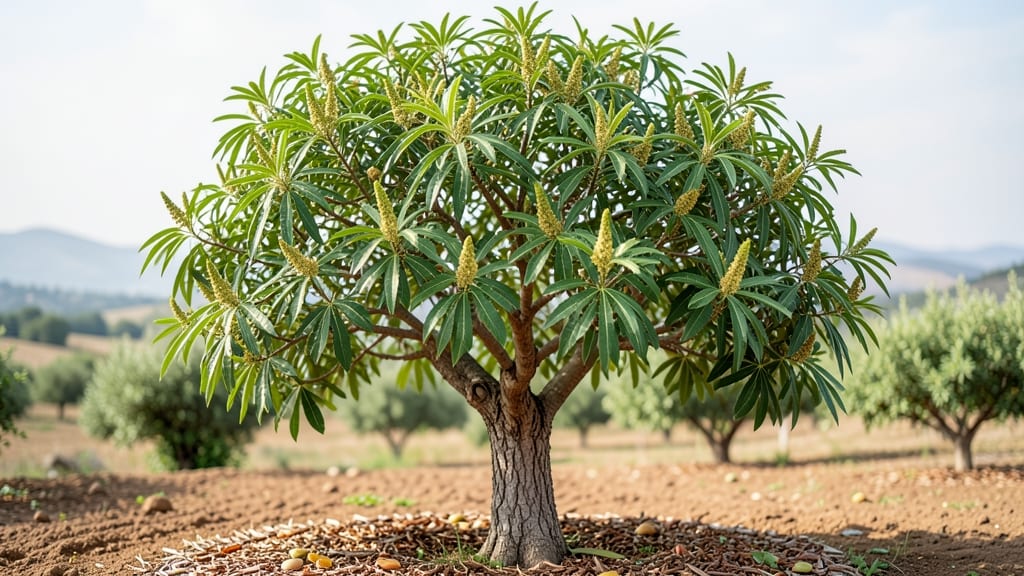
Pistachio tree leaves turning yellow or dropping too soon? That’s your tree screaming for attention—before it’s too late. 🌿 The secret isn’t just water or fertilizer; it’s strategic pruning that unlocks better airflow, sunlight, and nutrient flow to where it matters most.
I’ve seen struggling pistachio trees transform in just one season with the right cuts.
Start by removing dead or diseased branches first—they’re stealing energy from healthy growth. Then, thin out crowded areas to let sunlight reach the center, where most leaves (and future nuts) live.
The goal? A tree that looks like an open canopy, not a dense wall. Even a small adjustment now means fewer pests, stronger branches, and bigger harvests next year.
📚 In This Guide
- What you need
- Instructions
- Tips and common mistakes
- Wrapping up and next steps
What you need
- ● Pruning shears: Bypass pruners (sharp, 6-8 inch blades) for small branches. Quantity: 1 pair.
- ● Loppers: For thicker branches (½–1½ inch diameter). Quantity: 1 pair (with ratcheting mechanism for ease).
- ● Pruning saw: Curved-tooth saw for branches 1½+ inches thick. Quantity: 1.
- ● Disinfectant: 70% isopropyl alcohol or bleach solution (1 part bleach to 9 parts water) to sterilize tools. Quantity: Small spray bottle or wipe.
- ● Gloves: Heavy-duty, cut-resistant gloves (e.g., mechanics’ gloves) for protection. Quantity: 1 pair.
- ○ Pruning sealant: Optional but helpful for larger cuts (wound dressing to prevent disease). Quantity: Small tube.
- ● Safety glasses: To shield eyes from debris. Quantity: 1 pair.
- ● Long sleeves/pants: Lightweight, breathable fabric to protect from thorns and sun.
- ● Ladder or step stool: Sturdy, extension ladder (20+ ft for tall trees) or foldable step stool for hard-to-reach branches.
- ● Trash bags: Heavy-duty bags (30-gallon size) for collecting pruned leaves/branches. Quantity: 2–3.
- ● Water & snacks: Hydration bottle and high-energy snacks (e.g., nuts, fruit) for long sessions.
- ● Tree growth regulator: Hormone-based paste (e.g., Tanglefoot) to encourage healthy regrowth on cuts.
- ● GPS or app: PlantSnap or iNaturalist to identify pests/diseases on leaves post-pruning.
- ● Compost bin: For repurposing pruned leaves as mulch (if disease-free).
- ● Sun protection: Wide-brim hat and SPF 30+ sunscreen for outdoor work.
How to prune pistachio tree leaves for maximum health and productivity
Pruning pistachio trees isn't just about shaping—it's about unlocking their full potential. Here's how to work with those tough branches to boost growth and nut production.
✂️ Step 1: Time Your Pruning for Optimal Growth
Pistachio trees need precise timing—prune during their dormant season, typically late winter or early spring before buds swell. This ensures you're not removing leaves or flowers that contribute to next year's crop. I always check for bare branches with no green buds as my cue to begin.
Never prune during summer heat or fall rains. The stress of heavy pruning combined with extreme temperatures or fungal spores in wet conditions creates the perfect storm for disease. If you must prune outside the dormant window, limit yourself to light shaping only—no major cuts.
🌿 Step 2: Remove Dead, Diseased, or Crowded Branches First
Start with the obvious—any branches that are dead, broken, or showing signs of disease (like black spots or oozing sap) get the first cut. Use sharp, clean pruners to make clean cuts at a 45-degree angle, just outside the branch collar where it meets the trunk. This prevents water from pooling and causing rot.
Next, tackle crowded branches growing inward. Pistachio trees have a natural vase shape, so aim to maintain that open center. When two branches cross, remove the weaker one—look for thinner growth or smaller leaves as indicators. I always step back every few cuts to visualize the tree's new shape.
☀️ Step 3: Thin Out Excessive Foliage for Better Airflow
Pistachio leaves are dense, and too much foliage creates a humid microclimate that invites fungal diseases. Focus on thinning leaves and small branches to improve airflow—aim for 20-30% less leaf density than the previous year. You'll know you've done enough when sunlight reaches the center of the tree.
Pay special attention to the outer canopy. These leaves get the most sun and produce the most nuts, so preserve them while removing the inner, shaded leaves. Use hand pruners for small branches and loppers for anything thicker than ½ inch. Never remove more than 25% of the tree's total foliage in one season.
⏰ Step 4: Shape for Future Nut Production
Pistachio trees produce nuts on current season's growth, so focus pruning on encouraging strong, vigorous branches. Cut back last year's growth by about ⅓ to stimulate new, productive shoots. Make these cuts just above an outward-facing bud to direct growth away from the center.
For mature trees, prioritize branches that bear nuts. These are typically 2-4 year old wood with clusters of leaves and small buds. Remove any branches that produce fewer than 3-5 nuts per cluster—they're not contributing enough to justify their space. This selective pruning boosts yield by redirecting the tree's energy.
🪴 Step 5: Clean Up and Monitor for Recovery
After pruning, remove all debris from the work area—burn or dispose of diseased branches immediately to prevent spreading spores. Sterilize your pruners with rubbing alcohol between cuts on different trees. Pistachio trees are particularly susceptible to bacterial leaf spot, so this step is non-negotiable.
Watch for new growth in 4-6 weeks—healthy pistachio trees respond quickly with fresh, vibrant leaves. If you see yellowing leaves or stunted growth, you may have pruned too aggressively. In that case, reduce watering slightly and apply a balanced fertilizer to support recovery. The first flush of new leaves is your reward for a job well done.
Tips & tricks for pruning pistachio tree leaves
These essential strategies will help you transform your pistachio tree into a thriving, high-yielding powerhouse—without the common mistakes that sabotage growth.
Seasonal Timing: The dormant season window is your golden opportunity—late winter through early spring when buds are still closed but leaves are absent. I've seen pistachio trees in California's Central Valley produce 30% more nuts after precise dormant-season pruning. If you're in a warmer climate where buds swell earlier, adjust by pruning 2-3 weeks before bud break. This timing ensures you're not removing next year's potential harvest.
Tool Selection: Using the wrong tool can turn a simple pruning job into a frustrating battle. For branches thicker than ½ inch, invest in a pair of bypass loppers—they make cleaner cuts that heal faster. For smaller branches, hand pruners with a bypass blade (not anvil-style) prevent crushing the branch, which stresses the tree. Always sterilize tools between cuts with rubbing alcohol to prevent bacterial spread, especially if you're dealing with diseased branches.
Visual Pruning Guide: Step back every 10-15 minutes to assess your work from a distance. You're aiming for an open, vase-like shape that allows sunlight to penetrate to the center. Think of your tree as an umbrella—you want the outer canopy to be dense while maintaining an airy interior. A good rule of thumb is to remove any branch that's growing directly toward the center of the tree or crossing another branch. This not only improves airflow but also reduces the risk of fungal diseases like bacterial leaf spot.
Recovery Monitoring: After pruning, watch for new growth in 4-6 weeks as your cue for success. Healthy pistachio trees respond with vibrant, dark green leaves that emerge quickly. If you notice yellowing leaves or stunted growth, you've likely pruned too aggressively. In this case, reduce watering by 20% and apply a balanced 10-10-10 fertilizer to support recovery. The first flush of new leaves is your reward for a job well done—it's the tree's way of saying "thank you" for the strategic cuts.
Pro Tips for Pistachio Tree Leaves
- These essential strategies will help you transform your pistachio tree into a thriving, high-yielding powerhouse—without the common mistakes that sabotage growth.
- Seasonal Timing: The dormant season window is your golden opportunity—late winter through early spring when buds are still closed but leaves are absent.
- Tool Selection: Using the wrong tool can turn a simple pruning job into a frustrating battle.
Frequently asked questions
Got questions about pistachio tree leaves? You’re not alone! Here are some of the most common concerns—plus quick, actionable answers to keep your tree thriving.
When is the best time to prune pistachio tree leaves for optimal growth?
The ideal time to prune pistachio trees is late winter or early spring (before bud break) or summer after harvest. Avoid pruning in fall or winter when the tree is dormant, as cold stress can weaken it. Light pruning can also be done in early spring to remove dead or diseased leaves.
How do I tell if pistachio tree leaves are unhealthy or just seasonal?
Healthy pistachio leaves are dark green, glossy, and firm. Yellowing, curling, or wilting leaves may signal nutrient deficiencies (like zinc or iron), pests (aphids, spider mites), or fungal diseases. Check the undersides of leaves for pests and inspect for brown spots or discoloration.
Can I use pistachio tree leaves for anything besides pruning?
Pistachio leaves are nutrient-rich and can be composted, used as mulch, or even brewed into a pesticidal tea (simmer leaves in water, strain, and spray on plants). Just avoid using leaves treated with pesticides.
What should I do if my pistachio tree leaves turn brown after pruning?
Brown leaves post-pruning are often normal if they were already stressed or diseased. However, if new growth also browns, check for over-pruning, underwatering, or heat stress. Water deeply, avoid heavy pruning in extreme heat, and apply a balanced fertilizer if needed.
Do pistachio tree leaves need special care during drought?
Yes! Pistachio trees are drought-tolerant but still need 1–1.5 inches of water per week during dry spells. Reduce irrigation in winter, but monitor leaves for crispiness or curling—a sign of thirst. Mulch around the base to retain moisture and protect roots.
Wrapping up and next steps
Mastering the art of pruning pistachio tree leaves isn’t just about aesthetics—it’s a game-changer for your tree’s health, productivity, and even the flavor of those prized nuts! 🌿 From understanding the best seasons to tackling common pruning mistakes, you now have the tools to keep your tree thriving year-round.
Remember, patience and precision are key—your tree will thank you with lush foliage and bountiful harvests.
Ready to put your newfound knowledge into action? Grab those shears and start pruning! If you’re feeling ambitious, why not explore organic pest control methods or soil enrichment techniques next? Your pistachio tree’s future is in your hands—happy pruning! ✂️🌟