
Flowers
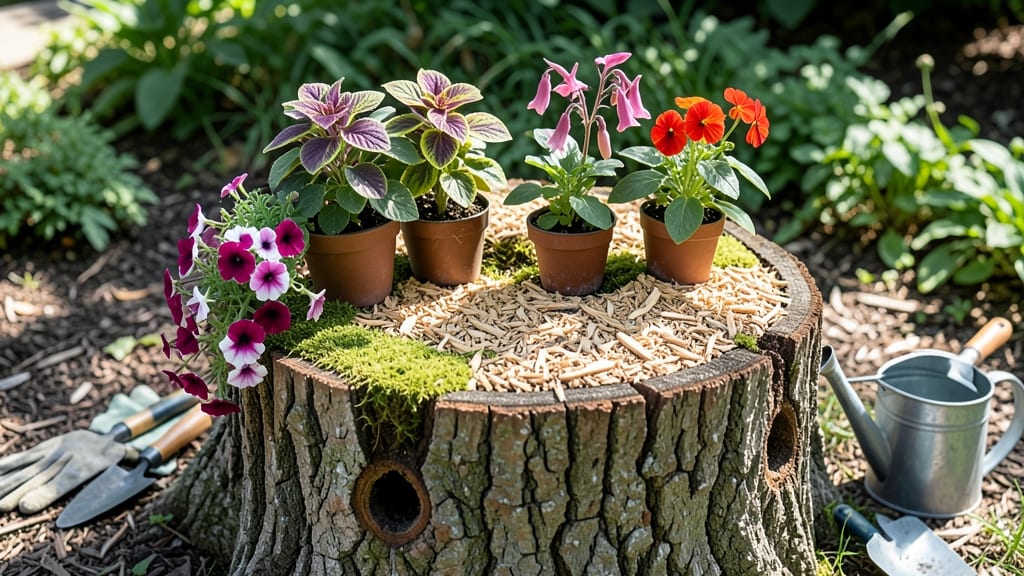
Turn that old tree stump into a showstopping vertical garden—no yard needed. 🌸 I transformed a weathered stump into a thriving floral display by planting flowers in the tree stump, and it became the unexpected centerpiece of my tiny patio.
The secret is simple: clean, prep, and fill with the right flowers for a space-saving, eco-friendly upgrade that saves money and adds charm.
Start by cleaning the stump thoroughly and drilling drainage holes at the bottom. Fill with a lightweight potting mix and choose flowers that thrive in shallow roots: trailing petunias, impatiens, or even small perennials like sedum.
The key is matching plant size to stump depth—5-6 inches of soil works for most annuals, while deeper stumps can handle small shrubs.
By summer, your stump will burst with color, drawing pollinators and becoming a conversation starter. The best part? It’s zero-waste—repurposing what’s already there—and takes up almost no space.
Plus, you can paint the stump or add moss for extra flair. Imagine this as your front door welcome or backyard focal point!
Works for any climate, from sun-drenched patios to shaded corners. Just adjust flower choices to your light conditions—morning sun suits impatiens, while full sun loves petunias. Ready to turn an eyesore into a garden hero? Let’s get planting!
📚 In This Guide
- What you need
- Instructions
- Tips and common mistakes
- Wrapping up and next steps
What you need
- ● Tree stump: A clean, dry stump (preferably freshly cut to allow for faster decomposition and root growth).
- ● Potting soil: 2–3 bags (1–2 cubic feet each) of high-quality, well-draining potting mix (avoid garden soil—it compacts too much!).
- ○ Moss (optional but recommended): Sheet moss: 1–2 pounds (for moisture retention and a lush look).
- ● Sphagnum moss: A handful (helps with water retention and acidity for certain plants).
- ● Flowering plants: 3–5 small, shallow-rooted plants (e.g., sedum, fuchsia, heuchera, or impatiens). Choose varieties that thrive in containers.
- ● Slow-release fertilizer: 1–2 granules or a small handful (to nourish roots over time).
- ● Watering can or hose: With a gentle spray nozzle (to avoid displacing soil).
- ● Drill or auger: ½-inch bit (to create drainage holes if the stump is sealed).
- ● Screws or nails: 4–6 (to secure the moss layer if needed).
- ● Landscape fabric: A small piece (to prevent soil from washing out through drainage holes).
- ● Decorative mulch: Pine bark or coconut coir (for a polished finish).
- ● Stump paint/sealant (if desired): Non-toxic, breathable option (to extend the stump’s life and add charm).
- ● Plant food: Liquid fertilizer (for a mid-season boost).
- ● Gloves & knee pads: Because comfort (and clean hands) matter! 😉
Step-by-Step instructions for planting flowers in tree stumps
Turn old stumps into thriving vertical gardens with these simple steps—perfect for adding color to small yards.
🪴 Step 1: Prepare the Tree Stump Surface
Start by cleaning the stump thoroughly with a stiff brush to remove dirt, debris, and any loose bark. I like to use a wire brush for stubborn spots—it gets into crevices where grime hides. Once clean, let the stump dry completely in the sun for 24 hours. This prevents mold and ensures good adhesion for your plants.
Next, drill ¼-inch drainage holes every 6-8 inches around the stump’s circumference. These holes allow excess water to escape, preventing root rot. Space them evenly so moisture can drain from all planting pockets. If your stump is large, group holes in clusters of three to create deeper planting zones for larger flowers.
🌱 Step 2: Create Planting Pockets and Add Soil
Fill the drainage holes with potting mix (never garden soil—it compacts and drains poorly). Use a trowel or small shovel to pack the mix firmly into each hole, leaving about ½ inch below the stump’s edge. I like to press the soil down gently with my fingers to create a stable base for roots.
For 4 stumps, you’ll need roughly 1 gallon of potting mix per stump. If your stump has deep holes, add a layer of orchid bark or perlite at the bottom to improve drainage further. This extra layer keeps roots from sitting in soggy soil, which is especially important in rainy climates.
☀️ Step 3: Choose and Plant Stump-Friendly Flowers
Select compact, drought-tolerant flowers like sedum, ferns, or small succulents—they thrive in shallow pockets and don’t need deep roots. Avoid heavy feeders like petunias; they’ll outgrow the space quickly. Dig a small hole in each soil pocket, just deep enough to bury the plant’s roots without covering the crown.
Gently press the soil around each plant to secure it, then water lightly to settle the roots. I like to mist the foliage afterward—this helps reduce transplant shock and keeps the soil evenly moist. Space plants 3-4 inches apart in each pocket to allow airflow and prevent crowding.
💧 Step 4: Water and Mulch for Long-Term Success
Water the stump thoroughly after planting, then let it dry slightly before watering again. Overwatering is the biggest mistake here—stumps drain poorly, and soggy soil leads to root rot. Aim for deep but infrequent watering, about once a week unless your area sees heavy rain.
Apply a 1-inch layer of mulch (like shredded bark) around the base of the stump to retain moisture and suppress weeds. Keep the mulch 2 inches away from plant stems to prevent rot. This layer also protects the soil from washing out during heavy rains, which is crucial for small, shallow-rooted plants.
✂️ Step 5: Maintain and Enjoy Your Vertical Garden
Check the stump weekly for signs of overwatering (yellowing leaves) or underwatering (wilted foliage). Adjust your watering schedule based on the weather—hotter days mean more frequent watering, while cooler months require less. I also trim spent blooms regularly to encourage new growth and keep the garden looking tidy.
Fertilize lightly once a month during the growing season with a balanced, water-soluble fertilizer. Too much fertilizer burns shallow roots, so dilute it to half-strength. With proper care, your stump garden will burst with color for years, turning an eyesore into a stunning vertical display.
Tips & tricks for perfect vertical stump gardens
Transforming tree stumps into vibrant gardens takes a few key tricks to ensure your plants thrive in their unusual home.
Drying Time Matters: That 24-hour drying period in Step 1 isn't just about cleanliness—it's about preventing mold and ensuring your plants have a stable foundation. If you're working with multiple stumps, space them apart so they all get direct sunlight. I've seen stumps with uneven drying develop mold within days, so don't rush this step.
Drainage Hack: For Step 2, if you don't have a drill, try using a hammer and nail to create those drainage holes—just be careful not to split the stump. The key is to make holes that are ¼-inch wide but deep enough to reach the stump's center. This creates proper drainage channels that prevent waterlogging, which is especially critical in rainy seasons.
Soil Prep Secret: When adding potting mix in Step 2, mix in a handful of perlite or vermiculite (optional but helpful) to lighten the soil and improve aeration. This is particularly useful if your stump has deep holes—it prevents compaction that can suffocate roots. I like to think of it as giving your plants a breath of fresh air in their cozy stump home.
Plant Selection Wisdom: In Step 3, while sedum and ferns are excellent choices, don't overlook mosses for shadier stumps—they thrive in moisture and add a lush green texture. For sun-loving stumps, consider helichrysum or sempervivum, which handle the shallow soil beautifully. Always check the mature plant size to ensure it fits your stump's pockets.
Pro Tips for Planting Flowers In Tree Stumps
- Transforming tree stumps into vibrant gardens takes a few key tricks to ensure your plants thrive in their unusual home.
- Drying Time Matters: That 24-hour drying period in Step 1 isn't just about cleanliness—it's about preventing mold and ensuring your plants have a stable foundation.
- Drainage Hack: For Step 2, if you don't have a drill, try using a hammer and nail to create those drainage holes—just be careful not to split the stump.
Frequently asked questions
Got questions about turning tree stumps into blooming vertical gardens? You’re not alone!
Here are answers to the most common curiosities—from timing to troubleshooting—to help you get started with confidence.
Can I plant flowers in any tree stump, or are there restrictions?
Most hardwood stumps (like oak, maple, or birch) work great because they’re dense and hold moisture. Softwoods (like pine) rot faster—skip those! Also, avoid stumps from trees treated with pesticides or preservatives. Pro tip: If the stump is still fresh, let it dry out for a few weeks before planting to prevent mold.
How long does it take for flowers to grow in a stump?
Patience is key! Fast-growing annuals (like marigolds or pansies) may bloom in 4–6 weeks, while perennials (like lavender or sedum) take 1–2 seasons to establish. Soil prep and consistent watering speed up the process. Start with small, hardy plants to see quick results!
Do I need to water tree stump flowers differently than regular garden plants?
Yes! Stumps dry out faster because they’re elevated. Water deeply 2–3 times a week (or daily in hot weather) and mulch the top to retain moisture. A drip irrigation system works wonders for hands-off care. Avoid overwatering—root rot is a real risk!
What if my stump starts rotting before flowers grow?
Rotting is normal, but excessive decay can harm plants. To slow it down:
- Seal the stump with stump sealant before planting.
- Choose drought-tolerant flowers (like succulents or sedum).
- Replace the stump if it’s crumbling—try a pre-made stump planter instead.
Are there better alternatives if I don’t have a tree stump?
Try these space-saving vertical garden hacks:
- Pallet gardens: Paint and fill with soil for a rustic look.
- Hanging planters: Perfect for herbs or trailing flowers.
- Wall pockets: Install fabric pockets on fences or walls.
- Old boots or tires: Upcycle with a drill and some potting mix.
Wrapping up and next steps
Transforming old tree stumps into vibrant flower gardens isn’t just creative—it’s a sustainable, space-saving way to bring beauty to your yard! 🌸 With the right plants, tools, and a little patience, you’ll create a stunning vertical garden that thrives year after year.
Whether you’re a beginner or a green thumb, this project is totally doable—and the results will make your outdoor space pop.
Ready to take the next step? Grab a stump, pick your favorite flowers, and start planting today! Share your progress with us—we’d love to see your vertical garden magic! 🌿