
Pruning
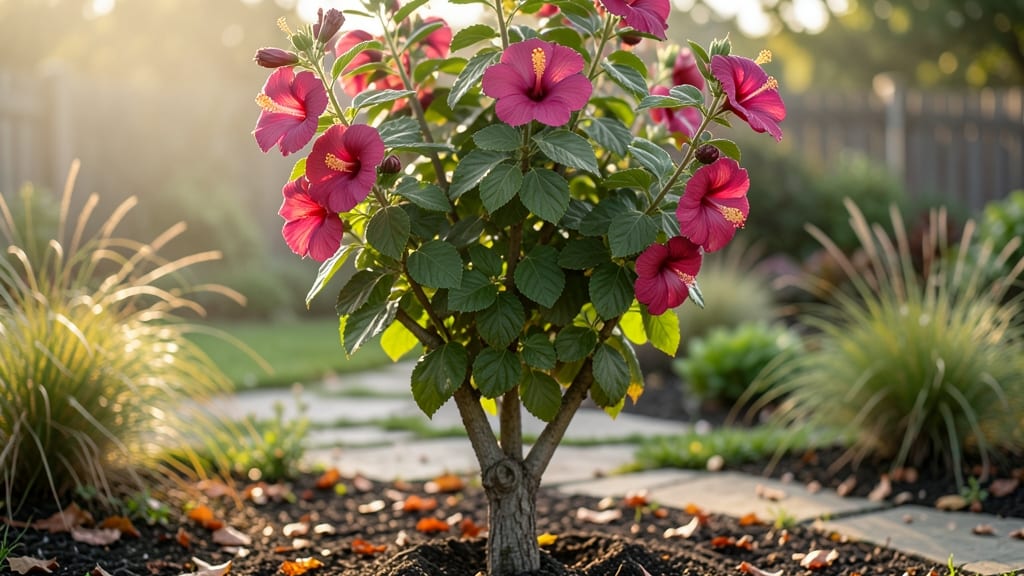
Your Rose of Sharon can transform from a leggy mess to a blooming powerhouse with the right pruning—it’s the secret weapon I’ve used to revive three neglected bushes in my yard. 🌿 This hardy shrub thrives as both a tree or shrub, but its magic happens when you prune it right: shaping it in late winter and deadheading spent blooms all season.
The key is cutting back 1/3 of the oldest stems each year to keep it compact and flowering like crazy.
Start by planting it in full sun with well-draining soil—it’s tough enough to handle drought once established, but give it consistent water for the first year. My bushes now bloom from mid-summer through fall, thanks to pruning that encourages new growth.
The trick is timing: prune right after flowering to shape for next year’s blooms, and do a light cleanup in late winter to remove dead wood before spring growth starts.
What you’ll end up with is a plant that’s disease-resistant, attracts hummingbirds, and keeps flowering even into autumn. The best part? It’s adaptable—grow it as a single-trunk tree or a multi-stem shrub, depending on your space.
My neighbors’ bushes still look sad from last year’s neglect, while mine are the talk of the neighborhood.
Works in zones 4-9, handles heat and cold, and even tolerates urban pollution. The only real rule? Don’t over-prune—this shrub bounces back from almost anything, but it rewards precision. Here’s how to make it happen without killing it this time.
The first product explained
Meet the Hibiscus syriacus—better known as the stunning Rose of Sharon! This versatile, low-maintenance plant is perfect for gardeners who want year-round beauty with minimal effort. Whether you're a beginner or a seasoned gardener, this shrub delivers vibrant blooms, lush foliage, and adaptability that’s hard to beat. 🌸✨
📏 Specs & Features
Here’s what makes this shrub a standout:
- Height: 6–12 feet (varies by variety and pruning style)
- Spread: 6–10 feet (great for hedges or standalone specimens)
- Bloom Time: Mid-to-late summer, with some varieties reblooming in fall
- Color Palette: White, pink, purple, or lavender flowers (depending on the cultivar)
- Hardiness: Zones 5–9 (tolerates heat, humidity, and even light frost)
- Sunlight Needs: Full sun to partial shade (6+ hours of sunlight for best blooms)
- Soil Type: Adaptable—thrives in average garden soil, clay, or sandy loam
- Drought Tolerance: Once established, it’s surprisingly resilient
🎯 Target Users
This shrub is a dream for:
- 🌿 Beginner gardeners—easy to grow and forgiving of mistakes
- 🏡 Homeowners looking for privacy screens, hedges, or focal points
- 🐝 Pollinator-friendly gardeners—bees and butterflies adore its flowers
- 🎨 Landscape designers seeking long-lasting, low-maintenance color
- 🌆 Urban gardeners with limited space (dwarf varieties available!)
💰 Price Point & Value
The Rose of Sharon offers exceptional value for its beauty and durability. Here’s a quick breakdown:
| Product Form | Price Range (USD) | Best For |
|---|---|---|
| 1-gallon container (nursery plant) | $25–$40 | Small gardens, containers, or test planting |
| 5-gallon container (established shrub) | $50–$80 | Immediate impact in landscapes or hedges |
| Bare-root plants (budget-friendly) | $15–$30 | Large-scale plantings or fall/winter planting |
| Dwarf varieties (e.g., 'Minima' or 'Blue Bird') | $30–$60 | Small spaces, containers, or foundation plantings |
Pro Tip: 💡 Buy in early spring or fall for the best selection and healthier plants at lower prices. Plus, planting during these seasons gives roots time to establish before extreme weather!
The second product explained
Looking for a hardy, low-maintenance beauty that thrives in various climates and delivers stunning blooms year after year? Meet the Hidcote Rose of Sharon—a standout variety that’s perfect for both novice and seasoned gardeners alike! 🌸✨
🌿 Specs & Features
This compact shrub (typically 6–8 feet tall and wide) is a showstopper with its deep purple-blue flowers that bloom profusely from mid-summer to fall. Here’s what makes it a top pick:
- Hardiness: Zones 5–9 (survives winter frost like a champ!)
- Sunlight: Full sun to partial shade (adaptable to your garden’s layout)
- Soil: Tolerates clay, sandy, or loamy soil—just ensure it’s well-draining
- Bloom Time: Continuous from July to October (with proper pruning!)
- Color: Vibrant Hidcote purple with a velvety texture
- Growth Rate: Moderate (expect 12–18 inches per year)
🎯 Who’s It For?
This shrub is a versatile powerhouse for:
- 🏡 Homeowners wanting a low-fuss, high-impact landscape focal point
- 🌆 Urban gardeners with limited space (thrives in containers too!)
- 🐝 Pollinator lovers—butterflies and bees adore its blooms
- 🎨 DIY pruners looking for a shrub that rewards consistent care with lush regrowth
💰 Price Point & Where to Buy
The Hidcote Rose of Sharon typically ranges from $35–$60 per plant, depending on the retailer and pot size. You’ll find it at:
- 🌱 Local nurseries (support small businesses!)
- 🛒 Online retailers like Fast-Growing-Trees.com or Proven Winners
- 💡 Pro Tip: Buy in early spring for the best selection and root development before planting.
With its resilience, beauty, and ease of care, this shrub is a game-changer for any garden. Ready to transform your outdoor space? Let’s dive into how to prune it for maximum blooms! 🌟
Head-to-head comparison
Deciding whether to grow the Rose of Sharon (Hibiscus syriacus) as a tree or a shrub can feel like choosing between two sides of the same stunning coin—both offer breathtaking blooms and versatility, but with distinct growing habits, maintenance needs, and aesthetic impacts.
Below, we break down the key differences in a side-by-side comparison to help you decide which form suits your garden vision, space, and lifestyle. 🌸✨
🌿 Growth Habit & Structure
The most fundamental difference lies in how you shape and train the plant:
- Rose of Sharon as a Tree:
- Requires structured pruning to develop a single, strong trunk (often 3-5 feet tall before branching).
- Branches form a rounded canopy, typically 6-12 feet wide, mimicking small ornamental trees like crabapples.
- Takes 2-3 years to establish a tree-like form if pruned correctly.
- Best for: Formal gardens, as a focal point, or in larger landscapes where height is desired.
- Rose of Sharon as a Shrub:
- Grows multi-stemmed from the base, creating a dense, bushy appearance (4-8 feet tall and wide).
- Branches spread outward naturally, requiring less aggressive pruning to maintain shape.
- Blooms earlier and more profusely in its first year compared to tree-form.
- Best for: Hedges, borders, or informal gardens where a full, lush look is prioritized.
Pro Tip: 💡 If you love the idea of a tree but want faster results, start with a pre-pruned young tree (available at nurseries) to skip the initial shaping phase.
🌱 Pruning & Maintenance
Pruning is where the two forms diverge the most—your commitment level will depend on which you choose!
| Factor | Tree-Form Rose of Sharon | Shrub-Form Rose of Sharon |
|---|---|---|
| Pruning Frequency | Year-round (light pruning after blooms, heavy structural pruning in late winter). | Seasonal (prune dead wood in winter, trim for shape in spring/summer). |
| Complexity | ⭐⭐⭐⭐ (Requires strategic cuts to avoid multiple trunks or weak branches.) | ⭐⭐ (Easier—focus on removing old wood and shaping outer growth.) |
| Tools Needed | Pruning saw, loppers, and clean cuts to avoid disease. | Hand pruners or loppers (less precision needed). |
| Time Investment | 30-60 mins annually (plus occasional heavy pruning sessions). | 15-30 mins every few months for maintenance. |
Pro Tip: 🔪 For tree-form, never remove more than 1/3 of the plant in a single pruning session—this can stress the plant and reduce blooms.
💰 Cost & Initial Setup
Your wallet will feel the difference, especially if you’re starting from scratch.
- Tree-Form Costs:
- Young Tree: $30–$70 (pre-pruned, 3-5 ft tall).
- Establishment: May require staking ($10–$20) for the first year to support the trunk.
- Long-Term Savings: Less frequent pruning tools needed over time.
- Shrub-Form Costs:
- Young Shrub: $20–$50 (1-2 ft tall, multi-stemmed).
- Establishment: Cheaper to plant in groups (e.g., for hedges).
- Long-Term Savings: Fewer tools and less labor-intensive pruning.
Pro Tip: 🌡️ If you’re on a budget, buy bare-root shrubs in winter—they’re often 30–50% cheaper than container-grown plants!
🌟 Bloom Performance & Aesthetic Impact
Both forms deliver showstopping flowers, but the experience differs slightly.
| Factor | Tree-Form | Shrub-Form |
|---|---|---|
| Flower Quantity | Moderate (fewer blooms in early years due to energy focused on trunk growth). | Abundant (blooms heavily in Year 1, especially if pruned for shape). |
| Bloom Duration | Mid-to-late summer (peaks in August-September). | Early to late summer (can bloom June–October with proper care). |
| Visual Drama | ⭐⭐⭐⭐⭐ (Striking tree silhouette with blooms cascading from branches.) | ⭐⭐⭐⭐ (Lush, romantic look—ideal for cottage gardens or privacy screens). |
| Foliage Appeal | Dark green leaves highlight the tree structure. | Dense foliage creates a privacy-friendly barrier. |
Pro Tip: ✨ For year-round interest, pair tree-form Rose of Sharon with winter-blooming shrubs like Camellia or Daphne to fill gaps when it’s dormant.
🏡 Space & Garden Suitability
Not all gardens are created equal—and neither are these two forms!
- Tree-Form:
- Ideal for: Large yards, specimen planting, or near patios where height adds dimension.
- Avoid if: You have power lines nearby (can grow up
Which one should you choose?
So, is the Rose of Sharon (Hibiscus syriacus) a tree or a shrub? The answer is both—but with a twist! 🌿✨ Whether you’re a seasoned gardener or a newbie with a green thumb, here’s your tailored verdict to help you decide how to prune and cultivate this stunning plant for year-round blooms.
🌳 For the Bold Landscape Designer (Maximizing Height & Drama)
If you love a statement-making focal point in your garden, train your Rose of Sharon as a small tree. Prune aggressively in late winter or early spring to encourage a single, sturdy trunk with tiered branches.
This method yields a 6–10-foot tall specimen with lush, cascading blooms. Pro tip: 💡 Use a selective thinning approach—remove up to 30% of old wood annually to maintain airflow and prevent disease.
🌺 For the Low-Maintenance Gardener (Easy & Bushy)
Prefer a no-fuss, shrub-like vibe? Let it grow naturally as a multi-stemmed shrub (3–5 feet tall). Prune lightly in late winter by cutting back 1/3 of the oldest stems to the ground.
This keeps it compact, full, and bursting with flowers. Bonus: ✨ Deadhead spent blooms in summer to encourage non-stop reblooming!
🏡 For the Urban Dweller (Small Spaces & Containers)
Short on yard space? No problem! Rose of Sharon thrives in containers (5+ gallon pots) as a dwarf shrub. Prune after flowering to shape it into a 2–3-foot tall bush. Use a balanced fertilizer (10-10-10) to keep it compact. Warning: ⚠️ Avoid over-potting—this plant hates soggy roots!
🌍 For the Eco-Conscious Gardener (Native & Wildlife-Friendly)
This hardy, drought-tolerant plant is a pollinator’s paradise! Prune to maintain an open, airy structure (3–6 feet tall) to support bees and butterflies. Pro move: 🌡️ Leave some seed pods for birds in fall—it’s a low-effort, high-reward choice for sustainable gardens!
Final Verdict: The Rose of Sharon is a versatile powerhouse—adapt it to your style! Whether you crave a towering tree, a lush shrub, or a container-friendly bush, consistent pruning is key. Start now: Grab your shears and give it the revival it deserves! 🌸🔪