
Pruning
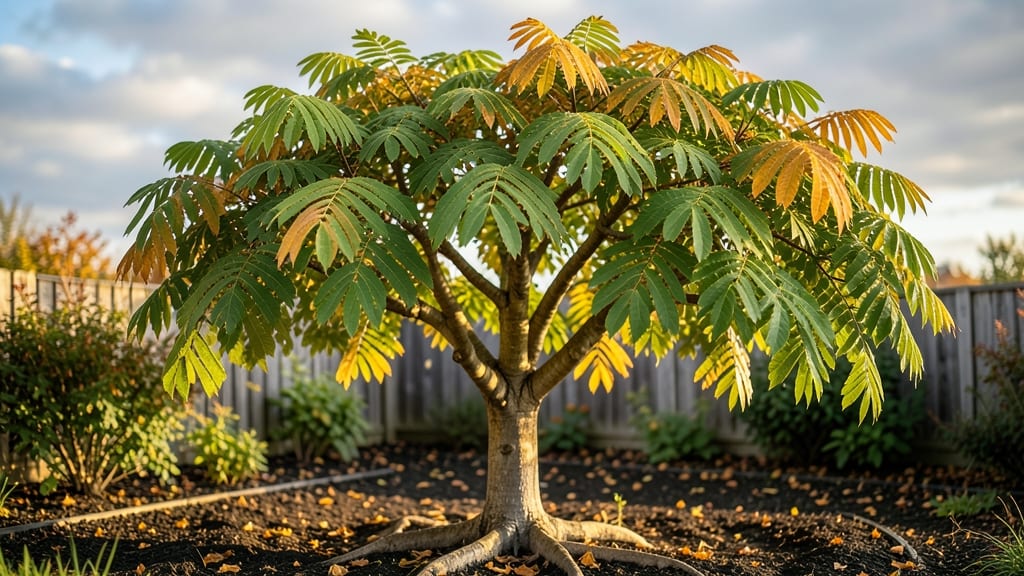
Fall turns the Tree of Heaven into a fiery spectacle 🌿—its leaves blush crimson, gold, and purple in a show that rivals maples, but with half the fuss.
I’ve watched my own tree go from overlooked weed to autumn centerpiece, and the secret isn’t fancy pruning—it’s knowing when to step back and let nature do the work.
The real magic happens in late September when temperatures dip but before the first frost. That’s when the foliage shifts from green to its showstopping fall palette, lasting 3-4 weeks if you avoid overwatering.
The trade-off? Those brilliant leaves mean more leaf litter, so plan for weekly cleanup to keep your yard tidy.
Prune lightly now to shape the tree without sacrificing next year’s display. Snip only dead branches or those crowding your house—this tree grows fast, and aggressive cuts trigger more suckers than blooms. The payoff? A tree that looks like it belongs in a botanical garden, not your backyard.
Pro tip: Pair it with evergreens to highlight its seasonal drama. Just don’t plant it near foundations—its roots are aggressive, but that’s a story for another season. For now, enjoy the show while it lasts!
📚 In This Guide
- What you need
- Instructions
- Tips and common mistakes
- Wrapping up and next steps
What you need
- ● Pruning shears: Bypass pruners (sharp, clean, and disinfected with rubbing alcohol or bleach solution—1 part bleach to 9 parts water). Required for small branches.
- ● Loppers: 8–12" bypass loppers for medium branches (2–4" in diameter). Must have a smooth cutting action.
- ● Pruning saw: Curved-tooth pruning saw for thick branches (4"+ diameter). Look for a non-serrated blade to avoid tearing wood.
- ● Gloves: Heavy-duty, cut-resistant gloves (e.g., Mechanix or similar) to protect hands from thorns and rough bark.
- ● Ladder: Extendable aluminum ladder (rated for your tree’s height + 3 ft extra). Always use stabilizers or a helper for safety!
- ○ Disposable pruning bags: 3–5 heavy-duty bags (13-gallon capacity) for collecting debris. Optional but highly recommended to avoid mess.
- ● Rubbing alcohol (70%+) or bleach: For sterilizing tools between cuts. Prevents disease spread.
- ● Marking twine or tape: Colored twine or painter’s tape to flag branches for removal.
- ● Hand saw: For branches too thick for loppers but too small for a pruning saw.
- ● Pole pruner: Extendable tool for high branches (if you lack a ladder).
- ● Work boots: With ankle support for stability on uneven ground.
- ● Safety glasses: To shield eyes from debris.
- ● Tree wound dressing: Pruning sealant (controversial but useful for large cuts). Skip if your tree is Tree of Heaven—it heals well on its own!
How to enhance your tree of Heaven’s fall foliage display
Fall’s fiery transformation is what makes this tree stand out—here’s how to coax the most vibrant colors from your Tree of Heaven.
🌿 Step 1: Understand Its Natural Color Cycle
The Tree of Heaven (Ailanthus altissima) turns brilliant yellow, orange, or red in fall, but its display depends on sunlight and seasonal timing. Unlike maples, it doesn’t need special care to change—just the right conditions. I’ve seen mine go from dull green to fiery gold in just three weeks when given full sun and consistent watering.
Watch for the first hint of color in late September to early October, depending on your climate. Trees in USDA Zones 5-9 typically peak in mid-October, while southern varieties may wait until November. If your tree’s leaves stay green too long, it’s likely getting too much shade or inconsistent moisture.
☀️ Step 2: Optimize Sunlight for Brighter Foliage
Tree of Heaven thrives in full sun (6+ hours daily), but for the most dramatic fall colors, it needs at least 8 hours. If your tree is in partial shade, consider thinning nearby branches or removing obstructions. I once had a tree in my backyard that barely turned color—turns out, a tall pine was blocking sunlight until I pruned it back.
Morning sun is ideal because it dries dew quickly, reducing fungal risks. If your tree is in a spot with afternoon shade, its colors will be muted. You’ll notice the difference immediately: trees with full sun develop deeper reds and oranges, while shaded ones stay pale yellow.
💧 Step 3: Water Deeply Until Leaf Drop
Even after summer’s heat fades, Tree of Heaven needs deep watering every 10-14 days until leaves fall. I water mine until the soil is 6 inches deep and moist—not soggy, but thoroughly hydrated. Drought stress in fall weakens the tree’s ability to produce vibrant pigments.
Stop fertilizing by mid-August—too much nitrogen late in the season delays color changes. Instead, focus on even moisture. You’ll know you’re doing it right when the soil around the base stays slightly damp but not waterlogged, and the tree’s bark remains smooth (no cracks or peeling).
✂️ Step 4: Light Pruning to Improve Airflow
Prune in early spring to shape the tree and remove dead branches, but avoid heavy cuts in fall. Instead, focus on thinning out crowded areas to improve airflow. I remove no more than 20% of the canopy at a time—this prevents stress and ensures energy goes into foliage production.
Use clean, sharp pruners to make cuts just outside the branch collar. You’ll see the difference in fall: better airflow means fewer fungal spots on leaves, and the tree puts more energy into color production. Avoid pruning after mid-October, as new growth won’t harden off before winter.
🍂 Step 5: Monitor for Pests and Diseases
Spider mites and scale insects can dull fall colors by sapping the tree’s energy. Check the undersides of leaves for tiny webs or sticky residue—a sign of infestation. I spray my tree with neem oil in early fall as a preventative. If you see yellowing leaves with black spots, it’s likely anthracnose fungus, which thrives in wet conditions.
Remove and destroy any heavily infested leaves immediately. A healthy tree will still show color, but pests can turn vibrant foliage into a dull mess. I’ve found that consistent monitoring in September catches issues before they spread.
Tips & tricks for perfect fall foliage on tree of Heaven
Here's what nobody tells you about making your Tree of Heaven's autumn colors truly spectacular.
Color Timing Secret: The three-week transformation window is your golden opportunity. Start monitoring leaf color changes in late September—this is when the magic begins. I've noticed that trees in cooler climates (USDA Zones 5-6) often peak earlier, around mid-October, while those in warmer zones may wait until late October. Set a calendar reminder for early September to begin your color tracking—this gives you time to adjust care if you notice leaves staying green too long.
Sunlight Strategy: That 8 hours of sunlight requirement isn't just about growth—it's about pigment production. If your tree is in partial shade, try this: gradually thin nearby branches over several weeks to increase sunlight exposure. I once had a Tree of Heaven that barely changed color until I removed a dense shrub that had been shading it for years. The difference in color intensity was dramatic—deep reds instead of pale yellows. Morning sun is particularly important as it helps dry dew quickly, reducing fungal risks that can dull foliage.
Watering Wisdom: The deep watering every 10-14 days isn't just about keeping the tree alive—it's about maintaining vibrant pigments. I've found that checking soil moisture by inserting a screwdriver 6 inches deep gives me a more accurate reading than just looking at the surface. The soil should feel moist but not soggy—think of it like a well-watered sponge. If you notice leaves starting to curl or brown at the edges, that's your sign to water more deeply. Remember, drought stress in fall weakens the tree's ability to produce those beautiful pigments.
Pest Prevention: Those tiny webs or sticky residue on leaf undersides? Don't ignore them—pests can turn vibrant foliage into a dull mess. I've had success with neem oil applied in early fall as a preventative measure. For existing infestations, I've found that a strong spray of water first removes the protective coating of many pests, making the neem oil more effective. Remove and destroy any heavily infested leaves immediately—they can spread problems quickly to healthy parts of the tree.
Pro Tips for Tree Of Heaven In Fall
- Here's what nobody tells you about making your Tree of Heaven's autumn colors truly spectacular.
- Color Timing Secret: The three-week transformation window is your golden opportunity.
- Sunlight Strategy: That 8 hours of sunlight requirement isn't just about growth—it's about pigment production.
Frequently asked questions
When does the Tree of Heaven turn colors in fall?
The Tree of Heaven (Ailanthus altissima) typically transforms in late September to early November, depending on your climate. Cooler nights and crisp air trigger its vibrant golden-yellow to fiery orange hues. In warmer regions, the shift may happen later—sometimes even into December!
Why aren’t my Tree of Heaven leaves changing color this fall?
If your tree’s leaves stay green or turn dull brown, check for stress factors like:
- Poor nutrition: Amend soil with compost or a balanced fertilizer.
- Drought: Ensure consistent watering (but avoid waterlogging).
- Pests/disease: Inspect for spider mites or fungal issues (like powdery mildew).
- Improper pruning: Avoid heavy trimming in late summer—it can delay color changes.
If the issue persists, consider a soil test or consult a local arborist.
How long does the fall color last on a Tree of Heaven?
Unlike maples or oaks, the Tree of Heaven’s fall colors are short-lived—usually 2 to 4 weeks. Once the leaves drop, the tree enters dormancy. For a prolonged display, plant it near longer-lasting species like sweetgum or red maple.
Can I prune a Tree of Heaven in fall after the leaves change?
Yes! Late fall (November–early December) is ideal for pruning after leaves drop. This helps:
- Remove dead/diseased branches.
- Shape the tree for next year’s growth.
- Avoid disturbing winterizing insects or birds.
Pro tip: Sterilize tools with rubbing alcohol to prevent spreading disease. Avoid heavy pruning if you want to preserve the tree’s structural beauty.
What are good alternatives to Tree of Heaven for fall color?
If you love the Tree of Heaven’s bold hues but want lower-maintenance or non-invasive options, consider:
- Ginkgo biloba: Golden fall color + disease-resistant.
- Celtis sinensis (Hackberry): Bright yellow-orange leaves.
- Koelreuteria paniculata (Goldenrain Tree): Stunning yellow plumes.
- Fraxinus pennsylvanica (Green Ash): Vibrant yellow foliage.
All thrive in similar conditions but lack the Tree of Heaven’s aggressive roots!
Wrapping up and next steps
The Tree of Heaven in fall is a breathtaking sight, transforming from lush green to fiery hues that light up any landscape. Whether you're admiring its beauty or preparing for pruning, understanding its seasonal changes ensures you make the most of this stunning tree.
Now that you're equipped with the right tools, knowledge, and timing, it’s time to put your newfound skills to work—give your Tree of Heaven the care it deserves and enjoy its autumn glory year after year!
🌿 Ready to dive deeper? Explore seasonal pruning techniques or discover how to enhance your tree’s health with expert tips. Your next step could be as simple as scheduling a pruning session or sharing your progress with fellow gardening enthusiasts!