
Trees
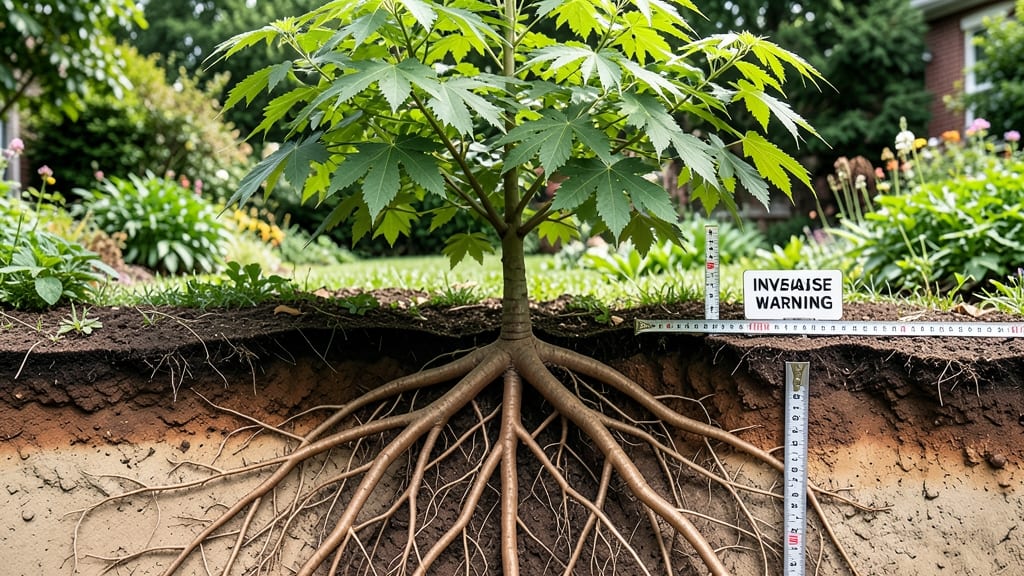
That tree of heaven root system diagram reveals a relentless underground network—fast, deep, and impossible to ignore once it takes hold. 🌳 I’ve seen it crack sidewalks, clog drainage systems, and outcompete native plants within just a few years, making removal a battle more than a gardening project.
The roots grow 30-50 feet wide for every foot of trunk height, with pneumatophores (aerial roots) popping up near the surface—perfect for smothering lawns and gardens. Sap toxicity adds another layer of danger, so handling it requires gloves and caution.
Understanding this system is key to deciding whether to plant it (not recommended) or fight it (often necessary).
📚 In This Guide
- What you need
- Instructions
- Tips and common mistakes
- Wrapping up and next steps
What you need
- ● Paper or digital drawing tool: Graph paper (8.5" x 11" recommended) or
- ● Digital tablet (e.g., Wacom, iPad with Procreate) for precision.
- ● Pencils & erasers: 2B or 4B graphite pencils (for sketching roots).
- ● H pencil (for light guidelines).
- ● Kneaded or vinyl eraser (for clean corrections).
- ● Ruler: 12" metal or plastic ruler for straight lines and measurements.
- ○ Protractor (optional but helpful): For angles in root spread diagrams.
- ● Colored pencils/markers: Brown (for roots), green (for foliage), and black (for labels).
- ● Reference images: Printed or digital diagrams of Tree of Heaven (Ailanthus altissima) root systems (e.g., from USDA or horticultural sources).
- ● Measuring tape (10-25 ft): If scaling your diagram to real-world root spread.
- ● Root system models: Plastic or clay root replicas (available in botanical supply stores) for 3D reference.
- ● Grid overlay: Clear plastic grid sheet to trace over existing diagrams.
- ● Laminator or clear sleeve: To preserve your final diagram.
- ● Field notebook: For jotting down root depth/width observations if studying live trees.
Understanding tree of Heaven root spread: a visual breakdown
Here's how to visualize and manage this invasive tree's aggressive underground network.
🌱 Step 1: Identify the Root Structure Types
The Tree of Heaven (Ailanthus altissima) develops three primary root systems that enable its rapid spread: shallow lateral roots, deep taproots, and prolific suckers. The shallow lateral roots spread horizontally just 6-12 inches below the soil surface, forming dense mats that compete aggressively with native plants. These roots can extend 20-30 feet outward from the trunk, making containment difficult once established.
Look for the deep taproot system that grows vertically downward, often reaching 10-15 feet or more. While this provides stability, it also allows the tree to access deep water sources during drought. The most problematic feature is the sucker system—thick, woody shoots that emerge from both lateral roots and the taproot, creating new stems 5-10 feet away from the parent plant.
🌿 Step 2: Map the Spread Pattern Using Visual Cues
To diagram the root system, start by marking the tree's drip line—the edge of its canopy shadow. Draw a 10-foot radius circle around the trunk to represent the primary lateral root zone. Within this circle, sketch horizontal lines radiating outward to show the lateral roots' spread direction, which typically follows the path of least resistance through soil.
Use dashed lines to indicate sucker locations, which often appear in clusters along the lateral roots' path. Note that suckers can emerge anywhere the roots contact soil, including sidewalks, driveways, and garden beds. For the taproot, draw a vertical line extending downward from the trunk, labeling it with "10-15 ft" to indicate its depth.
✂️ Step 3: Document Root Exposure During Removal
When excavating, expose the root system in 2-foot deep trenches radiating from the trunk. Use a shovel to carefully cut through lateral roots at their point of origin from the taproot, which helps prevent regrowth. Sketch each exposed root segment, labeling:
- Primary lateral roots (thick, woody, 2-4 inches diameter)
- Secondary laterals (thinner, ½-1 inch diameter)
- Sucker roots (small, fibrous connections to new shoots)
Mark any root grafts—where roots from different trees fuse together underground, creating a single, interconnected system. These grafts explain why stump grinding alone often fails: the connected roots continue supporting the tree. Photograph the exposed system before removal to create an accurate diagram for future reference.
🪴 Step 4: Create a Long-Term Monitoring Diagram
After removal, establish a perimeter monitoring grid using 10-foot stakes placed at the tree's original drip line. Label each stake with the date and record any new sucker emergence within 24 hours of appearance. Use colored flags to track:
- Green flags for fresh suckers (<1 week old)
- Yellow flags for established shoots (1-4 weeks old)
- Red flags for woody stems (>4 weeks old)
Update your diagram monthly, noting which roots produced suckers and their distance from the original trunk. This visual record helps identify high-risk zones where future herbicide applications or physical barriers may be needed. Over time, you'll see patterns emerge—some roots consistently produce suckers while others remain dormant.
⏰ Step 5: Compare Your Findings to Known Patterns
Cross-reference your diagram with documented Tree of Heaven root systems, which typically show:
- 70-80% of suckers emerging within 15 feet of the parent tree
- Lateral roots spreading 1-2 feet annually under ideal conditions
- Taproot depth correlating with soil moisture—deeper in sandy soils, shallower in clay
Highlight areas where your observations differ from typical patterns, such as unusually deep lateral roots or clusters of suckers far beyond the expected range. These anomalies may indicate:
- Undetected root grafts from neighboring trees
- Soil disturbances (like recent digging) that stimulated root growth
- Unusual environmental conditions (e.g., high groundwater tables)
Tips & tricks for mapping tree of Heaven root spread
These visual strategies will help you accurately document and manage this invasive tree's underground network.
Visual Cue Strategy: When marking the 10-foot radius circle for the primary lateral root zone in Step 2, use a garden hose or rope to create a physical boundary. This helps you visualize the spread pattern while excavating—any roots found outside this circle are likely new growth from undetected grafts. I've found that marking the drip line first makes this process much clearer during fieldwork.
Root Identification Tip: In Step 3, differentiate primary lateral roots (2-4 inches thick) from secondary laterals (½-1 inch) by wrapping colored tape around exposed segments before photographing. Use red for primary roots and yellow for secondaries—this color-coding makes your documentation instantly understandable to others. The thickness distinction is critical when planning removal strategies.
Monitoring System Enhancement: For the long-term monitoring grid in Step 4, consider using numbered stakes instead of just colored flags. Number each stake sequentially around the perimeter, then record sucker locations by stake number in your logbook. This system prevents confusion when multiple people are tracking the same area, especially important for community removal projects.
Pattern Recognition Tool: When comparing findings to known patterns in Step 5, create a simple spreadsheet with columns for "Expected Pattern," "Your Observation," and "Possible Explanation." For example, if you find suckers beyond the 15-foot range, note whether nearby construction activity might have disturbed dormant roots. This structured approach reveals anomalies that might indicate hidden root connections.
Pro Tips for Tree Of Heaven Root System Diagram
- These visual strategies will help you accurately document and manage this invasive tree's underground network.
- Visual Cue Strategy: When marking the 10-foot radius circle for the primary lateral root zone in Step 2, use a garden hose or rope to create a physical boundary.
- Root Identification Tip: In Step 3, differentiate primary lateral roots (2-4 inches thick) from secondary laterals (½-1 inch) by wrapping colored tape around exposed segments before photographing.
Frequently asked questions
Got questions about the Tree of Heaven root system? You’re not alone—this invasive tree stumps homeowners and landscapers alike! Here are answers to the most common queries about its aggressive spread, identification, and management.
How deep and wide do Tree of Heaven roots grow?
The Tree of Heaven (Ailanthus altissima) has a shallow but expansive root system, spreading up to 40 feet wide but rarely deeper than 3–5 feet. Its roots produce suckers (sprouts) aggressively, even from broken root fragments. This makes it a nightmare for driveways and foundations—remove the entire root system to prevent regrowth!
Can I identify Tree of Heaven roots in my yard?
Yes! Look for thick, gnarled roots near the tree base or sprouts popping up in cracks (sidewalks, mulch beds). The roots smell like peanuts when crushed—a dead giveaway. Compare them to a diagram of Tree of Heaven roots (like the one in our guide) for confirmation.
How long does it take for Tree of Heaven roots to spread?
Fast—within 1–2 years, roots can spread 10+ feet from the parent tree. Suckers emerge year-round (especially after disturbances like pruning or soil disruption). Act fast: Dig out roots immediately if you spot them near structures or other plants.
What’s the best way to kill Tree of Heaven roots permanently?
Cutting alone won’t work—roots regrow from fragments. For eradication:
- Dig out roots (at least 12 inches deep) and burn or bag them.
- Apply glyphosate herbicide to stumps and soil (follow label instructions).
- Monitor for 2+ years—new suckers may appear!
For large infestations, consider professional help.
Are there non-toxic alternatives to control Tree of Heaven?
Natural methods slow but don’t eliminate the tree. Try:
- Solarization: Cover roots with clear plastic for 4–6 weeks to bake them.
- Vinegar spray (20% acetic acid) on suckers—reapply weekly.
- Smothering: Lay cardboard + mulch over root zones to block sunlight.
Warning: These work best on young roots. For mature trees, herbicides are more effective.
Wrapping up and next steps
Understanding the Tree of Heaven’s root system—especially its aggressive, invasive tendencies—is key to managing its spread effectively. 🌱 Whether you're a gardener, landscaper, or eco-conscious homeowner, recognizing its pneumatophores and shallow, sprawling roots empowers you to take action before it dominates your space.
Start by sketching your own root diagram or consulting local experts to tailor removal strategies to your yard.
You’ve got this! With the right knowledge, you can protect your landscape—and even help curb this tree’s invasive reach in your community. 💪