
Container Gardens
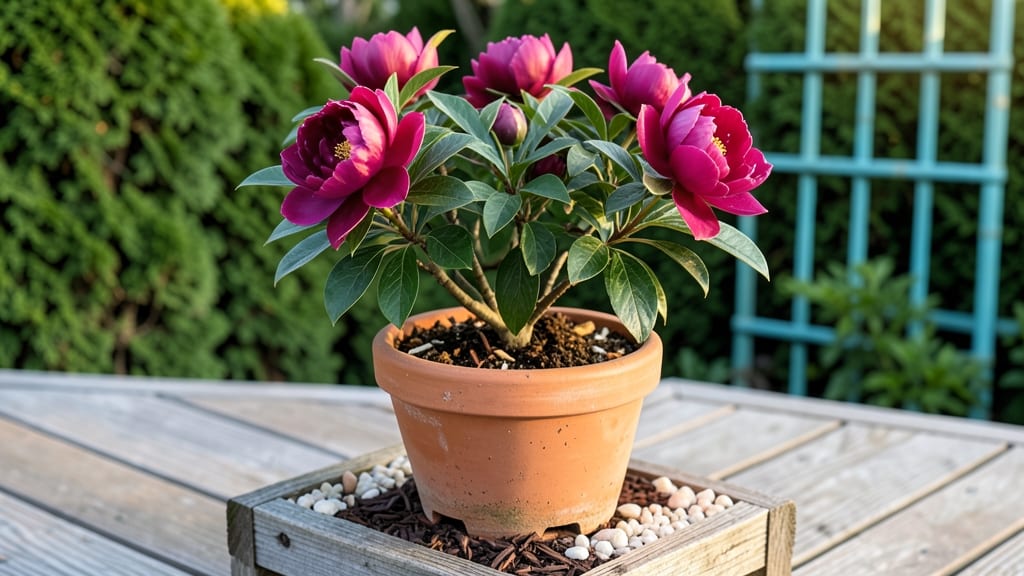
Growing tree peonies in pots lets you enjoy their lush blooms without the permanent commitment. 🌸 I've transformed my patio into a peony paradise by mastering the container approach—what works, what doesn't, and how to keep them blooming year after year despite their reputation for being finicky.
The secret starts with the right container: at least 18 inches wide with drainage holes, filled with a mix of 60% well-draining potting soil and 40% perlite or orchid bark.
Tree peonies hate soggy roots, so good airflow and drainage are non-negotiable. Plant the roots just below the soil line—they need depth but not burial.
Once established, they reward you with bold, fragrant blooms in early spring and sometimes again in fall. The key to repeat performances? Prune back dead stems in late fall, fertilize lightly in early spring, and move pots to a sheltered spot before winter.
No more excuses for skipping these stunners—container life works.
Watch for root-bound stress (yellowing leaves = time to repot) and protect pots from harsh winds. With these adjustments, your potted peonies will outlast store-bought annuals and become the showstopper of your outdoor space every season.
📚 In This Guide
- What you need
- Instructions
- Tips and common mistakes
- Wrapping up and next steps
What you need
- ● Tree peony plant: 1 healthy, dormant tree peony (look for Paeonia species like P. suffruticosa or P. ludlowii). Container: 1 large, heavy pot (18–24" in diameter) with drainage holes. Terracotta or ceramic (for heat retention) or fiberglass (for lightweight durability) work best. Potting mix: 3–4 gallons of well-draining soil blend: 60% garden soil, 20% perlite or pumice, 20% compost. Drainage layer: 2–3" of gravel, expanded clay pebbles, or broken pottery shards. Pruning tools: 1 pair of sterilized pruning shears (sharp, clean, and disinfected with rubbing alcohol). 1 pair of bypass pruners (for precision cuts). 1 hand saw (for thick stems, if needed).
Step-by-Step instructions for pruning potted tree peonies
Here's how I revive potted tree peonies and coax them into full, year-round blooms—no mystery involved.
✂️ Step 1: Time Your Pruning for Peak Health
Prune immediately after flowering, when blooms have fully faded but before new growth begins. This timing—typically late spring to early summer—ensures the plant directs energy toward next year's buds rather than seed production. I always wait until at least 50% of the blooms have dropped to avoid cutting off potential rebloom potential.
Use clean, sharp pruners to make cuts just above a bud or leaf node. Avoid leaving stubs—tree peonies heal poorly from jagged cuts. If your plant has multiple stems, prioritize the oldest wood first to encourage younger, more vigorous growth.
🌿 Step 2: Remove Dead or Weak Wood
Inspect each stem for signs of disease, dead wood, or weak growth. Dead wood appears brown, dry, and brittle, while weak stems are thin and pale. Cut these back to the base, but never remove more than 1/3 of the plant's total foliage in one session—tree peonies are slow to recover from drastic pruning.
Look for suckers (shoots growing from the base) and remove them immediately. These drain energy from the main plant and rarely produce quality blooms. I like to dig them out with a small trowel if they've rooted deeply—this prevents regrowth.
☀️ Step 3: Thin for Better Airflow and Light
Tree peonies need 6+ hours of direct sun daily, but crowded stems block light and airflow. Space remaining stems 6-8 inches apart to allow sunlight to reach the center of the plant. This step is where you'll see the most dramatic improvement in bloom quality—thinner plants produce larger, more abundant flowers.
If your pot is overcrowded, consider dividing the plant every 3-5 years in early spring. Lift the rootball, separate sections with a clean knife, and replant the strongest divisions. Just be patient—tree peonies need 2-3 years to re-establish after division before blooming again.
💧 Step 4: Adjust Watering After Pruning
Water deeply immediately after pruning to help the plant recover. Tree peonies in pots dry out faster than in-ground plants, so check the soil every 3-4 days during hot weather. The top 2 inches of soil should feel dry before watering again—overwatering leads to root rot, which is fatal for these woody plants.
Add a 2-inch layer of mulch (like bark chips) around the base to retain moisture and regulate soil temperature. Avoid piling mulch against the stems—this can cause rot. I also fertilize lightly with a balanced 10-10-10 formula after pruning to support new growth.
⏰ Step 5: Monitor for Rebloom Potential
Tree peonies typically bloom once per year, but with proper care, some varieties will produce a second flush. Watch for new buds forming on last year's wood in late summer. These are your rebloom indicators—protect them by avoiding heavy pruning in fall or winter.
If your peony doesn’t rebloom, don’t panic. Some varieties are single-bloomers by nature. Instead, focus on keeping the plant healthy—well-pruned, watered, and fed peonies will reward you with larger, more vibrant blooms next season. I’ve seen potted tree peonies live for decades with minimal care, so be patient.
Tips & tricks for perfect tree peony pots
These simple but game-changing strategies will transform your potted tree peonies into blooming powerhouses year after year.
Timing Secret: The late spring to early summer window for pruning is non-negotiable—this is when the plant naturally shifts its energy from flowering to next year's buds. I've learned the hard way that pruning too early can cut off potential rebloom potential, while waiting too long means missing the optimal growth window. Watch for that 50% bloom drop as your cue—it's the plant's way of saying "I'm done showing off for now."
Pruning Precision: When making cuts in Step 1, aim for clean angles just above a bud or leaf node—never leave stubs. Tree peonies heal slowly from jagged cuts, and those little nubs can become entry points for disease. I keep a small magnifying glass handy to verify I'm making those precise cuts right at the node. For older stems, prioritize removing the thickest, most established ones first to encourage new, vigorous growth from the younger wood.
Rebloom Strategy: The key to encouraging that second flush of blooms lies in protecting those late-summer buds forming on last year's wood. Mark your calendar to avoid any heavy pruning from fall through early spring—this gives those potential blooms the best chance to develop. I've seen varieties like 'Sarah Bernhardt' produce stunning second blooms when given this protection, though not all varieties rebloom, so don't be discouraged if yours doesn't.
Container Care: Potted tree peonies need special attention to their watering needs—those containers dry out much faster than in-ground plantings. After pruning, I water deeply right away, then check the top 2 inches of soil every 3-4 days during hot weather. The secret here is consistency: let that top soil dry out completely between waterings, but never let the roots sit in soggy conditions. A moisture meter is worth its weight in gold for this delicate balance.
Pro Tips for Tree Peony In Pots
- These simple but game-changing strategies will transform your potted tree peonies into blooming powerhouses year after year.
- Timing Secret: The late spring to early summer window for pruning is non-negotiable—this is when the plant naturally shifts its energy from flowering to next year's buds.
- Pruning Precision: When making cuts in Step 1, aim for clean angles just above a bud or leaf node—never leave stubs.
Frequently asked questions
Got questions about growing tree peonies in pots?
You’re not alone! Whether you’re a first-time container gardener or a seasoned plant parent, these FAQs will help you keep your tree peonies thriving—and blooming—year after year.
Can tree peonies grow well in pots long-term?
Yes! Tree peonies thrive in containers if given proper drainage, well-draining soil, and a spacious pot (at least 18–24 inches wide). They’re slow-growing, so repotting every 2–3 years keeps them happy. Just avoid overcrowding—space multiple plants 12+ inches apart for airflow and blooms!
When’s the best time to prune tree peonies in pots?
Prune right after flowering (late spring to early summer) to encourage next year’s blooms. Avoid heavy cuts—just remove dead or crossing branches. For winter prep (late fall), trim back any remaining foliage to 6–12 inches tall to protect the plant from frost. Pro tip: Sterilize pruners with rubbing alcohol to prevent disease!
How do I keep my potted tree peony from dying in winter?
Tree peonies are hardy but need winter care in pots. Move them to a sheltered spot (like a garage or under eaves) before temps drop below 20°F (-7°C). Mulch the soil with straw or leaves (3–4 inches) to insulate roots. Warning: Avoid freezing soil—pots can crack!
What’s the easiest alternative to tree peonies for pots?
If tree peonies seem tricky, try herbaceous peonies (Paeonia lactiflora)—they’re equally stunning but more compact. Other low-maintenance pot picks: Japanese maples (Acer palmatum) or dwarf flowering cherries (Prunus). All three love containers and brighten up patios with minimal fuss!
Why aren’t my potted tree peonies blooming?
No blooms? Check these fixes:
- Age: Tree peonies often wait 3–5 years to flower.
- Light: They need 6+ hours of sun daily—move to a sunnier spot.
- Food: Feed with balanced fertilizer (10-10-10) in early spring.
- Pruning: Over-pruning can stunt blooms—keep cuts minimal!
Patience and proper care will pay off with showstopping flowers next season.
Wrapping up and next steps
Growing tree peonies in pots is a rewarding way to enjoy their stunning blooms year-round—with a little pruning mastery! 🌸 By choosing the right container, providing proper care, and timing your pruning just right, you’ll keep your peonies thriving and flourishing.
Whether you’re a seasoned gardener or just starting out, these tips make it easier than ever to create a vibrant, low-maintenance display.
Ready to transform your space? Start small—pick a healthy tree peony and a sunny spot, then follow the steps to prune and nurture it. Soon, you’ll be basking in season-after-season beauty with minimal effort. Happy gardening! 🌱