
Pruning
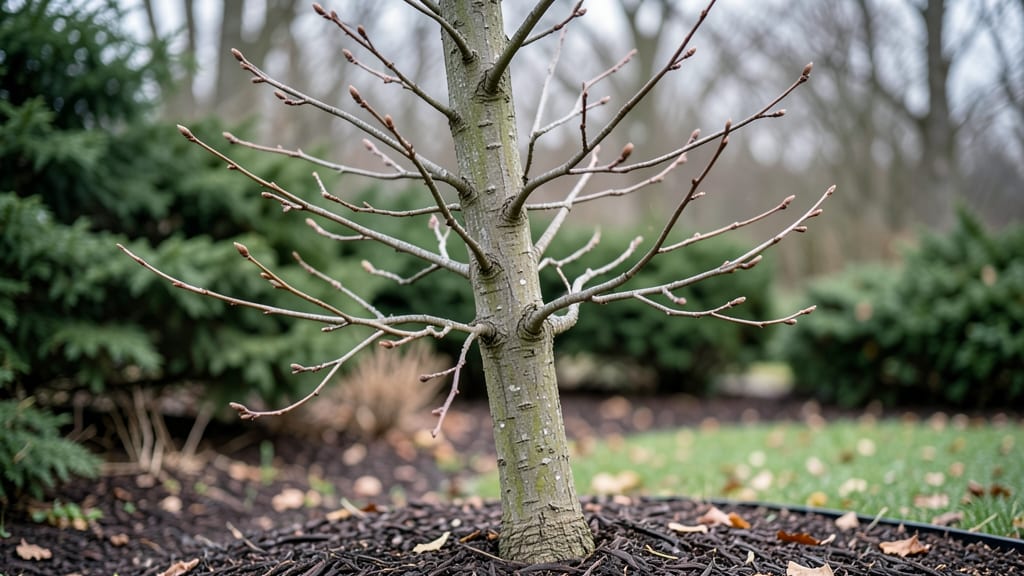
Your dormant tree branch isn't dead—it's just waiting for the right cut to wake up. ✂️ Pruning during dormancy (late winter or early spring) removes weak growth before new shoots form, giving your tree a head start on energy storage for spring.
I’ve saved struggling trees by cutting at the right angle and place, and the difference in growth is shocking—thicker branches, more blooms, and fewer weak limbs by summer.
The key is knowing what to cut: dead branches snap easily when bent, while live ones bend slightly. Look for smooth, dry bark on dead wood and green buds on healthy branches.
Grab your pruners, sanitize the blades with rubbing alcohol, and make clean cuts just outside the branch collar (that swollen area where the branch meets the trunk). It’s easier than it sounds—just avoid cutting into the trunk itself.
You’ll see the payoff in 4-6 weeks when new growth emerges—thicker, straighter, and stronger than before. Proper pruning also reduces disease risk and improves airflow, so your tree stays healthier longer.
Plus, it’s satisfying to step back and see a tree that looks like it’s been professionally cared for, even if you did it yourself.
Works for fruit trees, shade trees, and even overgrown shrubs. The same principles apply whether you’re trimming a small backyard tree or tackling a large landscape specimen. Let’s get those branches looking sharp for spring!
Natural Triggers Behind Dead Branches
Ever wondered why some tree branches go dormant—or worse, die back—while others thrive? The answer lies in a mix of biological signals, environmental stress, and even the tree’s own survival instincts.
Understanding these causes helps you prune with purpose, ensuring your tree bounces back stronger in spring. Let’s break down the science behind why dormant branches lose their vitality.
Trees enter dormancy as a survival strategy, much like hibernating animals. During winter or dry seasons, deciduous and evergreen trees conserve energy by slowing metabolic processes. This shutdown affects branches in two key ways:
- Reduced sap flow: Cold temperatures or drought trigger the tree to redirect nutrients to roots and the trunk, leaving outer branches starved of essential sugars and water. Without these resources, branches may appear "dormant" but are technically functionally dead if the stress persists.
- Bud formation failure: If a tree can’t produce viable buds (the embryonic shoots for next year’s growth), the branch won’t regenerate. This often happens in late frosts or nutrient-deficient soils, where the tree’s energy reserves are too low to support new growth.
Actionable insight: Prune dormant branches in late winter or early spring (just before bud break) to avoid removing potential growth. Look for branches with no buds, dry bark, or hollow centers—these are prime candidates for removal.
Extreme or prolonged environmental conditions can push branches into a state of dormancy—or worse, death. Here’s how:
| Stressor | How It Harms Branches | Signs to Watch For |
|---|---|---|
| Drought | Lack of water disrupts the tree’s ability to transport nutrients. Branches at the outer canopy suffer first because they’re farthest from the water source (roots). | Brittle, snapping branches; curled or brown leaves; no new growth after rain. |
| Frost or Ice Damage | Freezing temperatures rupture xylem cells (the tree’s water-conducting vessels), blocking sap flow. Evergreens are especially vulnerable because they retain needles year-round. | Blackened or mushy branch tips; peeling bark; needles that turn brown and fall off. |
| Wind or Physical Trauma | Repeated bending or rubbing against structures (like fences or power lines) crushes cambium tissue (the growth layer under bark). Without this layer, the branch can’t heal or produce new cells. | Stripped bark; cracked or split branches; uneven growth patterns. |
| Pests or Disease | Insects (like borers) or fungi (such as Armillaria root rot) block nutrient pathways or consume living tissue. The tree may "abandon" infected branches by sealing them off with callus tissue. | Sawdust-like frass (insect droppings); oozing sap; mushrooms at the base; unusual wilting even in healthy seasons. |
Pro tip: 🌡️ If your tree is struggling with environmental stress, deep watering (1–2 inches per week) and mulching (2–4 inches of organic mulch) can help revive dormant branches. For pest/disease issues, consult a certified arborist—some problems (like fungal infections) require targeted treatments.
Not all dormancy is natural—some is human-made. Improper pruning cuts can trigger branch death by:
- Removing too much foliage at once: The 30% rule applies here: Pruning more than 30% of a tree’s canopy in one go stresses it, reducing its ability to photosynthesize and sustain dormant branches.
- Making jagged or improper cuts: A topping cut (severing a branch flush to the trunk) or a tear-out (ripping bark while cutting) exposes raw wood, inviting disease and preventing callus formation (the tree’s natural healing tissue).
- Pruning during active growth: Cutting in spring or summer (instead of dormant season) can exhaust the tree’s energy reserves, leaving branches vulnerable to stress.
- Ignoring weak branch unions: Branches growing at sharp angles (like a "V" shape) or with included bark (where bark grows between two branches) are prone to splitting or dying back.
Actionable fix: ✨ Always use clean, sharp tools and make cuts just outside the branch collar (the swollen area where the branch meets the trunk). Follow the three-cut method for larger branches to avoid tearing:
- 🔪 Make the first cut 1–2 feet out from the trunk, under the branch.
- 👨🍳 Angle the second cut downward to create a notch without removing it completely.
- 🥘 Finally, cut just outside the collar on the top side of the branch.
Fixing Dead Branches for Healthier Trees
Dormant tree branches—whether dead, diseased, or simply overgrown—can stifle your tree’s vitality and even pose safety risks. But with the right approach, you can revitalize your tree’s growth while keeping your yard safe and beautiful.
Below, we break down practical solutions tailored to the root cause of your tree’s woes, plus prevention tips to keep future problems at bay.
Dead branches are like dead weight—removing them stimulates new growth and prevents pests or disease from spreading. Here’s how to do it right:
🔥 Step 1: Identify the Problem Branches
- Snap Test: Bend a small branch—if it snaps easily (with a dry crack), it’s dead. If it bends like green wood, it’s still alive.
- Color Check: Dead branches are gray, brown, or black inside (no green beneath the bark).
Healthy branches have green or moist inner bark. - Look for Signs: Peeling bark, fungal growth (mushrooms at the base), or hollow centers are red flags.
👨🍳 Step 2: Gather the Right Tools
You’ll need:
- Bypass pruners (for small branches <1 inch thick)
- Loppers (for branches 1–2 inches thick)
- Pruning saw (for thicker branches)
- Gloves & safety goggles (protection first!)
- Disinfectant (rubbing alcohol or bleach solution to clean tools between cuts)
⏰ Step 3: Make Clean, Strategic Cuts
- Cut at the Branch Collar: Never leave a stub! Locate the swollen area where the branch meets the trunk (the branch collar). Cut just outside the collar, at a 45-degree angle if needed, to allow water to run off.
- Avoid Topping: Never cut more than 25% of the tree’s canopy at once—this stresses the tree. Remove one branch at a time to avoid shock.
- Seal Large Wounds (If Necessary): For cuts >2 inches in diameter, apply pruning sealant (like Tanglefoot Tree Wound Pruning Seal) to prevent disease entry.
💡 Pro Tip:
- Timing Matters: Prune dormant branches in late winter or early spring (before buds swell) to minimize stress. Avoid pruning in fall, as wounds take longer to heal before winter.
Diseased branches (e.g., fungal infections, canker disease) require extra care to prevent spread. Here’s how to tackle them:
🔥 Step 1: Sterilize Your Tools
- Wipe blades with 70% isopropyl alcohol or a 10% bleach solution before and after each cut to avoid cross-contamination.
🍳 Step 2: Remove Infected Wood
- Cut back to healthy tissue: Look for green bark and no signs of rot.
Remove at least 6 inches beyond visible disease to ensure you’ve got the whole problem. - Burn or Bag Infected Branches: Never compost diseased wood—burn it or dispose of it in sealed bags to prevent spores from spreading.
🌿 Step 3: Treat the Tree
- Fungicide Spray: Apply a copper-based fungicide (like Bordeaux mixture) or neem oil spray to remaining branches to prevent reinfection.
- Improve Airflow: Thin the canopy to reduce humidity (fungi love damp conditions).
- Water at the Base: Keep the soil moist but not soggy to support recovery.
✨ Pro Tip:
- Monitor for Recurrence: Check the tree every few weeks for new signs of disease. If it persists, consult a certified arborist for stronger treatments (like systemic fungicides).
Too many branches can weaken the tree’s structure, leading to breakage or poor airflow. Prune to encourage a balanced, resilient shape:
🔥 Step 1: Prioritize Structural Integrity
- Remove crossing branches (they rub and create wounds).
- Eliminate water sprouts (fast-growing vertical shoots)—they drain energy.
- Thin out crowded branches to allow sunlight and air to reach the center.
👨🍳 Step 2: Follow the “Third Cut” Rule
For large branches, use the three-cut method to avoid tearing the bark: 1. Under-Cut: Make a horizontal cut about 12–18 inches out from the trunk.
- Top Cut: Cut down just above the under-cut from the top.
- Final Cut: Remove the branch just outside the branch collar.
💡 Pro Tip:
- Step Back & Visualize: Before cutting, stand back and picture the tree’s final shape. Aim for an open-center form (common in fruit trees) or a balanced oval (for shade trees).
An ounce of prevention saves a pound of pruning! Follow these easy habits to keep your tree thriving:
- 🌱 Mulch Properly: Apply 2–4 inches of mulch around the base (but not touching the trunk) to retain moisture and regulate temperature. - 💧 Water Deeply & Infrequently: Water slowly at the base (1–2 inches per week) to encourage deep root growth.
Avoid shallow watering. - 🍄 Monitor for Pests Early: Look for sawdust-like frass (sign of borers), holes in bark, or sap oozing—catch infestations before they spread. - 🌿 Fertilize Smartly: Use a slow-release, balanced fertilizer (like 10-10-10) in early spring to support growth without overfeeding. - 🔍 Inspect Annually: Do a quick check every spring for dead, diseased, or weak branches. Small fixes now = big problems avoided later!
Final Thought: Pruning dormant branches isn’t just about cleaning up—it’s about giving your tree a fresh start. With the right cuts and care, you’ll see stronger branches, lush foliage, and a tree that stands tall for years to come! 🌳✨
Frequently asked questions
How can I tell if a dormant branch is truly dead?
Use the bend test: Bend a small branch—if it snaps with a dry crack, it’s dead. Healthy branches bend slightly. Also check the bark: dead branches have dry, gray/brown inner bark, while live ones stay green or moist. Look for hollow centers or peeling bark too.
Is it safe to prune dormant branches in winter?
Yes, but time it right! Late winter (just before buds swell) is ideal. Avoid pruning during freezing temperatures or deep frost, as cold stress can slow healing. Never prune in fall—wounds take longer to heal before winter.
What’s the best way to remove a large dormant branch?
Use the three-cut method to avoid tearing bark:
- Make an under-cut 12–18 inches from the trunk.
- Cut downward from the top to create a notch.
- Remove the branch just outside the branch collar. For branches >2 inches thick, seal the wound with pruning sealant.
Will pruning dormant branches encourage new growth?
Removing dead/diseased branches reduces stress and lets the tree redirect energy to healthy branches. You’ll often see new buds and shoots within 4–6 weeks of proper pruning. Just avoid cutting more than 25% of the canopy at once.
Can I compost branches I remove?
Only if they’re 100% healthy. Diseased or pest-infested branches should be burned or bagged to prevent spreading spores. For clean branches, chop them into small pieces and add to your compost pile—they’ll break down slowly but add valuable nutrients.