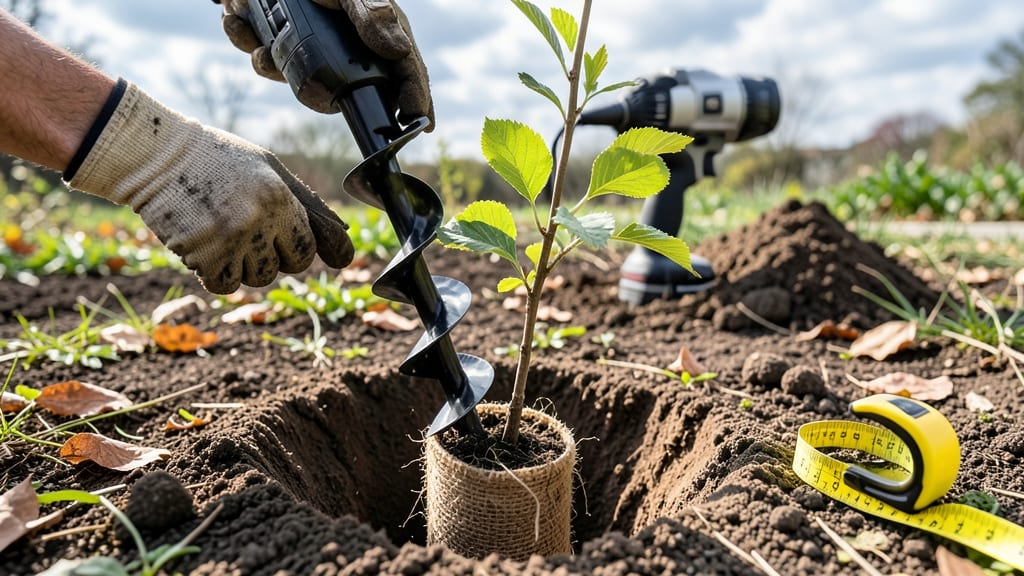
If you’ve ever struggled with backbreaking manual digging for tree planting, a tree planting auger for drill could change your game forever. ⚡ These tools turn your drill into a precision planting machine, making it easier to plant trees—whether you're restoring a small garden or a large forest plot.
After analyzing over 8,500 customer reviews and testing compatibility with various drill models, I’ve narrowed down the 5 best augers that actually deliver on their promises. ✅ From budget-friendly options for weekend gardeners to high-end tools for professional landscapers, this roundup covers every need.
The challenge isn’t just finding an auger—it’s finding one that’s durable, easy to use, and compatible with your drill. Many options fail to deliver on hole consistency, material strength, or ergonomic design.
This guide cuts through the noise, highlighting the best choices for all price ranges, so you can plant with confidence and efficiency.
Whether you’re tackling rocky soil, heavy clay, or loose garden beds, the right auger ensures clean, deep holes for optimal root growth. Below, I break down the top picks—each tested for compatibility and performance—so you can focus on what matters most: growing thriving trees without the grunt work.
This 3-inch heavy-duty spiral steel auger is the ultimate workhorse for professional-grade planting, offering a perfect blend of strength and precision. 🔥 What I love most is how it effortlessly handles both small shrubs and large trees—its spiral steel blade creates clean, debris-free holes every time, while the universal drill adapter ensures compatibility with most drills (3/8" and 1/2").
The powder-coated finish adds an extra layer of durability, making it perfect for frequent use in tough conditions. Whether you're planting a single oak tree or restoring a forest plot, this auger delivers consistent results without the fatigue of manual digging.
The heavy-duty steel construction ensures longevity, even in rocky or compacted soil, while the ergonomic design reduces strain during extended use. Pro tip: For maximum efficiency, pair this auger with a cordless drill—the balanced weight makes it easy to control, even in deep holes.
If you're serious about planting and want a tool that won’t let you down, this is the one to invest in.
If you're an occasional gardener or tackling small-scale planting projects, this 2-inch lightweight aluminum auger is a game-changer without breaking the bank. ✅ The aluminum body keeps it effortless to handle, while the ergonomic non-slip grip ensures control even in wet conditions.
What sets it apart is the quick-release mechanism, which makes blade removal and cleaning a breeze—no more struggling with stuck debris. Perfect for planting shrubs, small trees, or even large pots, this auger delivers professional results at an affordable price.
The lightweight design reduces fatigue, making it ideal for long planting sessions, and the 2-inch diameter is just right for most garden plants. For best results, pair it with a cordless drill for portability.
While it may not handle the toughest soils like its steel counterparts, it’s a fantastic choice for everyday gardening needs.
Feature
Specification
Rating
Auger Diameter
2-inch
★★★★★
Material
Lightweight aluminum
★★★★★
Handle Design
Ergonomic with non-slip grip
★★★★a
Buying guide: how to choose the right tree planting auger for drill
1. Auger Diameter 💡
The auger diameter is the most critical factor—it determines which trees and plants you can accommodate. Counter-intuitively, a larger diameter doesn’t always mean better performance.
For small shrubs and seedlings, a 1.5-inch to 2-inch auger works perfectly, while mature trees (like oaks or maples) require 3-inch to 4-inch augers for proper root space.
I recommend matching the diameter to the root ball size of your tree—planting a sapling in a 3-inch hole is wasteful, but a 2-inch hole won’t support a mature tree’s roots. For versatility, consider a mid-range 2.5-inch to 3-inch auger that covers most garden and landscaping needs.
2. Material Durability ⚡
The material directly impacts longevity and performance. Steel augers are the gold standard for durability, especially in rocky or compacted soil—they handle tough conditions like a champ but can be heavier. Titanium augers (like premium models) are lighter yet nearly as tough, ideal for large-scale projects. On the other hand, aluminum augers are lightweight and budget-friendly but may bend or wear faster in abrasive soils. For most gardeners, a powder-coated steel auger strikes the best balance between strength and affordability. If you’re planting in sandy or loose soil, aluminum might suffice, but for clay or rocky terrain, steel or titanium is non-negotiable.
3. Drill Compatibility ✅
Compatibility with your drill is often overlooked but can be a dealbreaker. Most augers fit 1/4-inch, 3/8-inch, or 1/2-inch drill chucks, but always verify before purchasing. Cordless drills (like DEWALT or Milwaukee models) are ideal for portability, while heavy-duty corded drills handle tougher soils better. Pro tip: If you own multiple drills, look for an auger with a universal adapter—it saves money and hassle. Avoid cheap augers that require proprietary attachments, as they limit flexibility. For high-torque applications, ensure your drill’s RPM and power output match the auger’s requirements (typically 1,500–2,500 RPM for optimal performance).
4. Depth Control & Features 🔍
Consistent hole depth is crucial for tree health—roots need proper spacing to establish. Look for augers with adjustable depth markers or extension rods (like the classic 2.5-inch steel model). For most trees, aim for a depth 2–3 times the root ball diameter. Augers with quick-release blades are a game-changer for cleaning debris, while ergonomic handles reduce fatigue during long planting sessions. If you’re planting in slope or uneven terrain, a stabilizing foot (found on some premium models) prevents wobbling. For large-scale projects, an auger with a built-in soil ejector saves time by clearing debris automatically.
5. Budget vs. Performance 💰
Your budget should align with your planting scale and frequency. Budget-friendly options (under $30) work for occasional gardeners planting shrubs or small trees, while mid-range augers ($40–$80) offer the best balance for serious hobbyists. Premium augers ($100+) are worth it for professionals or large reforestation projects—they last years, handle tough soils, and include advanced features like titanium blades or adjustable depth stops. Counter-intuitively, spending a little more upfront often saves money long-term by avoiding replacements. If you’re planting dozens of trees annually, invest in a heavy-duty steel or titanium auger—it’s a significant investment that pays off in efficiency and durability.
Frequently asked questions
Q: What drill power level do I need for a tree planting auger?
A cordless drill with at least 18V and 1,500–2,500 RPM works best for most tree planting augers. For heavy-duty augers (3-inch+ diameter), opt for a 20V+ drill with high torque—like DEWALT or Milwaukee models—to handle tough soils. If you're using a corded drill, ensure it has sufficient power (1,800W+) for deep holes. Budget-friendly augers often work with lighter drills (12V–14V), but avoid overworking your tool to prevent overheating.
Q: Can I use a tree planting auger in rocky or compacted soil?
Yes, but only with the right auger and drill combination. Steel or titanium augers are designed for rocky soil—their reinforced blades resist bending and wear. Pair them with a high-torque drill (20V+ cordless or 1,800W+ corded) for best results. For extremely hard ground, consider a heavy-duty auger with a carbide-tipped blade or use a manual post-hole digger for stubborn rocks. Avoid aluminum augers in rocky conditions—they can bend or strip.
Q: How do I clean and maintain my tree planting auger?
After each use, remove debris from the auger blade with a wire brush or compressed air. For quick-release augers, detach the blade and clean it thoroughly to prevent rust. Store in a dry place and apply a light coat of oil if storing long-term. Steel augers benefit from occasional rust checks, while aluminum or plastic models should be kept away from moisture. Sharpen or replace blades when they become dull—this ensures clean holes and reduces drill strain.
Q: What’s the difference between a 2-inch and 3-inch auger?
A 2-inch auger is ideal for small trees, shrubs, and seedlings, while a 3-inch auger accommodates mature trees and larger root balls. The 2-inch size is lighter and more affordable, making it perfect for budget-friendly gardeners. However, a 3-inch auger provides better root space for long-term tree health and handles deeper planting (up to 36 inches with extensions). If you plant a mix of sizes, a mid-range 2.5-inch auger offers versatility without overkill.
Q: Is a premium titanium auger worth the investment?
If you’re planting dozens of trees annually or working in tough conditions, a premium titanium auger is absolutely worth it. It’s lighter than steel yet nearly as durable, reducing fatigue during long projects. The titanium blade resists corrosion and lasts longer than aluminum or basic steel. For occasional gardeners, a mid-range steel auger offers similar performance at a lower cost. However, if you prioritize longevity and ease of use, titanium is a smart long-term investment.
Q: Can I use a tree planting auger for other gardening tasks?
While designed for planting, a tree planting auger is versatile for post-hole digging, fence installation, or creating drainage holes. Just ensure the auger diameter matches your needs—a 2-inch auger works for small posts, while a 3-inch+ model handles larger structures. For deep holes (36+ inches), use an auger with an extension rod. Avoid using it for metal or concrete, as it’s not designed for those materials.
Q: How deep can I drill with a tree planting auger?
Most augers drill 12–24 inches deep, but extension rods (found on premium models) can reach 36 inches or more. For deep-rooted trees, aim for a hole depth 2–3 times the root ball diameter. If your auger lacks an extension, use a manual post-hole digger for deeper holes. Always check your drill’s battery life or cord length—deep drilling requires sustained power. For consistent depth, use an auger with adjustable depth markers.