
Trees
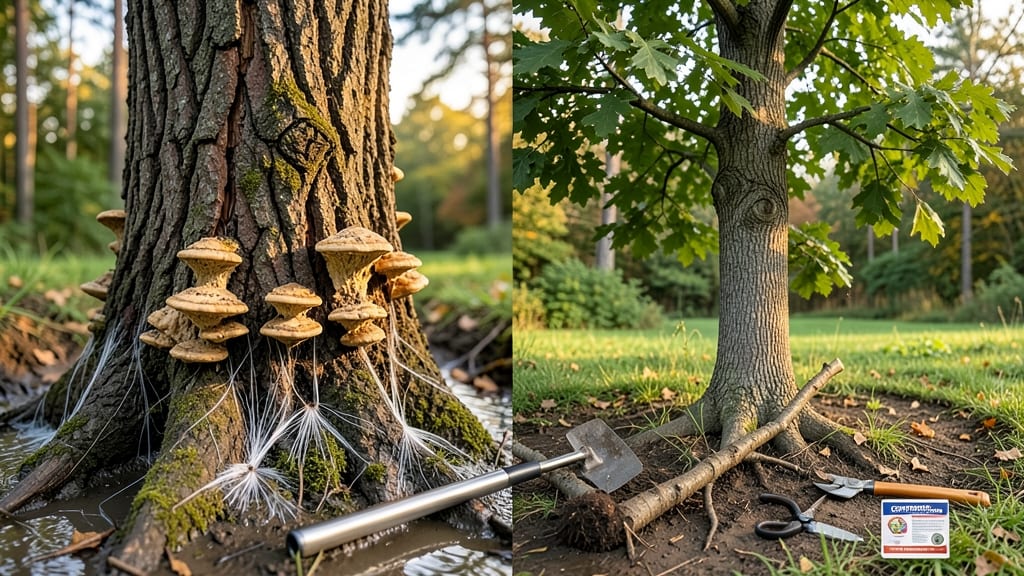
That soft, spongy wood and mysterious white growth on your oak’s trunk isn’t just decay—it’s tree rot fungus, and it spreads faster than you think. 🌳 I’ve seen healthy trees collapse in months from this silent killer, but there’s a way to stop it before it’s too late.
The key is catching the signs early: discolored bark, mushrooms at the base, or branches that snap like dry twigs.
Most rot starts from wounds—broken branches, old pruning cuts, or storm damage—where fungus sneaks in like a thief. Poor drainage makes it worse, turning your tree’s roots into a damp, fungal buffet.
Even resistant species can fall victim if you ignore warning signs, so don’t wait until you see mushrooms growing like toadstools in your yard.
You can still save your tree with the right moves: prune infected areas cleanly, apply fungicide to wounds, and improve drainage around the roots. A little prevention—like proper pruning, mulching correctly, and choosing tougher tree varieties—can keep rot from ever getting a foothold.
The sooner you act, the better your tree’s chances.
When in doubt, call an arborist. Some rots, like heart rot, are already too far gone, but others respond well to treatment if you catch them early. Don’t let this fungus turn your backyard giant into firewood—take action now before it spreads to your neighbors’ trees too.
Understanding The Root Causes
Tree rot fungus doesn’t strike at random—it thrives when specific conditions align, turning your once-healthy trees into weak, decaying structures. Understanding these triggers is the first step to prevention. Let’s break down the key factors that create the perfect environment for fungal invasion.
Fungi love water—it’s their lifeline. When trees sit in soggy soil for prolonged periods, their roots suffocate, creating entry points for Heterobasidion (a common rot fungus) and Armillaria (shelf fungus). Here’s why it happens:
- Compacted or clay-heavy soil: These soils repel water, pooling it around roots instead of allowing drainage. 💡 Pro Tip: Test your soil’s drainage by digging a 12-inch hole and filling it with water—if it doesn’t drain in 6 hours, you’ve got a problem.
- Overwatering or poor irrigation practices: Drip systems or sprinklers that saturate the base of the tree (rather than the root zone) encourage fungal growth. ✨ Key Insight: Trees need 1–1.5 inches of water per week, but the soil should dry slightly between waterings.
- Flooding or poor grading: If your yard slopes toward the tree or sits in a low-lying area, water pools at the trunk. 🔧 Fix It: Install a French drain or create a slight berm (mound) around the tree’s drip line to redirect water.
Trees heal injuries like humans—with scars. But while a human’s skin knits back together, a tree’s bark can remain a permanent weak spot for fungi. Common culprits:
- Physical trauma: Storms, lawnmowers, or even improper pruning (cutting too close to the trunk) create open wounds. ⚠️ Warning: Pruning cuts should be made 6–12 inches from the trunk and sealed with pruning paint if larger than ½ inch in diameter.
- Bark splits or sun scald: Rapid temperature swings (common in urban areas) cause bark to crack, especially on the southwest side of the trunk. 🌡️ Solution: Apply a tree wrap in winter to protect vulnerable bark.
- Insect or animal damage: Beetles, woodpeckers, or even burrowing rodents create entry points. 🔍 Spot It: Look for exit holes or sawdust-like frass at the base of the tree.
A weak tree is like an open invitation to fungi. When trees struggle—whether from nutrient deficiencies, disease, or environmental stress—their defenses drop, making them prime targets. Key stressors:
| Stressor | How It Weakens Trees | Actionable Fix |
|---|---|---|
| Drought | Roots shrink, reducing water/nutrient uptake. Fungi latch onto dehydrated wood. | Mulch 3–4 inches deep (keep it 6 inches away from the trunk) and water deeply 1–2 times per week in dry spells. |
| Competition (weeds, grass, other plants) | Roots compete for nutrients, starving the tree and leaving it vulnerable. | Remove weeds within the drip line and avoid planting shallow-rooted species (like grass) too close. |
| Improper planting (too deep, girdling roots) | Restricts root growth, causing root rot and fungal entry. | Plant trees at the same depth they were in the nursery and avoid girdling roots (roots circling the trunk). |
Sometimes, the problem isn’t the tree itself—it’s the surroundings. Fungi spread faster when:
- Dead or dying trees remain standing: Decaying wood provides a food source for spores. 🪓 Remove It: Cut down and chip diseased trees immediately to prevent spore spread.
- Mulch piles up against the trunk: Thick mulch (over 4 inches) traps moisture and blocks oxygen. 🌿 Fix It: Use wood chip mulch in a donut shape, keeping it 6 inches from the trunk.
- Nearby infected trees or stumps: Fungal spores can travel up to 30 feet via wind or water. 🛡️ Prevent Spread: Isolate infected trees with a 6-foot buffer of healthy plants.
- Urban pollution or soil contamination: Heavy metals or chemical runoff weaken tree immunity. 💡 Solution: Test soil pH (ideal: 6.0–7.0) and amend with compost or mycorrhizal fungi to boost health.
Stop Wood Decay Before It Worsens
If you’ve spotted signs of tree rot fungus—like oozing sap, mushrooms at the base, or hollowed-out trunks—don’t panic. Early action can save your tree (and your yard). Below, we break down the most common causes of fungal decay and the practical fixes to restore your tree’s health.
Plus, we’ll share prevention tips to keep future infections at bay.
Cause: Overwatering, poor drainage, or compacted soil traps moisture, creating the perfect breeding ground for Phytophthora or Armillaria fungi. How to Fix It:🔹 Step 1: Drain the Damage
- Check the soil around the base—if it’s soggy even a week after rain, your tree is at risk.
- Dig a shallow trench (6–12 inches deep) around the trunk to improve drainage. Fill it with gravel or coarse sand.
🔹 Step 2: Prune for Airflow
- Remove any dead or crowded branches to let air circulate. Use sterilized pruning shears to avoid spreading spores.
- Thin out lower branches to reduce humidity near the trunk.
🔹 Step 3: Adjust Watering Habits
- Water deeply once a week (or less in rainy climates) instead of daily shallow watering.
- Use a soaker hose or drip irrigation to deliver water directly to the roots.
💡 Pro Tip: If the tree is already severely rotted, consider root pruning—carefully trimming infected roots (with a sterilized saw) to limit the spread. But only do this in early spring or fall!
Cause: Armillaria (honey fungus) or Polyporus thrive in wounded or stressed trees, often appearing as shelf-like mushrooms at the trunk’s base. How to Fix It:🔹 Step 1: Remove the Fungi
- Scrape off or burn any mushroom growths (wear gloves—some spores are toxic!).
- Apply a copper-based fungicide (like Bordeaux mixture) to the base and lower trunk to disrupt spore germination.
🔹 Step 2: Repair Physical Damage
- If the tree has wounds from storms or tools, seal them with pruning paint or tree wound dressing (only on fresh cuts—older wounds won’t benefit).
- Avoid girdling roots (roots circling the trunk)—if present, carefully excavate and prune them.
🔹 Step 3: Boost Tree Immunity
- Fertilize with mycorrhizal fungi (beneficial soil microbes) to outcompete pathogens.
- Apply compost or well-rotted manure around the base (keep it 3–4 inches away from the trunk).
⚠️ Warning: If the trunk is hollow or oozing sap, the tree may be beyond saving. In this case, remove it safely to prevent the fungus from jumping to nearby plants.
Cause: Fungi like Fomes fomentarius (the “hoof fungus”) invade through old wounds, slowly decomposing wood from the inside. How to Fix It:🔹 Step 1: Confirm the Diagnosis
- Tap the trunk with a hammer—if it sounds hollow or crumbles easily, heart rot is likely.
- Look for conks (shelf fungi) on the trunk or branches.
🔹 Step 2: Limit the Spread
- Prune all infected branches (including those with conks) at the base where they meet the trunk.
- Dispose of infected wood in a sealed trash bag (don’t chip it—spores can linger!).
🔹 Step 3: Support the Tree’s Structure
- If the tree is still standing but unsafe, install tree supports or cables to stabilize it.
- Reduce stress by watering deeply but infrequently and avoiding heavy pruning.
🎯 Long-Term Prevention: After treating, mulch properly—keep mulch 2–4 inches thick and 6+ inches away from the trunk to prevent moisture buildup.
An ounce of prevention is worth a pound of cure! Follow these easy habits to protect your trees:
| Do This | Avoid This |
|---|---|
| ✅ Water in the morning so foliage dries quickly. | ❌ Overhead watering (keeps leaves wet too long). |
| ✅ Prune in dry weather (tools should be clean and sharp). | ❌ Leaving stubs—always cut back to a healthy branch collar. |
| ✅ Test soil drainage—dig a hole, fill with water, and time how long it takes to drain (ideal: <4 hours). | ❌ Planting in low-lying areas where water pools. |
| ✅ Choose resistant species (e.g., oak, hickory, or black walnut tolerate rot better than willows or elms). | ❌ Ignoring early signs (discoloration, wilting, or odd growths). |
💡 Bonus Tip: Beneficial nematodes (like Phasmarhabditis hermaphrodita) can help control fungal pathogens in the soil. Ask your local nursery for organic options!
Frequently asked questions
What are the first signs my tree might have rot fungus?
Watch for mushrooms growing at the base (like shelf fungi), discolored or oozing bark, and branches that snap easily. Another red flag: if the trunk feels soft when tapped or shows cracks filled with white fungal growth, it’s likely infected. Check for wilting leaves or dead branches even when other trees stay green.
Can tree rot fungus spread to other plants in my yard?
Yes—some fungi like Armillaria (honey fungus) can spread up to 30 feet through soil and roots. If you see mushrooms near multiple trees, isolate the infected ones immediately. Remove all infected wood (don’t chip it!) and avoid planting new trees in the same spot until the soil is treated with fungicide.
Will pruning infected branches stop the rot from spreading?
Pruning helps, but only if you sterilize your tools between cuts and remove all infected wood. For severe cases, prune in dry weather and dispose of infected branches in sealed bags. If the rot is in the trunk, pruning alone won’t save the tree—you’ll need to treat the base with fungicide or consider removal.
Are there any trees that naturally resist rot fungus?
Some species handle moisture better than others. Oak, hickory, and black walnut are tougher due to their dense wood, while willows and elms are more vulnerable. When planting, choose native varieties adapted to your climate—local nurseries can recommend the best options for your area.
How long does it take for tree rot fungus to kill a tree?
It depends on the type and severity, but some rots (like heart rot) can weaken a tree over years before it collapses. Fast-acting fungi (e.g., Armillaria) may kill a tree in 1–3 years if untreated. The key is early action—catching signs within the first 6–12 months gives you the best chance to save it.