
Flowers
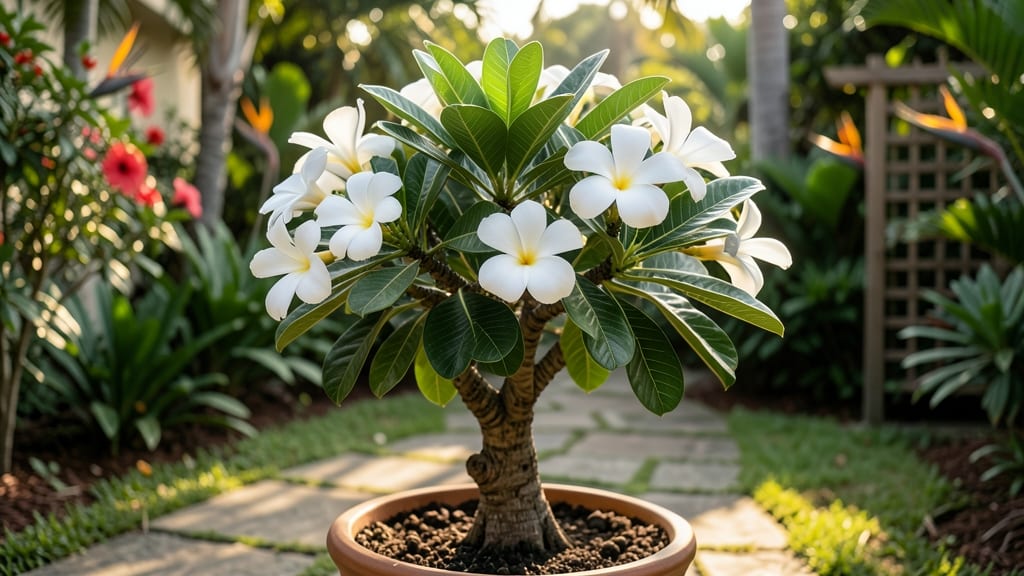
White orchid-like flowers on a tree add dreamy elegance to any garden. 🌸 The Plumeria (Frangipani) steals the show with its waxy, fragrant blooms, while Bridal Wreath Spirea offers delicate cascades of white flowers that dance in the breeze.
These trees aren’t just pretty—they’re year-round stars, transforming shady corners into romantic retreats.
Plumerias thrive in warm climates and need full sun, while Bridal Wreath Spirea handles cooler zones and partial shade. Both love well-draining soil and occasional pruning to keep their shapes lush.
Pair them with purple foliage plants or fragrant jasmine for a garden that feels like a fairy tale. The scent alone makes them worth growing!
Imagine your patio draped in snow-white blooms that last from spring to fall. These trees aren’t just ornamental—they’re conversation starters, drawing hummingbirds and butterflies while keeping your garden looking fresh. Whether as a focal point or a border, they bring effortless drama to any space.
For container gardening, dwarf varieties like Plumeria ‘Mini Ruby’ work beautifully in large pots. Just ensure they get enough sunlight and water during dry spells. With the right care, these orchid-like trees will reward you with months of bloom time—and zero fuss.
Nature’s Floral Illusion Explained
If you’ve ever spotted a tree adorned with delicate, white orchid-like blooms and wondered, "Why does this happen?"—you’re not alone. These stunning displays aren’t random; they’re the result of a fascinating mix of biology, environmental triggers, and even human influence.
Below, we break down the key reasons behind this breathtaking phenomenon, so you can better understand (and even encourage!) these floral masterpieces in your own garden.
Some trees are simply born to bloom with orchid-like flowers because of their genetics. Species like the Frangipani (Plumeria), Crabapple (Malus), or Bradford Pear (Pyrus calleryana) produce these delicate, waxy blooms as part of their natural reproductive strategy. These flowers aren’t just for show—they’re designed to:
- Attract pollinators: Their sweet fragrance and striking appearance lure bees, butterflies, and even hummingbirds, ensuring cross-pollination.
- Thrive in specific climates: Many of these trees evolved in tropical or temperate regions where consistent warmth and humidity trigger blooming cycles.
- Flower at precise times: Some species, like the Bradford Pear, bloom in early spring to take advantage of mild weather before summer heat sets in.
Actionable tip: If you want a tree with orchid-like flowers, start with the right species! Research varieties that naturally produce these blooms, such as:
- Plumeria (Frangipani) – Tropical beauty with fragrant, waxy flowers.
- Crabapple (Malus) – Compact trees with clusters of small, rose-like blooms.
- Japanese Snowbell (Styrax japonica) – Delicate, bell-shaped white flowers.
Not all trees bloom reliably—some need just the right conditions to put on their floral spectacle. For orchid-like flowers, these key factors play a major role:
| Factor | How It Works | What Happens If It’s Wrong? |
|---|---|---|
| Sunlight | Most flowering trees require 6+ hours of direct sun daily to produce blooms. Photosynthesis fuels flower development. | Too little sun = sparse or no flowers. Too much scorching heat can stress the tree. |
| Temperature | Cooler winters (for temperate species) or consistent warmth (for tropical trees) trigger blooming hormones. | Sudden freezes or extreme heat can shock buds, causing them to drop. |
| Water Balance | Moderate moisture encourages root growth, which supports flower production. Drought stress can halt blooming. | Overwatering = root rot; underwatering = stunted growth and fewer flowers. |
| Seasonal Cues | Many trees bloom in spring or early summer when days lengthen, signaling it’s time to flower. | If planted in the wrong zone, the tree may bloom out of season or not at all. |
Pro tip: 🌡️ If your tree isn’t blooming, check its location. Move it to a sunnier spot or adjust watering to mimic its natural habitat. For tropical species like Plumeria, bring potted trees indoors before frost to protect buds.
Even the most genetically inclined trees won’t bloom spectacularly if they’re not cared for properly. Pruning, fertilization, and overall health directly impact flower production. Here’s how:
- Pruning at the wrong time:
- ✅ Do this: Prune after blooming (late summer/early fall) to encourage next year’s flowers.
- ❌ Avoid this: Heavy pruning in late winter or early spring can remove next year’s flower buds.
- Nutrient deficiencies: Trees need phosphorus and potassium (found in bloom-boosting fertilizers) to produce flowers. A nitrogen-heavy fertilizer promotes leafy growth but fewer blooms.
- Stress from pests/disease: Aphids, scale insects, or fungal infections can drain a tree’s energy, leaving little for flowers.
- Overcrowding: Trees competing for space and nutrients may skip blooming to survive.
Actionable fix: 🔥 If your tree looks healthy but isn’t flowering, try:
- Applying a balanced fertilizer (10-10-10 or 5-10-10) in early spring.
- Thinning out nearby plants to reduce competition.
- Inspecting for pests and treating early with neem oil or insecticidal soap.
Not all trees with orchid-like flowers are created equal—and some are genetically modified or hybridized to bloom more prolifically. Here’s how humans play a role:
- Hybrid varieties: Many modern trees (like Bradford Pear) are bred for larger, showier flowers and disease resistance.
- Grafting: Some trees are grafted onto rootstock to produce more abundant or earlier blooms.
- Climate-adapted cultivars: Nurseries now offer cold-hardy Plumerias or drought-tolerant Crabapples that bloom reliably in unexpected zones.
- Container growing: Potted trees (like Japanese Snowbell) can be moved to optimize sunlight and temperature for blooming.
Pro tip: ✨ When shopping for a tree, look for labels like:
- "Repeat bloomer" (for multiple flushes of flowers).
- "Cold-hardy" (if you live in a cooler climate).
- "Fragrant" (for added sensory appeal).
By understanding these factors, you can encourage—or even troubleshoot— your tree’s orchid-like blooms. Whether it’s genetics, environment, or a little extra care, the secret to these stunning displays is often simpler than you think!
Revive & Protect Your Blooming Tree
Your stunning tree with white orchid-like flowers deserves the best care to keep its showstopping blooms thriving. Whether it’s struggling with pests, poor growth, or environmental stress, these practical solutions will help you nurse it back to health—and keep it vibrant for seasons to come.
Let’s tackle the most common issues with clear, actionable steps.
If your tree’s white orchid-like flowers wilt prematurely, it’s often due to environmental factors like heat, drought, or improper pruning. Here’s how to make them last longer:
💧 Hydrate Without Overwatering - Check soil moisture by sticking your finger 2–3 inches deep.
If it’s dry, water deeply but infrequently—most flowering trees prefer a slow drink rather than frequent shallow watering. - Mulch properly: Apply 2–3 inches of organic mulch (like shredded bark or wood chips) around the base, but keep it away from the trunk to prevent rot.
Mulch retains moisture and regulates soil temperature. - 💡 Pro Tip: Water in the early morning to reduce evaporation and fungal risks.
☀️ Shield from Harsh Sun or Wind
- If your tree is in a scorching or windy spot, consider light shade cloth during peak heat (10–50% coverage, depending on intensity).
- Prune strategically: Remove dead or crossing branches in late winter or early spring to improve airflow and sunlight distribution.
🌱 Boost Nutrients for Longer Blooms - Fertilize in stages: Use a balanced, slow-release fertilizer (like 10-10-10) in early spring and again after flowering.
Avoid high-nitrogen fertilizers—they promote foliage over flowers! - Add compost: Mix compost into the top 6 inches of soil annually to improve drainage and nutrient retention.
Yellowing leaves, holes in foliage, or black spots on blooms? Pests and diseases are likely the culprits. Act fast with these organic fixes:
🐜 Common Culprits & Fixes
| Problem | Signs | Solution |
|---|---|---|
| Aphids | Sticky residue (honeydew), curled leaves | Spray with soapy water (1 tsp mild soap per quart of water) or introduce ladybugs (natural predators). Repeat every 5–7 days. |
| Powdery Mildew | White fuzzy coating on leaves/blooms | Apply baking soda spray (1 tsp baking soda + 1 quart water + a drop of soap). Prune infected areas immediately and improve airflow. |
| Scale Insects | Bumpy, waxy spots on branches | Wipe off with a rubbing alcohol-soaked cloth or use neem oil spray (1 tbsp neem oil + 1 quart water + soap). Repeat weekly. |
🌡️ Prevent Future Infestations
- Inspect regularly: Check undersides of leaves and new growth weekly.
- Encourage beneficial insects: Plant marigolds, lavender, or basil nearby to attract predatory wasps and bees.
- Clean up debris: Remove fallen leaves/blooms to eliminate hiding spots for pests.
If your tree is growing sluggishly or looks leggy, it may need a growth boost or structural support. Try these techniques:
🔥 Fertilize for Vigorous Growth - Test your soil first: Use a DIY kit (available at garden centers) to check pH and nutrient levels.
Most flowering trees prefer slightly acidic to neutral soil (pH 6.0–7.0). - Use a growth fertilizer: Opt for a low-nitrogen, high-phosphorus formula (like 5-10-10) in spring to encourage root and bloom development.
👨🍳 Prune for Health & Shape - When to prune: Late winter or early spring (before new growth starts) is ideal.
Avoid pruning in fall—it can stimulate tender new growth that won’t survive winter. - How to prune: - Use clean, sharp pruners to make cuts at a 45-degree angle just above a leaf node. - Remove dead, diseased, or crossing branches first. - Thin out 20–30% of the canopy to improve light penetration.
🌍 Support Young or Top-Heavy Trees
- Stake if needed: Use 3 stakes and soft ties to support weak trunks, but remove stakes after 1–2 years to avoid dependency.
- Mulch for stability: A thick mulch ring (2–3 inches) helps prevent soil erosion around the base.
If your tree is drooping, shedding leaves, or showing signs of severe distress, act quickly with these emergency steps:
💦 Immediate Hydration & Shade - Deep-water the roots: Use a garden hose or soaker hose to saturate the soil for 30–60 minutes.
Repeat every 2–3 days until the tree recovers. - Provide temporary shade: Use a lightweight shade cloth or move potted trees to a shaded spot for 1–2 weeks.
🩺 Check for Root Issues
- Look for signs: Mushrooms at the base, soft or mushy roots, or a foul smell indicate root rot.
- Fix it:
- If roots are healthy but soil is waterlogged, improve drainage by adding sand or perlite to compacted soil.
- For root rot, prune affected roots (with sterilized tools) and repot in fresh, well-draining soil.
🌿 Boost Immune System
- Apply a fungal treatment: Use copper fungicide if you suspect disease.
- Avoid stress triggers: Refrain from heavy pruning or fertilizing until the tree shows new growth.
With these solutions, your tree with white orchid-like flowers will bounce back stronger—and put on an even more spectacular show next season. Consistency is key, so monitor its progress and adjust care as needed. Happy gardening! 🌸🌿
Frequently asked questions
Which trees have white, orchid-like flowers that are fragrant?
The Plumeria (Frangipani) is the most famous for its waxy, fragrant white blooms that smell like tropical gardens. Other fragrant options include Bradford Pear (early spring blooms) and Japanese Snowbell, which has delicate bell-shaped flowers with a sweet scent. For containers, dwarf varieties like Plumeria 'Mini Ruby' work beautifully.
Can these trees grow in cooler climates?
Most tropical varieties like Plumeria need USDA zones 10-11, but some cold-hardy alternatives thrive in cooler areas. Try Bridal Wreath Spirea (zones 4-8) or Crabapple trees (zones 3-8) for white, orchid-like blooms. For potted tropical trees, bring them indoors before frost or use frost cloth for protection.
How do I make my tree bloom more abundantly?
Focus on sunlight (6+ hours daily), balanced fertilizer (5-10-10 ratio), and proper pruning after blooming. Avoid high-nitrogen fertilizers, which encourage leafy growth over flowers. For tropical trees, ensure consistent warmth and humidity. Prune in late winter to remove dead wood and improve airflow.
Are these trees good for small gardens or containers?
Dwarf varieties like Plumeria 'Mini Ruby' or Crabapple 'Sargent' (only 15-20 feet tall) work perfectly in containers or small spaces. Use large pots with drainage holes and well-draining soil. For shade gardens, Japanese Snowbell thrives in partial shade and fits well in tight spaces.
Why aren't my orchid-like flowers lasting long?
Premature wilting often happens from overwatering, direct afternoon sun, or lack of nutrients. Water deeply but infrequently, and provide afternoon shade during hot months. Boost blooms with a phosphorus-rich fertilizer (like 10-30-10) in early spring. Remove spent blooms to encourage new growth.