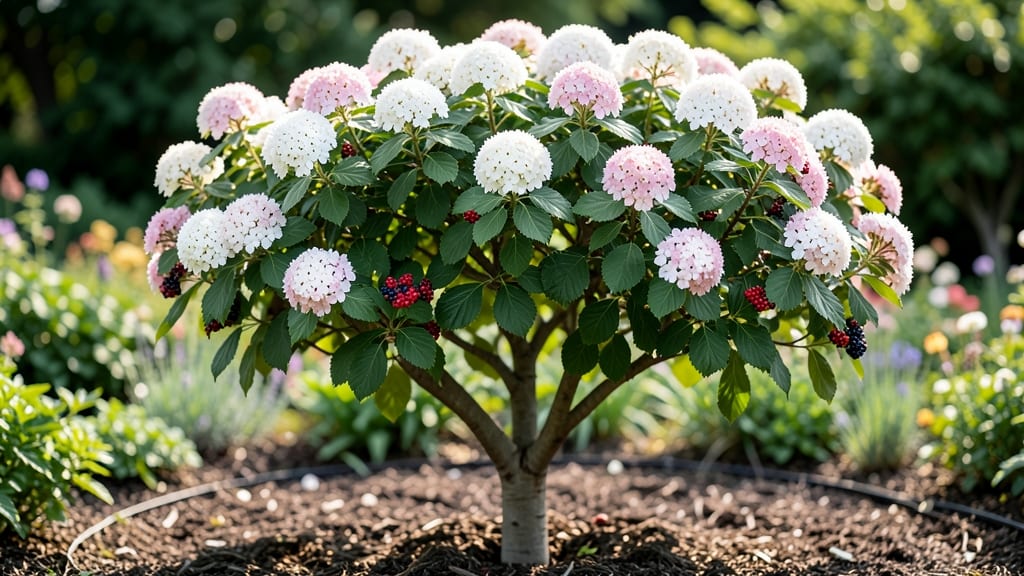
A viburnum tree’s height can range from a compact 3 feet to a towering 15 feet, depending on the variety you choose. Wondering if it’ll dwarf your patio or blend seamlessly into your landscape?
The answer depends on whether you pick a dwarf viburnum like Viburnum bodnantense or a bold statement-maker like Viburnum plicatum—and how much pruning you’re willing to do.
Some varieties grow fast, shooting up 12–24 inches per year, while others take their time, adding just 6–12 inches annually. That means a 3-foot viburnum could become a 10-foot shrub in a decade if left unchecked.
The good news? Pruning in late winter or early spring keeps even the fastest growers in check—without sacrificing those stunning spring blooms.
Below, I break down the height expectations for 12+ popular viburnum varieties, including growth rates, mature sizes, and pruning tips to keep them at your ideal height.
Whether you’re working with a cozy backyard or a sprawling garden, you’ll find the perfect fit—and the secrets to managing their size without stress.
Ready to pick the right viburnum for your space? Let’s dive into the details so you can enjoy its beauty without the surprises.
Viburnum Tree Height Range
3 ftto15 ft
0 ft
3 ft
6 ft
9 ft
12 ft
🌱
Medium Shrub/Tree
Viburnum tree height by variety: small vs. large growth habits
Choosing a viburnum tree often comes down to one key question: how tall will it grow? The answer depends entirely on the variety, with some staying as compact shrubs while others become small trees.
For example, Viburnum dentatum stays under 6 feet, while Viburnum plicatum can reach 12 feet or more. Understanding these differences helps you pick the perfect fit for your garden layout.
Viburnums are prized for their ornamental blooms, fragrant flowers, and low-maintenance nature. However, their mature height varies widely—some even qualify as dwarf varieties for small spaces. Below, we’ll categorize 12+ popular viburnums by their growth habits, so you can visualize their final size before planting.
| Variety |
Height Range |
Growth Rate |
Best For |
Notes |
| Viburnum bodnantense |
6–8 ft |
6–12 in/year |
Shrub borders, hedges |
Winter blooms, fragrant flowers |
| Viburnum plicatum |
8–12 ft |
12–18 in/year |
Specimen trees, privacy screens |
Layered branches, dramatic shape |
| Viburnum opulus |
6–10 ft |
8–12 in/year |
Wildlife gardens, cottage yards |
Berries attract birds, glossy leaves |
| Viburnum dentatum |
3–6 ft |
4–8 in/year |
Foundation plantings, small gardens |
Native to North America, drought-tolerant |
| Viburnum burkwoodii |
3–5 ft |
3–6 in/year |
Container gardens, urban spaces |
Slow-growing, long-lived, fragrant blooms |
| Viburnum trilobum |
10–15 ft |
12–24 in/year |
Woodland gardens, large yards |
Edible berries, fast growth |
| Viburnum lantana |
10–12 ft |
10–15 in/year |
Privacy hedges, rural landscapes |
Tough, adaptable, long-lived |
| Viburnum tinus |
8–10 ft |
6–10 in/year |
Evergreen hedges, coastal gardens |
Year-round interest, salt-tolerant |
How fast do viburnum trees grow? Annual height increases explained
If you're planning your landscape and wondering how quickly a viburnum tree will grow, the answer depends entirely on the variety. Some varieties creep along at just 6 inches per year, while others shoot up 2 feet annually.
Understanding these growth rates helps you choose the perfect viburnum for your space and timeline. Let’s explore the fastest growers and how to manage their height naturally.
Growth speed also varies by season. Most viburnums experience their biggest height jumps in spring, when new shoots emerge and expand rapidly.
Summer slows growth slightly, while fall and winter bring near-complete dormancy. Soil fertility plays a huge role too—rich, well-draining soil can double the growth rate of a hungry viburnum compared to poor or compacted soil.
For homeowners with limited space, pruning in late winter is your best tool to control height. A well-timed cut can redirect energy toward bushier growth instead of vertical expansion. However, avoid heavy pruning on flowering varieties like Viburnum bodnantense, as you risk reducing next year’s blooms.
3 Fastest-Growing Viburnums
- 🌱 Viburnum trilobum (American cranberrybush): 12–24 inches/year—ideal for quick privacy screens.
- 🌿 Viburnum dentatum (Arrowwood): 10–18 inches/year—fast but compact, perfect for small yards.
- 🌳 Viburnum opulus (Snowball bush): 10–20 inches/year—aggressive grower with stunning spring blooms.
Tip: Mulch heavily around these varieties to encourage faster vertical growth while protecting roots.
Slow growers like Viburnum burkwoodii (6–12 inches/year) are ideal for tight spaces or container gardening. These varieties take patience but reward you with long-lived, low-maintenance plants. If you’re growing them in containers, expect even slower growth—container roots restrict expansion—so plan for a smaller mature size.
To maximize growth, focus on early spring fertilization with a balanced 10-10-10 mix. Avoid heavy nitrogen in fall, as it encourages late-season growth that’s vulnerable to frost damage. And remember: water deeply but infrequently—viburnums hate soggy roots but thrive with occasional deep soakings that encourage strong root systems.
For the fastest results, pair your viburnum with well-draining, slightly acidic soil (pH 5.0–6.5) and morning sunlight. These conditions create the perfect storm for rapid, healthy growth.
Just be prepared to prune regularly if you’re growing a fast variety—height control is a year-round task for aggressive growers like Viburnum trilobum.
★★★★★4.7(2 reviews)