
Pests and Diseases
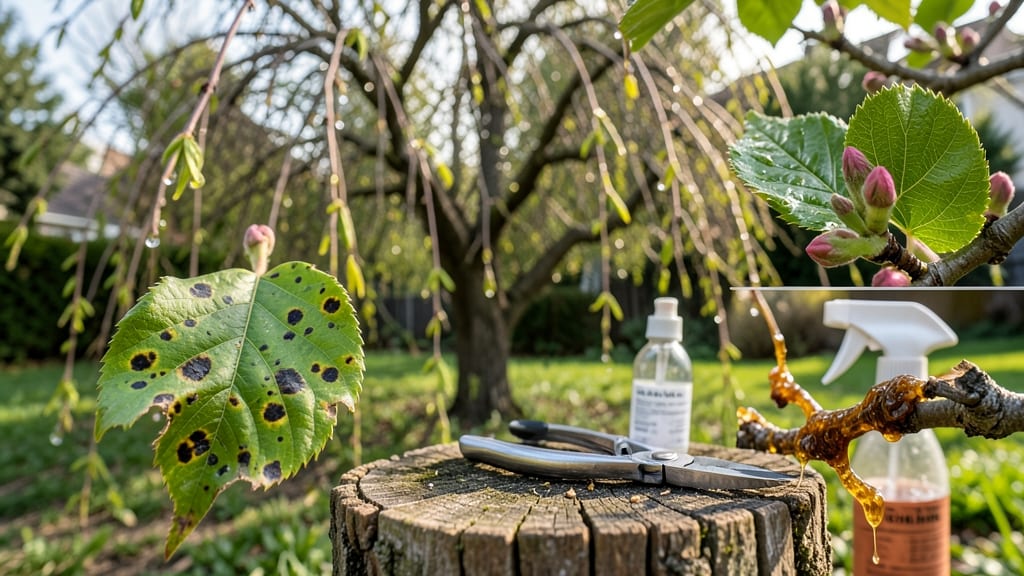
Weeping cherry tree disease turns your branches into twisted, blackened knots—spreading like wildfire if you wait. 🌿 I’ve seen entire branches die within months when this fungal infection takes hold, but the good news? You can stop it fast with the right approach.
This ugly disease thrives in wet springs, clinging to fresh cuts or weak bark. Those dark, swollen growths you’re seeing? They’re fungal mats choking your tree’s nutrients.
The key to saving it lies in pruning infected branches early and cleaning tools between cuts—something I learned the hard way after losing two cherries to neglect.
With a sharp pair of pruners and a 10% bleach solution, you can remove infected wood before it spreads further. Sterilize your tools after each cut, and seal pruning wounds with pruning paint to prevent reinfection. Most importantly, act now—before the fungus moves deeper into the tree’s structure.
For stubborn cases, a copper fungicide spray in early spring gives extra protection. But if your tree is already heavily infected, an arborist can assess whether it’s worth saving. Prevention is easier than cure—so keep your tree healthy with proper watering and airflow.
Why it happens
When your weeping cherry tree starts showing signs of distress—like dark, swollen knots on branches or sudden leaf drop—it’s often a cry for help from an unseen enemy. Understanding why these problems arise is the first step to restoring your tree’s health.
Below, we break down the key culprits behind weeping cherry tree decline, explained in clear, actionable terms.
🌱 Fungal Infections: The Silent Invaders
The most common and destructive cause of weeping cherry tree disease is black knot fungus (Apiosporina morbosa), a persistent pathogen that thrives in wet, humid conditions. Here’s how it works:
- Spores Spread Easily: Fungal spores hitch rides on wind, rain, or even garden tools, landing on young shoots where they germinate. Once established, they form dark, tar-like growths that strangle branches.
- Weakened Tree Defense: Trees under stress (from drought, poor soil, or injury) are far more susceptible. Fungi exploit these gaps, multiplying rapidly in the sap.
- Seasonal Flare-Ups: Peak infection occurs in spring (when new growth is tender) and fall (when leaves drop, leaving branches exposed).
💡 Pro Tip: Prune infected branches before spores mature (late winter/early spring) and sterilize tools with 70% rubbing alcohol to prevent cross-contamination.
🌧️ Environmental Stressors: The Perfect Storm
Fungal diseases like black knot don’t act alone—they’re often enabled by environmental factors that weaken your tree’s resilience. Key triggers include:
| Factor | How It Harms the Tree | Actionable Fix |
|---|---|---|
| Poor Drainage | Waterlogged soil suffocates roots, starving the tree of oxygen and nutrients. Fungi love damp wood. | Amend soil with compost or sand; install drainage tiles if needed. |
| Overhead Watering | Wet foliage for prolonged periods creates a fungal buffet. Splashes can even launch spores onto branches. | Water at the base early in the day; use drip irrigation to avoid foliage contact. |
| Extreme Heat/Drought | Stressed trees produce less resin (a natural antifungal barrier), making them prime targets. | Mulch with 2–3 inches of organic matter; deep-water weekly during dry spells. |
⚠️ Warning: Avoid pruning during rainy seasons—fresh cuts are high-risk infection sites.
🐛 Pest Damage: The Unseen Allies
Insects like borers or sap-sucking aphids don’t cause disease directly, but they open doors for fungi. Here’s the chain reaction:
- Borers: Wood-boring beetles create tunnels that disrupt sap flow, weakening branches. Fungi then colonize these wounds.
- Aphids: These tiny pests excrete honeydew, a sugary film that fosters sooty mold—a secondary fungus that clogs leaves and blocks sunlight.
- Spider Mites: Their feeding stress triggers abscission (premature leaf drop), leaving the tree vulnerable to fungal spores.
🔥 Quick Fix: Apply neem oil or insecticidal soap to control pests before fungal symptoms appear. Monitor for egg masses or frass (insect droppings) on branches.
🌿 Cultural Mistakes: Human Errors
Even well-meaning gardeners can inadvertently invite disease. Common oversights include:
- Over-Fertilizing: Excess nitrogen promotes soft, fast growth—a fungal magnet. It also burns roots, reducing disease resistance.
- Ignoring Pruning Hygiene: Using the same shears on infected and healthy trees spreads spores like wildfire.
- Planting Too Close: Poor airflow between trees traps moisture, creating the ideal fungal greenhouse.
🎯 Prevention Checklist:
- Prune in dry weather; remove all infected wood (burn or bag it).
- Space trees 10–15 feet apart for airflow.
- Test soil pH—cherry trees thrive at 6.0–7.0; adjust with lime or sulfur if needed.
How to Treat & Prevent Tree Ailments
Now that you’ve identified the issue—likely black knot fungus or another common weeping cherry tree disease—it’s time to act. Early intervention is key to saving your tree and preventing the problem from spreading.
Below are practical, step-by-step solutions tailored to the most common causes, along with prevention tips to keep your tree healthy long-term.
Black knot is the most notorious weeping cherry tree disease, but it’s also one of the most treatable if caught early.
🔪 Step 1: Prune Infected Branches (The Right Way)
- When to prune: Late winter or early spring (before buds swell) is ideal. Avoid pruning during wet weather, as spores spread easily.
- How to cut: Use sterilized pruners (wipe with rubbing alcohol or bleach solution between cuts).
Remove all infected branches, including 1–2 inches below the knot—fungus can linger in the wood. - Dispose of debris: Bag infected branches in plastic bags and throw them in the trash (not compost). Never leave them on the ground near your tree.
🧴 Step 2: Apply Fungicide (Preventative & Curative)
- Best fungicides for black knot:
- Copper fungicide (e.g., Bordeaux mixture) – Effective but must be applied before symptoms appear (early spring).
- Systemic fungicides (e.g., propiconazole or myclobutanil) – Work internally; apply every 2–4 weeks during wet seasons.
- How to apply: Spray thoroughly, covering all branches, buds, and trunk cracks.
Reapply after heavy rain.
🌧️ Step 3: Improve Airflow & Reduce Moisture
- Thin the canopy if branches are too dense—this helps dry leaves faster and limits fungal growth.
- Water at the base (not overhead) to keep foliage dry.
- Mulch properly: Use 2–4 inches of organic mulch (wood chips, straw) but keep it 6 inches away from the trunk to prevent rot.
If insects (like borers, aphids, or scale) are weakening your tree, they create entry points for disease.
🚫 Step 1: Eliminate Pests Immediately
- For soft-bodied pests (aphids, scale):
- Spray with neem oil or insecticidal soap (reapply every 5–7 days).
- Introduce ladybugs or lacewings (natural predators).
- For borers (tunnels in wood):
- Inject beneficial nematodes or systemic insecticides (e.g., imidacloprid) into the soil.
- Severe cases? Consult an arborist—sometimes drilling out larvae is necessary.
🌱 Step 2: Strengthen Tree Resilience
- Fertilize wisely: Use a balanced, slow-release fertilizer (10-10-10) in early spring to boost immunity.
- Avoid overwatering—cherry trees prefer well-draining soil; soggy roots invite pests and disease.
Poor soil, drought, or extreme heat can weaken trees, making them susceptible to disease.
💧 Step 1: Fix Soil & Watering Habits
- Test soil pH: Cherry trees thrive in slightly acidic soil (6.0–6.5). Amend with sulfur or lime if needed.
- Water deeply but infrequently: 1–2 inches per week (more in extreme heat). Use drip irrigation to avoid wetting leaves.
🌿 Step 2: Mulch & Protect Roots
- Avoid compacted soil—add compost or aerate if the ground feels hard.
- Shade young trees in scorching summers with light fabric row covers to reduce stress.
Once your tree is back on track, proactive care is your best defense:
- 🔍 Inspect monthly: Check for swellings, discoloration, or sticky residue (honeydew from pests).
- 🌳 Space trees properly: Plant weeping cherries at least 15–20 feet apart to improve airflow.
- 🍂 Clean up fallen leaves/debris in autumn—this removes overwintering fungus spores.
- 🛡️ Sterilize tools before and after pruning to prevent cross-contamination.
Pro Tip: 💡 If your tree is severely infected (large knots, widespread dieback), consult a certified arborist—sometimes removal and replacement is the safest option to prevent spread to other plants.
With consistent care, your weeping cherry tree can bounce back—and even thrive despite its past struggles! 🌸🌿
Frequently asked questions
What are the first signs of black knot fungus on my weeping cherry?
Look for small, olive-green swellings on branches that turn black and glossy as they mature. These knots often appear in clusters along twigs, and infected branches may wilt or die back. Early detection is key—catch it before the growths exceed 1 inch in diameter.
Can I save my tree if it already has large black knots?
It depends on the severity. Remove all infected branches 1–2 inches below the knot and sterilize your tools between cuts. For advanced cases, apply a copper fungicide in early spring, but if over 50% of the canopy is affected, consult an arborist—the tree may need removal to prevent spread.
How often should I prune to prevent fungal spread?
Prune once a year in late winter/early spring (before buds swell) to remove infected wood. Sterilize tools with 70% rubbing alcohol between cuts, and dispose of infected branches in sealed bags. Avoid pruning during wet weather when spores are airborne.
Will neem oil help with black knot fungus?
Neem oil is excellent for pests (like aphids) that weaken trees, but it’s not effective against black knot fungus. For fungal control, use copper fungicide or myclobutanil instead. Combine both for comprehensive protection—neem oil first to eliminate pests, then fungicide to stop the fungus.
Can I use homemade remedies like baking soda for black knot?
Baking soda sprays (1 tablespoon baking soda + 1 teaspoon dish soap per gallon of water) may help with powdery mildew, but they’re not reliable for black knot. For this stubborn fungus, stick to registered fungicides like copper or propiconazole. Homemade remedies can’t penetrate the thick fungal mats.