
Plants
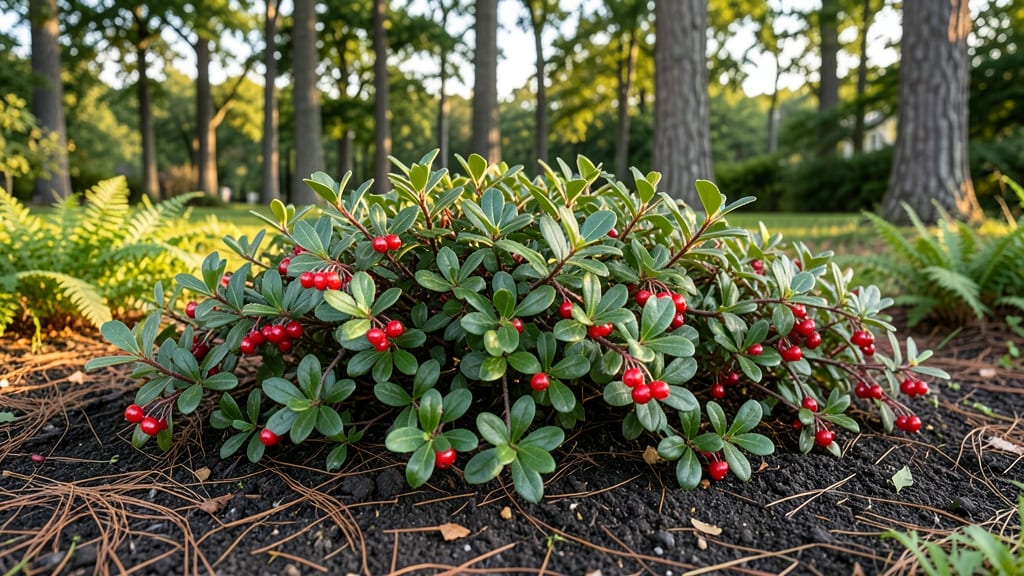
A cranberry tree looks like a small, deciduous shrub with glossy, dark green oval leaves, delicate white flowers in spring, and bright red berries in fall. Its bark is smooth and grayish-brown, while its branches spread low to the ground in a rounded shape.
A cranberry tree's most distinctive feature is its leathery, serrated-edged leaves that stay vibrant year-round, though they turn reddish in cold weather. 🍁 The bell-shaped flowers appear in late spring, blooming white with pinkish tints, while the bright red berries develop in fall—each about the size of a marble but packed with tart flavor.
Unlike cranberry vines (which grow horizontally in bogs), these trees grow upright, reaching 3-5 feet tall with a bushy, rounded canopy. The berries cling to the branches well into winter, making them easy to spot even when leafless.
What makes them stand out in gardens is their year-round interest: the glossy leaves catch sunlight, the flowers attract pollinators, and the berries provide winter color. If you're comparing to cranberry vines, remember these trees thrive in well-drained soil and full sun, while vines prefer wet, acidic conditions.
Many gardeners plant them as ornamental shrubs precisely for their four-season visual appeal.
💡 In This Article
- Identifying Cranberry Tree Leaves, Flowers, and Berries
- Cranberry Tree vs. Bog Plant: Key Differences
Identifying cranberry tree leaves, flowers, and berries
The cranberry tree's leaves are its first visual clue, with a leathery texture and serrated edges that give them a slightly jagged appearance when viewed closely.
These oval-shaped leaves measure about 1-2 inches long and ½-1 inch wide, with a deep green color that stays vibrant throughout most of the year. 🌿 What's fascinating is how they react to cold: in winter, they often turn a striking reddish-purple, creating a beautiful contrast against the snow.
The leaves grow in pairs along the stems, creating a layered effect that adds depth to the tree's appearance.
The flowers are another standout feature, appearing in late spring as delicate bell-shaped blooms that hang downward from the branches. These flowers start as a pale pinkish-white color and gradually open to reveal five petals with a subtle pinkish hue at their centers.
Each flower is about ¼ inch wide, and they grow in clusters of 3-5 along the stems. What makes them unique is their four-parted structure, which attracts pollinators like bees and butterflies.
The flowers are so delicate that a gentle breeze can make them sway, creating a soft, almost whisper-like movement.
The berries are what most people recognize about cranberry trees, and they develop in late summer through fall. These round, waxy berries are about the size of a marble (½ inch in diameter) and start as green before ripening to a deep, glossy red.
What's unusual is how they cling to the branches even after frost, often lasting until late winter. Each berry contains 20-30 tiny seeds embedded in a gelatinous pulp, which is what gives cranberry sauce its signature texture.
The berries grow in tight clusters along the branches, creating a striking visual effect that's hard to miss.
What's often overlooked is how the cranberry tree's growth pattern changes with the seasons. In spring, the tree bursts into life with new leaves and flowers, while in summer, the foliage becomes denser and more vibrant.
By fall, the berries begin to appear, and the leaves start to take on their reddish tint. In winter, the tree's bare branches and bright red berries create a stunning contrast against a snowy landscape.
This seasonal transformation is why many gardeners choose cranberry trees as both functional and ornamental plants.
If you're trying to identify a cranberry tree in your garden, look for these key features: the leathery, serrated leaves, the bell-shaped flowers in late spring, and the clusters of bright red berries in fall.
The tree's rounded shape and low-growing branches also help distinguish it from other shrubs. 🍂 The berries are particularly useful for identification, as they remain on the tree long after the leaves have fallen, making them easy to spot even in winter.
One interesting detail is how the cranberry tree's leaves and berries are adapted to their environment. The leathery leaves help conserve moisture, while the waxy coating on the berries protects them from drying out.
This adaptation is crucial for the tree's survival, especially in colder climates where moisture can be scarce. Understanding these botanical details not only helps with identification but also gives you a deeper appreciation for the cranberry tree's resilience and beauty.