
Watering
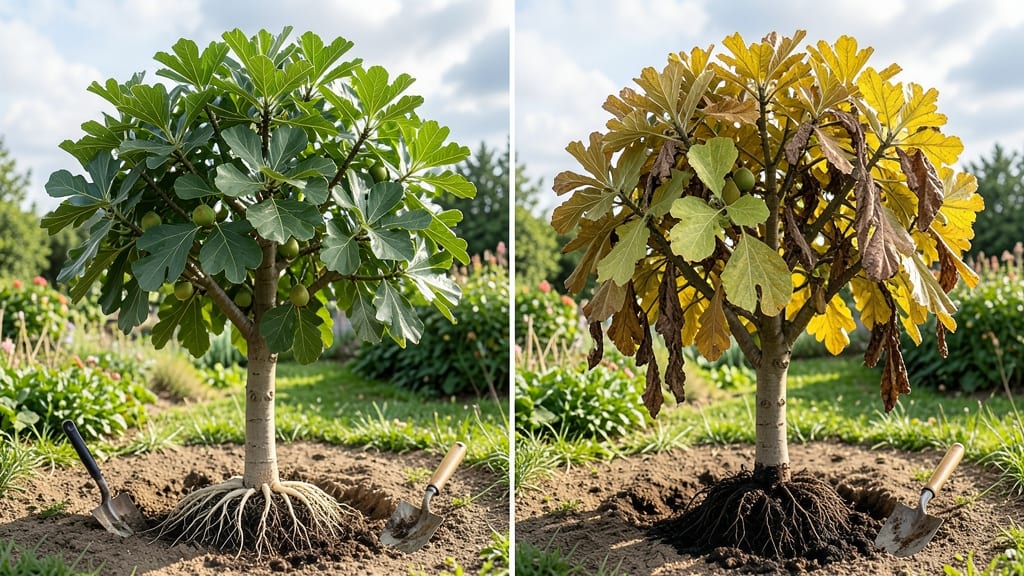
If you’ve ever wondered, what does an overwatered fig tree look like?, the answer is a sad droop and yellowing leaves—your tree’s way of begging for help. 🌿 Overwatering turns fig roots into soggy, oxygen-starved messes, and the plant screams for air through wilting branches and pale, mushy leaves.
I’ve seen this too many times, especially after heavy rains or well-meaning but overzealous watering schedules.
Here’s the giveaway: yellowing starts at the bottom leaves and spreads upward, while the soil stays clingy and smells sour. Roots turn black or brown when pulled, and fungal growth might appear as fuzzy white or gray patches.
It’s not the same as underwatering—those leaves turn crispy and brown at the edges, not mushy and limp.
Fix it fast by cutting back watering to 1-2 times per week (depending on heat) and improving drainage with sand or gravel. Snip off any blackened roots and repot if needed. Within 2-3 weeks, you’ll see new green growth as the roots recover.
Prevent future soggy soil by testing moisture with your finger—water only when the top 2 inches feel dry. Fig trees hate wet feet, so prioritize drainage over frequent watering. Your tree will thank you with glossy, happy leaves by summer.
Root Causes of Overwatering
Overwatering a fig tree might seem like a harmless mistake—after all, more water is always better, right? Wrong. Too much moisture can suffocate your tree’s roots, disrupt nutrient uptake, and even invite harmful pathogens. But why does this happen so often?
Let’s break down the key reasons your fig tree might be drowning in its own pot (or garden bed), and how to fix them before it’s too late.
Fig trees thrive in well-draining soil, but many gardeners unknowingly plant them in heavy clay, compacted soil, or containers without proper drainage holes. When water can’t escape, it pools around the roots, creating an oxygen-deprived environment. Without oxygen, roots can’t respire—meaning they suffocate and rot.
🔹 Science behind it: Roots need a balance of water and air in the soil pores. Clay soil holds water tightly, while containers without drainage force excess moisture to linger. Over time, this leads to anaerobic conditions, where harmful bacteria thrive and beneficial microbes die off.
💡 Fix it:
- Amend heavy soil with perlite, sand, or compost to improve aeration.
- Use pots with drainage holes and elevate them on saucers to prevent waterlogging.
- Test drainage by pouring water into the pot—if it doesn’t drain within 10–15 minutes, you’ve got a problem.
Fig trees are drought-tolerant once established, but many gardeners water on a schedule rather than checking soil moisture. Overwatering often happens when people:
- Water every day (even light sprinkles add up).
- Ignore seasonal changes (e.g., watering the same amount in winter as in summer).
- Use automatic irrigation without monitoring soil conditions.
🔹 Science behind it: Fig trees have deep taproots that seek moisture below the surface. Frequent shallow watering keeps the topsoil soggy but leaves deeper roots thirsty. Meanwhile, excess surface moisture encourages fungal growth (like Phytophthora) that attacks roots.
💡 Fix it:
- Water deeply but infrequently—aim for 1–2 inches per week (adjust for rain).
- Use the finger test: Stick your finger 2–3 inches into the soil. If it’s damp, wait.
- Switch to drip irrigation or soaker hoses for slow, targeted watering.
Potted fig trees are especially vulnerable because containers heat up faster and retain moisture longer than garden beds. Without the right setup, water evaporates slowly, leaving roots in a permanent swamp. Common mistakes include:
- Using glazed pots without drainage (like decorative ceramic planters).
- Placing pots in shady, humid spots where evaporation is minimal.
- Not repotting when roots outgrow the container, leading to root-bound stress.
🔹 Science behind it: In small pots, roots fill the space quickly, creating a closed-loop water system. When you water, there’s nowhere for excess water to go, and the soil stays saturated. Over time, this causes root rot (Pythium or Fusarium fungi) and nutrient deficiencies.
💡 Fix it:
- Upgrade to a larger pot (1–2 sizes bigger) every 2–3 years.
- Use a fast-draining mix (e.g., 60% potting soil, 30% perlite, 10% coarse sand).
- Move pots to bright, indirect light to speed evaporation.
- Add a layer of gravel at the bottom of the pot to improve drainage.
Sometimes, overwatering isn’t your fault—it’s the weather. Heavy rain, high humidity, or poor airflow can turn your careful watering routine into a disaster. For example:
- Frequent rain keeps soil soggy longer than usual.
- Low sunlight slows evaporation, so water lingers.
- High humidity (like in greenhouses or tropical climates) reduces transpiration, making roots work harder to dry out.
🔹 Science behind it: Fig trees rely on transpiration (water loss through leaves) to regulate moisture. In humid or shady conditions, this process slows down, and excess water stays in the soil.
Meanwhile, poor airflow traps moisture near the plant, creating the perfect conditions for root rot and powdery mildew.
💡 Fix it:
- Move potted figs to a sheltered spot during heavy rain.
- Use a fan in greenhouses or indoor setups to improve airflow.
- Adjust watering based on weather forecasts—skip watering if rain is expected.
- Mulch with gravel or straw to help soil dry faster.
Revive Your Fig Tree Naturally
Overwatering can stress your fig tree, but with the right steps, you can nurse it back to health—and even prevent future issues. Below are targeted solutions based on the symptoms you’ve noticed, from yellowing leaves to soggy soil. Let’s get your tree thriving again!
Yellow leaves are the first sign your fig tree is drowning in moisture. Here’s how to correct it:
1️⃣ Adjust Your Watering Schedule
🔥 Stop watering immediately—let the top 2–3 inches of soil dry out completely before watering again. 🍳 Water deeply but less often—fig trees prefer drought-like conditions.
Aim for 1–2 times per week (adjust based on climate and soil type). 👨🍳 Use the finger test: Stick your finger 2 inches into the soil. If it’s damp, wait. If it’s dry, it’s time to water.
2️⃣ Improve Soil Drainage
✨ Amend heavy or compacted soil with:
- Perlite or coarse sand (20–30% of potting mix)
- Compost (for nutrients without retaining moisture)
- Orchid bark (helps with aeration)
💡 Pro Tip: If your tree is in a pot, repot into a container with drainage holes—this is non-negotiable for fig trees!
3️⃣ Prune Damaged Foliage
🔪 Trim yellow or mushy leaves with clean, sharp pruners to redirect energy to healthy growth. ⏰ Best time to prune: Early morning when the tree is hydrated (avoid pruning wet leaves).
Drooping isn’t just sad—it’s a cry for help. Here’s how to firm up those floppy limbs:
1️⃣ Let the Soil Dry Out Completely
🌡️ Wait until the soil is bone-dry before watering again. This prevents root rot from spreading. 🎯 Prevention Tip: Group potted fig trees together to create a microclimate—they thrive in slightly drier air.
2️⃣ Check for Root Rot (The Silent Killer)
📊 Inspect the roots: Gently remove the tree from its pot (if possible) and look for:
- Black, mushy roots (rot) → Trim these with sterilized shears.
- Healthy roots (white or light tan) → Keep them!
💪 Repot in fresh, well-draining soil after trimming rotten roots.
3️⃣ Support Weak Branches
🌿 Stake tall or droopy branches temporarily to prevent breakage while the tree recovers. 🔥 Boost humidity (if indoors) with a pebble tray or humidifier—fig trees love 40–60% humidity.
Once your tree is back on track, keep it that way with these long-term strategies:
- 💡 Water in the morning—this gives leaves time to dry, reducing fungal risks. - 🌡️ Mulch lightly (1–2 inches) with straw or wood chips to retain just enough moisture. - 🌿 Avoid soggy spots—never let water pool around the base of the tree. - 🍃 Monitor leaf color—consistent yellowing?
Time to adjust watering again!
Remember: Fig trees are tough! With the right care, they’ll bounce back stronger than ever. 🌳💚 Now go give that tree the dry-but-loving treatment it needs!
Frequently asked questions
How can I tell if my fig tree's yellow leaves are from overwatering vs. underwatering?
Overwatered fig trees show yellow leaves starting at the bottom that feel mushy or soft to the touch, while underwatered trees have crispy, brown edges and dry, brittle leaves. Check the soil too—overwatered soil stays clingy and smells sour, while underwatered soil feels dry 2+ inches deep.
Will my fig tree recover from root rot caused by overwatering?
Yes, but you must act fast! Trim away all black, mushy roots with sterilized shears, repot in fresh, well-draining soil, and stop watering for 1-2 weeks to let roots dry. Keep the tree in bright, indirect light and monitor for new growth—healthy roots should be white or light tan.
Can I save a fig tree that's completely drooping and wilting?
Drooping often means roots are suffocating—remove the tree from its pot and check for blackened roots. If roots are mostly healthy, let the soil dry completely, then repot with perlite or sand added to improve drainage. Water lightly only when the top 2 inches of soil are bone-dry. Most trees recover within 2-3 weeks if root rot hasn't set in.
How often should I water my fig tree after fixing overwatering issues?
Once recovered, water your fig tree deeply but infrequently—aim for 1-2 times per week in summer, reducing to every 2-3 weeks in winter. Always check soil moisture first: stick your finger 2 inches deep. If dry, water thoroughly; if damp, wait. Fig trees hate soggy feet!
What's the best soil mix to prevent overwatering in potted fig trees?
Use a fast-draining mix like 60% potting soil, 30% perlite, and 10% coarse sand. Add a 1-inch gravel layer at the pot's bottom for extra drainage. Avoid garden soil—it compacts and holds too much moisture. For containers, choose terra cotta pots (they wick away moisture) with drainage holes.