
Companion Plants
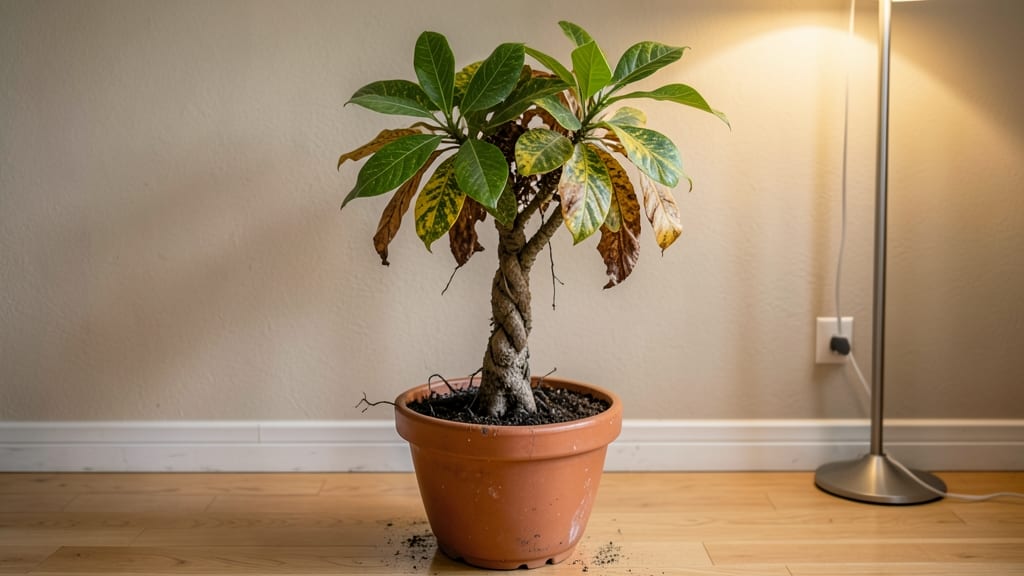
What does an overwatered money tree look like? The drooping leaves and yellowing stems are a dead giveaway. 🌱 I’ve nursed back more soggy money trees than I’d like to admit, and the signs are always the same—mushy roots, wilting fronds, and soil that smells like a swamp.
The good news? You can usually revive it with just a few adjustments.
Start by sticking your finger 1-2 inches into the soil—if it’s damp, hold off on watering. Overwatered money trees often have yellow or brown leaves that feel soft to the touch, and the stems may ooze when squeezed.
Root rot is the real villain here, turning healthy roots black and mushy instead of firm and white.
To fix it, let the soil dry out completely between waterings and repot in well-draining mix if the roots are rotting. Within 2-4 weeks, you’ll see new growth pushing through as the plant recovers. The key is patience—money trees bounce back better than most people think.
Pro tip: Use a pot with drainage holes and only water when the top 1-2 inches of soil are bone dry. A healthy money tree should have dark green, glossy leaves and a sturdy trunk—no more guesswork after this.
Common Causes of Overwatering
Overwatering your money tree (Pachira aquatica) might seem like a harmless mistake, but it can quickly turn into a silent killer for your plant.
Understanding the root causes—literally and figuratively—will help you avoid soggy soil and sad leaves. Let’s break down why this happens and how to prevent it.
---
The most obvious culprit is giving your money tree too much water too often. Money trees thrive in well-draining soil and prefer their roots to dry out slightly between waterings.
When you water on a strict schedule without checking soil moisture, you risk: - Saturated soil: Oxygen can’t reach the roots, leading to anaerobic conditions (a fancy term for "no air"). - Root suffocation: Roots deprived of oxygen weaken, turn brown, and eventually rot. - Fungal growth: Excess moisture creates the perfect breeding ground for pathogens like Phytophthora or Pythium, which attack roots and stems.
Pro Tip: 🌡️ Stick your finger 1-2 inches deep into the soil—if it’s damp, wait. If it’s bone-dry, water thoroughly but only until excess drains from the bottom.
---
Not all potting mixes or containers are created equal. If your money tree’s pot lacks drainage holes or you’re using heavy, compacted soil, water pools at the bottom instead of draining away.
Signs of poor drainage include: - Waterlogging: Soil stays soggy for days after watering. - Salinity buildup: Minerals from tap water accumulate, creating a toxic sludge around roots. - Root-bound stress: Roots grow in circles, trapping moisture and blocking airflow.
Fix It: 🔧 Use a well-draining mix (60% potting soil, 30% perlite/pumice, 10% sand or orchid bark) and repot if the current soil feels like wet cement.
---
Your money tree isn’t just affected by how much you water—its environment plays a huge role too.
Humidity, temperature swings, and even where you place it can trap moisture: - High humidity: While money trees love humidity (40-60%), excessive moisture in the air (like in bathrooms or kitchens) + overwatering = a recipe for fungal infections. - Cold drafts or heat: Roots struggle in below 60°F (15°C) or above 85°F (29°C), slowing evaporation and keeping soil damp longer. - Tight or non-breathable pots: Plastic pots retain moisture longer than terracotta or fabric pots, which allow evaporation.
Adjustments: 🌿 Move your plant to a bright, indirect spot (like an east-facing window) and avoid placing it near AC vents or heaters.
--- Big pots = more soil = more water retention. If you repotted your money tree into a container that’s too large, the excess soil stays wet for weeks, even if you’re not watering as frequently.
Roots in oversized pots can’t absorb moisture quickly, leading to: - Stagnant water: Creates anaerobic pockets where roots drown. - Weak root growth: Energy goes into surviving soggy conditions instead of growing.
Solution: 📏 Choose a pot only 1-2 inches larger in diameter than the root ball. If you love big pots, top-dress with dry mulch (like coconut coir) to absorb excess moisture.
--- Money trees are tropical but slow down in winter.
During cooler months (below 70°F/21°C), they need less water because: - Evaporation slows: Soil stays damp longer. - Root activity drops: Metabolism slows, so they don’t drink as much. - Light levels decrease: Less photosynthesis means less water is used.
Winter Care: ❄️ Reduce watering to every 2-3 weeks and monitor soil closely—it’s easy to overdo it when your plant isn’t growing fast.
--- Not all water is equal!
Hard water (high in minerals like calcium and magnesium) or chlorinated tap water can worsen overwatering issues: - Mineral buildup: Leaves yellow or brown as salts accumulate in the soil. - Root burn: Chlorine and fluoride can damage delicate root hairs. - pH imbalance: Alkaline water (pH >7) locks out nutrients, stressing the plant.
Fix: 💦 Use filtered, distilled, or rainwater at room temperature. If you must use tap water, let it sit out for 24 hours to dissipate chlorine.
How to Revive Your Money Tree
Overwatering might have left your money tree (Pachira aquatica) looking sad, but don’t toss it just yet! With the right steps, you can nurse it back to health and help it thrive again.
Below are practical fixes tailored to the most common signs of overwatering—plus prevention tips to keep your plant happy long-term.
---
Cause: Overwatering causes nutrient deficiencies and root rot, leading to yellowing leaves (often starting at the bottom).
Fix: 1. Stop Watering Immediately 🚰 - Let the top 1–2 inches of soil dry out completely before watering again. Stick your finger in the soil—if it’s damp, wait!
2. Repot in Fresh, Well-Draining Soil 🏺 - Remove the plant from its pot and gently inspect the roots. Trim any black, mushy, or smelly roots with sterilized scissors. - Repot in a clean container with cactus or succulent mix (or regular potting soil amended with perlite/pumice for drainage).
3. Adjust Your Watering Routine 💧 - Water only when the top 2–3 inches of soil are bone-dry (usually every 10–14 days in warm weather, less in winter). - Pro Tip: Use a moisture meter or the "finger test" to avoid guesswork.
---
Cause: Soggy roots from overwatering can rot, cutting off oxygen and nutrients.
Fix: 1. Trim the Damage ⚔️ - Rinse the roots under lukewarm water to remove excess soil. - Cut away all black, slimy, or foul-smelling roots with clean pruners. Healthy roots are firm and white/tan.
2. Disinfect the Pot 🧼 - Wash the old pot with soapy water and bleach solution (1 part bleach to 9 parts water) to kill fungus/bacteria. - Let it dry completely in the sun before repotting.
3. Give It a Dry Recovery Period ⏳ - After repotting, hold off on watering for 5–7 days to let roots heal. - Place the plant in bright, indirect light (no direct sun yet) to reduce stress.
---
Cause: Overwatered plants often droop due to root stress or fungal infections.
Fix: 1. Prune Damaged Foliage ✂️ - Snip off yellow, brown, or crispy leaves to redirect energy to healthy growth.
2. Improve Airflow 🌬️ - Move your money tree to a well-ventilated spot (avoid humid bathrooms or closed rooms). - Use a small fan on low setting for 10 mins/day to prevent fungal growth.
3. Fertilize Lightly (If Needed) 🌱 - Wait 4–6 weeks after repotting before fertilizing. - Use a balanced, diluted liquid fertilizer (half-strength) once a month in spring/summer.
---
Once your plant recovers, keep these habits to avoid future overwatering:
- ✅ Use the Right Pot: Choose a terracotta or pot with drainage holes—plastic traps moisture. - ✅ Check Soil Type: Mix regular potting soil with perlite, sand, or orchid bark (30% amendment) for better drainage. - ✅ Adjust for Seasons: Water less in winter (growth slows) and more in summer (but still let soil dry). - ✅ Mistakes Happen! If you’re unsure, underwater slightly—money trees are drought-tolerant but not flood-tolerant. - 💡 Pro Tip: Group your money tree with succulents or snake plants—they share similar care needs and remind you of its low-water tolerance!
--- Remember: Patience is key! A reviving money tree may take 4–8 weeks to bounce back, but with these steps, it’ll be stronger than ever—and those lucky coins (or braided stems) will keep bringing good vibes! 🍀
Frequently asked questions
How can I tell if my money tree’s roots are rotting?
Healthy roots should be firm, white or light tan, and smell earthy. If your money tree’s roots are black, mushy, and give off a foul odor (like rotten eggs), that’s a clear sign of root rot from overwatering. Gently squeeze a root—if it feels squishy or crumbles easily, it’s rotted.
Why are my money tree’s leaves turning yellow but staying attached?
Yellow leaves that stay on the plant typically signal overwatering or nutrient deficiencies. Check the soil: if it’s damp or smells sour, you’re overwatering. Yellowing often starts at the bottom leaves first. Trim the yellowed leaves to help the plant redirect energy to healthier growth.
Can I save a money tree with completely black stems?
Blackened stems are a severe sign of advanced root rot, but you might still save it with quick action. Cut back any blackened stems to healthy green tissue, repot in fresh, well-draining soil, and hold off on watering for 5-7 days. Place it in bright, indirect light and monitor closely—new growth may take 4-6 weeks.
How often should I water my money tree in winter?
In winter, reduce watering to every 3-4 weeks since growth slows dramatically. Stick your finger 1-2 inches deep—if the soil feels dry, water thoroughly but only until excess drains. Avoid watering on a schedule; always check moisture first.
Is it better to underwater or overwater a money tree?
Money trees are far more forgiving of underwatering than overwatering. They’re drought-tolerant and can bounce back from dry conditions, but soggy soil leads to irreversible root rot. When in doubt, let the soil dry completely between waterings—your money tree will thank you with lush, green growth!