
Size
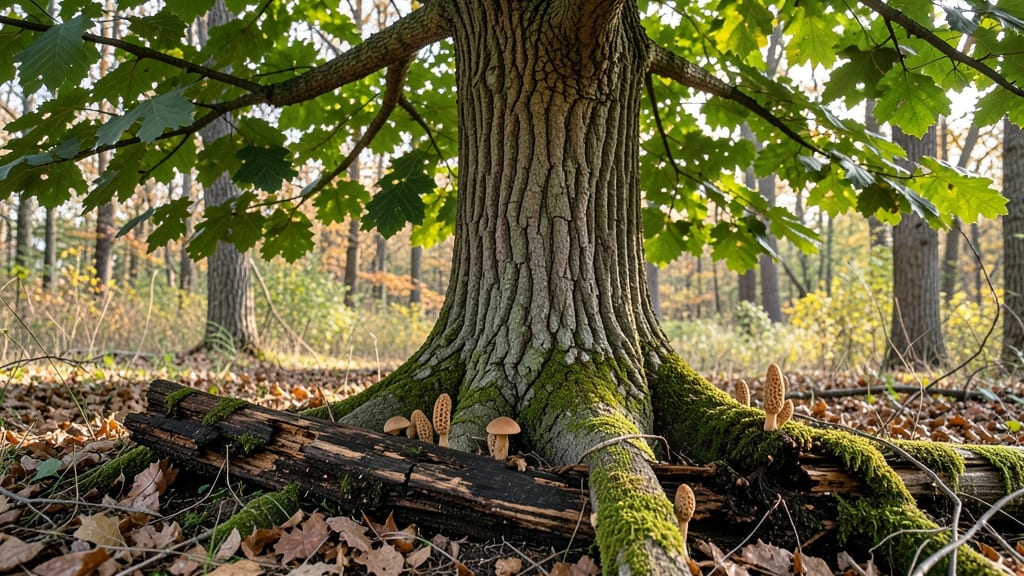
Morel mushrooms grow by ash, elm, apple, and other hardwood trees like oak, cottonwood, and sycamore, often appearing near decaying roots or stumps in spring after rain. Avoid pine or coniferous trees, as morels rarely thrive there.
Morels thrive near hardwoods because their mycelium networks connect with decaying roots, creating ideal conditions. 🌱 The key is finding ash, elm, or apple trees—especially those with damaged or rotting wood—where moisture levels rise after spring rains.
These trees support the fungal growth morels need, while pine forests lack the organic matter morels require. Foragers often spot them along creek banks or near old orchards, where hardwoods dominate.
Seasonal timing matters too: morels emerge when soil temperatures hit 50-60°F after a warm spell, often following heavy rainfall. This explains why they're seasonal treasures—patience and tree knowledge are your best tools for successful foraging.
💡 In This Article
- Morel Mushroom Tree Hosts: Why Ash and Elm Are Key
- Best Foraging Spots for Morels Near Common Trees
Morel mushroom tree hosts: why ash and elm are key
Morels form a specialized relationship with hardwood trees through their mycelium, which thrives in decaying organic matter. Ash and elm trees are prime hosts because their root systems create ideal microclimates—moist, nutrient-rich, and shaded—where morels can establish their fruiting bodies.
The decaying wood releases sugars and nutrients that feed the fungal networks, while the tree's root exudates provide essential minerals. This symbiotic dance explains why you'll rarely find morels near coniferous trees like pine, which produce acidic soil and lack the organic matter morels crave.
The magic happens when tree roots decay or get damaged, creating pockets of high moisture and microbial activity. Morels detect these conditions through chemical signals released by decomposing wood, particularly cellulose and lignin breakdown products.
Elm trees, for example, often develop weak spots in their roots, while ash trees frequently suffer from disease or storm damage—both scenarios trigger morel growth.
The fungal mycelium spreads through the soil, waiting for the right temperature and moisture cues to fruit. 🌿 When soil temperatures hit 50-60°F after spring rains, these networks burst into visible mushrooms within days.
Seasonal triggers are equally critical. Morels need a "warm-up" period after winter dormancy—typically when daytime temperatures exceed 55°F for several days followed by overnight chills. This temperature shift signals the fungi to fruit. The moisture component can't be overstated: morels require 1-2 inches of rainfall within a week before emergence.
This explains why they appear suddenly after spring storms, often within 24-48 hours of heavy rain. The combination of warm soil, high humidity, and decaying hardwood creates the perfect storm for morel production.
What sets ash and elm apart is their bark composition. These trees have thinner bark that retains moisture longer than oaks or maples, creating ideal conditions near the base where morels emerge. The bark also provides physical protection for developing mushrooms, shielding them from desiccation.
Foragers often find morels growing in clusters near these trees because the mycelial networks can be extensive—sometimes spanning several feet underground. This interconnected system means one productive tree can lead to others nearby.
Chemical analysis reveals another fascinating detail: morels produce enzymes that break down complex organic compounds in decaying wood, creating their own food source. This metabolic process releases volatile compounds that attract insects, which then help disperse spores.
The result is a self-sustaining cycle where morels thrive near their host trees while contributing to the forest's nutrient recycling. This ecological relationship explains why you'll find morels in the same locations year after year, provided the host trees remain healthy.
One common misconception is that morels only grow near dying trees. In reality, they can appear near healthy hardwoods too, especially if the soil has been disturbed. Old orchards with apple or pear trees often produce morels because the pruned wood creates new decay points.
The key is looking for any sign of organic matter breakdown—whether from fallen branches, stumps, or even buried roots. This understanding transforms foraging from luck to science, where tree health and decay become your primary indicators. 🌳