
Pruning
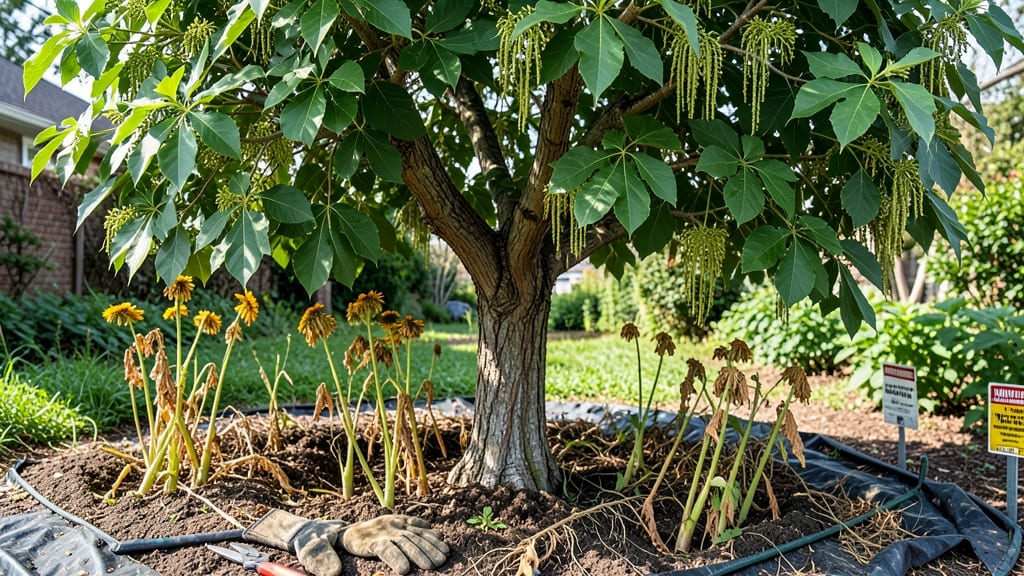
Why the tree of heaven is bad is because its rapid growth, aggressive root system, and toxic compounds crowd out native plants, disrupt soil health, and harm ecosystems by outcompeting local species for sunlight and nutrients.
The tree of heaven earns its reputation as an ecological menace thanks to its relentless competitive edge. 🌱 Its roots release chemicals called allelochemicals that poison surrounding plants, while its ability to grow 3-4 feet per year leaves native species struggling to keep up.
Even worse, its seeds spread easily through birds and wind, making eradication nearly impossible once established. I've seen entire forests choked by this invader, where nothing else can grow beneath its dense canopy.
What makes this problem worse is how it thrives in disturbed soils—perfect for construction sites or abandoned lots. 🌳 Once it takes hold, removing it requires persistent effort, often combining manual cutting with specialized herbicides.
Many homeowners don't realize they're planting an ecological time bomb when they choose this tree for their yards.
💡 In This Article
- How Tree of Heaven Spreads and Dominates Landscapes
- Identifying and Controlling Tree of Heaven Infestations
How tree of heaven spreads and dominates landscapes
The tree of heaven (Ailanthus altissima) dominates ecosystems through a combination of explosive growth and chemical warfare. Its roots release allelopathic compounds like ailanthone, which disrupt the growth of neighboring plants by interfering with their cellular processes.
These chemicals can inhibit seed germination and stunt root development in competing species, creating a toxic zone that only the tree of heaven can tolerate. 🌱 In controlled studies, soil samples from beneath mature trees showed up to 70% reduction in native plant growth compared to uncontaminated soil.
This invasive species grows with astonishing speed—sprouts can reach 3-4 feet per year, while mature trees can add 12+ feet annually under ideal conditions. The dense canopy it forms blocks 90% of sunlight from reaching the forest floor, effectively starving native understory plants.
What's more alarming is its seed production: a single tree can release 300,000 seeds per year, which spread via wind, water, and wildlife, ensuring rapid colonization of new areas.
The tree's adaptability makes it particularly dangerous in disturbed environments.
It thrives in urban areas, construction sites, and abandoned lots where soil has been disrupted, outcompeting native species that require stable, undisturbed conditions. 🌳 Unlike many invasive plants, it doesn't rely on specialized pollinators—its flowers produce copious amounts of pollen that fertilize its own seeds, eliminating one potential bottleneck in its spread.
This self-sufficiency allows it to dominate landscapes with minimal ecological resistance.
What most people don't realize is how its root system contributes to its dominance. The tree of heaven develops extensive lateral roots that spread aggressively, forming dense networks that monopolize water and nutrients.
These roots can grow up to 50 feet long and penetrate deep into the soil, making removal difficult even when the tree is cut down.
The stumps often regenerate, and any remaining root fragments can sprout new trees, creating a cycle of reinvasion that's nearly impossible to break without specialized treatment.
Another critical factor is its ability to thrive in poor soil conditions. While many native trees require nutrient-rich environments, the tree of heaven flourishes in contaminated or depleted soils, often outcompeting species that are better adapted to healthy ecosystems.
This resilience allows it to invade areas where other plants would struggle, further reducing biodiversity in the regions it colonizes.
Consider this real-world example: In urban parks along the East Coast, tree of heaven has been found to reduce native plant diversity by 60% within a decade of establishment.
The combination of its chemical defenses, rapid growth, and prolific seeding makes it one of the most challenging invasive species to manage once it takes hold in an ecosystem. 💥