
Pruning
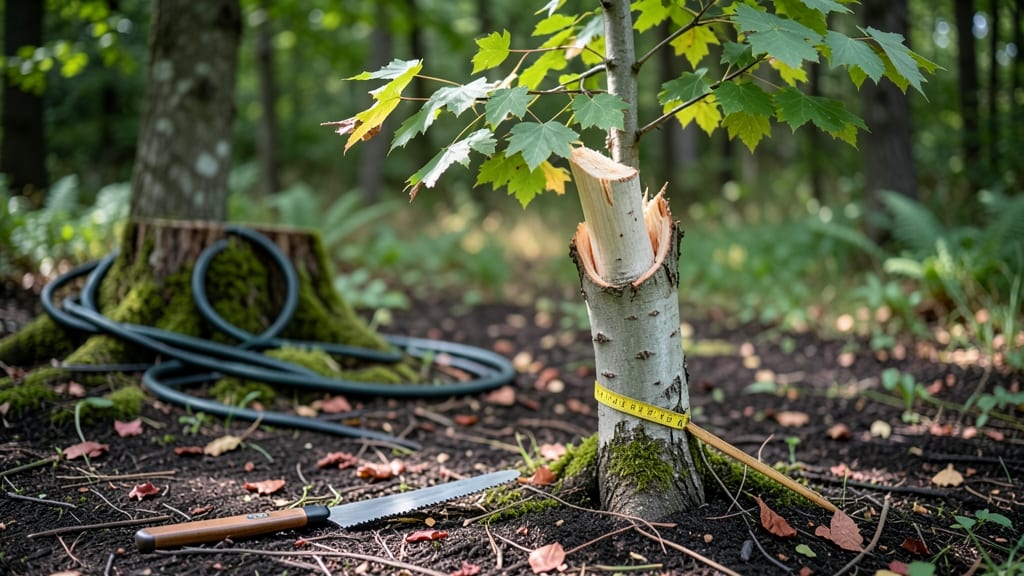
A young tree snapped in half isn’t a death sentence—it’s a call to action. 🌳 I’ve nursed back broken trees by acting fast, and with the right tools and technique, you can too.
The key is stabilizing the trunk immediately to prevent further damage while assessing whether the tree can be saved or needs replanting.
First, assess the damage: if the break is clean and the tree is still attached at the base, you may be able to repair it. Gather 3/4-inch wood screws, a saw, and sturdy metal straps—these will become your lifeline.
Cut away any jagged edges to prevent tearing, then align the broken pieces and secure them with screws and straps before wrapping the entire trunk with tree repair tape for extra support.
Once stabilized, monitor the tree closely for signs of stress—wilting leaves or oozing sap means it’s fighting to recover. Prune any dead branches and water deeply to help it heal.
With proper care, many trees bounce back stronger, but if the trunk is severely damaged, replanting a cutting from the healthy side might be your best option.
This isn’t just about saving the tree—it’s about learning why it happened. Was it weak from poor planting, or did a storm catch it off guard? Adjusting soil, staking new trees properly, and choosing resilient varieties can prevent future heartbreak. Let’s get that tree back on its feet.
Root Causes Behind Tree Failure
When a young tree snaps in half, it’s rarely just bad luck—it’s usually a sign of underlying stress or structural weakness. Understanding these causes can help you prevent future damage and save your tree’s life.
Let’s break down the key reasons why this happens, so you can address them before it’s too late.
Wind, storms, and heavy snow are the most common culprits behind sudden tree failure. Young trees have shallow root systems, making them unstable in high winds. Here’s how it happens:
- Wind Stress: Strong gusts create torque (twisting force) at the base, especially if the tree is leaning. Over time, this weakens the trunk’s vascular cambium (the growth layer), reducing its ability to transport water and nutrients.
- Ice & Snow Load: Accumulated ice or wet snow adds 10–20 lbs per square foot to branches, snapping weak limbs or even the main trunk. Evergreens are particularly vulnerable due to their dense foliage.
- Lightning Strikes: A direct hit can split the trunk instantly by superheating moisture inside the wood, causing explosive fractures.
Actionable Fix: If your tree is in a windy or storm-prone area, consider staking young trees temporarily (1–2 years) and pruning to reduce wind resistance by thinning the canopy by 25–30%.
A young tree’s roots are its foundation—if they’re weak, the trunk can’t support its own weight. Common root-related causes include:
| Issue | Why It Happens | Signs to Watch For |
|---|---|---|
| Girdling Roots | Roots grow in circles around the trunk, strangling the tree by cutting off nutrient flow. | Visible root loops at the base, stunted growth, or a cracked trunk. |
| Compacted Soil | Heavy foot traffic or machinery crushes roots, reducing oxygen and water uptake. | Yellowing leaves, slow growth, or roots poking above ground. |
| Shallow Planting | The root flare (where roots meet the trunk) is buried too deep, suffocating roots. | Trunk appears swollen at the base or roots grow horizontally instead of downward. |
Actionable Fix: When planting, ensure the root flare is exposed (above soil level) and roots spread at least 12–18 inches wide. For compacted soil, amend with compost or use a soil aerator.
Not all trees are built to handle their own weight. Some species and growth patterns make young trees prone to splitting:
- Co-Dominant Stems: When two (or more) equally sized trunks grow upward, they compete for dominance, creating a weak V-shaped crotch that splits under stress.
- Fast Growth = Weak Wood: Trees that grow too quickly (often due to over-fertilization) develop large, weak cells in their wood, making them prone to splintering.
- Included Bark: When branches grow inside the trunk instead of outward, they create pressure points that split the wood over time.
Actionable Fix: During pruning, remove competing leaders (leave one dominant trunk) and thin out crowded branches to reduce weight. For included bark, make careful cuts to relieve pressure.
Drought, disease, and pests can weaken a tree’s structural integrity over time, making it more likely to snap:
- Drought Stress: Prolonged dry spells reduce moisture in the wood, making it brittle. Trees like oaks and maples are especially vulnerable.
- Fungal Infections (e.g., Heart Rot): Fungi like Armillaria or Fomes fomentarius decay the inner wood, hollowing out the trunk until it can’t support its own weight.
- Insect Infestations (e.g., Bark Beetles): These pests tunnel through the phloem, disrupting nutrient flow and causing wood weakness.
Actionable Fix: Water deeply during droughts (1–1.5 inches per week) and inspect for signs of decay (mushrooms at the base, oozing sap, or hollow sounds when tapped). Treat infections early with approved fungicides or call an arborist.
💡 Pro Tip: If your tree has already snapped, don’t remove it immediately—some species (like willows or dogwoods) can regenerate from the stump if the root system is intact. Assess the damage before deciding on removal or repair.
How to Fix a Severed Tree
When a young tree snaps in half, panic might set in—but don’t give up hope! With the right steps, you can often nurse it back to health or even salvage the remaining structure.
Below, we’ll break down practical fixes based on the root cause, plus prevention tips to keep your tree strong for years to come.
(The trunk or main branch is split but still attached at one end.)
🔧 Step 1: Assess the Damage
- Check the split: If the break is jagged or uneven, the tree may struggle to heal.
Smooth, clean breaks have a better chance of recovery. - Look for green tissue: If the inner bark (cambium layer) is still intact and green, the tree can regenerate. If it’s dry or brown, healing will be harder.
🪴 Step 2: Stabilize the Tree
- Splint the break: Use tree repair clips, metal straps, or sturdy wooden splints to hold the two halves together.
Avoid wire—it can cut into the bark over time. - Secure with rope or bungee cords: Wrap gently to prevent further movement, but don’t overtighten (this can girdle the tree).
💧 Step 3: Prune Damaged Areas
- Remove dead or hanging branches: Use clean, sharp pruners to trim any broken limbs that are no longer viable. This reduces stress on the tree.
- Avoid heavy pruning: Only remove what’s necessary—over-pruning weakens the tree further.
🌿 Step 4: Promote Healing
- Apply tree wound sealant (optional): While controversial, some arborists recommend pruning sealant to protect the wound from pests and disease.
Skip this if the break is small. - Water deeply but less frequently: A snapped tree is already stressed—overwatering can cause rot. Give it 1–2 deep waterings per week (unless your area is in drought).
⏳ Step 5: Monitor and Wait
- Healing takes time: It may take 1–3 years for callus tissue to form over the wound.
Avoid touching or disturbing the area during this period. - Watch for signs of recovery: New growth at the break site or budding leaves are good indicators.
(The trunk or main branch is completely detached.)
🌳 Option 1: Salvage the Remaining Stump
- Prune back to a strong lateral branch: If the top half is gone but a sturdy side branch remains, cut just above a healthy bud or branch collar (the swollen area where the branch meets the trunk).
- Use a clean cut: Angle the cut slightly away from the branch collar to prevent water from pooling.
🪓 Option 2: Remove and Replace (If Necessary)
- If the stump is small and the tree is young, you may opt to dig it out and plant a new tree in its place.
- If the tree is mature or valuable, consult an arborist—some species (like willows or dogwoods) can sprout new shoots from the stump.
🌡️ Step 1: Reduce Wind Exposure
- Temporarily stake the tree: Use soft ties and stakes to prevent further swaying, especially if the tree is in an exposed area.
- Plant windbreaks (if possible): Fast-growing shrubs or a temporary fence can shield the tree while it recovers.
🌱 Step 2: Strengthen the Tree’s Structure
- Fertilize lightly: A balanced, slow-release fertilizer (like 10-10-10) can help the tree recover, but avoid overdoing it—too much nitrogen encourages weak, fast growth.
- Mulch properly: Apply 2–3 inches of mulch (wood chips or shredded bark) 3–4 inches away from the trunk to retain moisture and protect roots.
🌿 Prevention Tips for Future Storms
- Choose wind-resistant species: Trees like oak, maple, or hickory have stronger wood than willows or pines.
- Prune strategically: Remove dead, weak, or crossing branches annually to reduce weight and improve structure.
- Deep water before storms: A well-hydrated tree is less likely to snap in high winds.
- 💡 Avoid "topping" the tree (cutting the top flat)—this creates stubs that attract pests and weakens the structure.
- 🌡️ Check for disease: If the break oozes sap or smells rotten, disinfect tools and consider a fungicide treatment.
- ✨ Be patient: Some trees recover beautifully, while others may never fully bounce back. Observe before deciding to remove it.
With the right care, your snapped tree might just pull through—and if not, you’ll have learned valuable lessons for keeping your landscape resilient. Now’s the time to act! 🌳💪
Frequently asked questions
What should I do immediately after my young tree snaps in half?
First, stabilize the break by using tree repair clips or metal straps to hold the two halves together. Avoid wire—it can damage the bark. Then, prune any dead or hanging branches with clean, sharp pruners to reduce stress. Water deeply but less frequently (1–2 times per week) to avoid rot.
Can a snapped tree ever fully recover?
Yes, if the inner bark (cambium layer) is still green and intact, the tree can regenerate. Healing takes 1–3 years for callus tissue to form. Monitor for new growth at the break site—this is a good sign! Some species like willows or dogwoods can even sprout new shoots from the stump.
When should I consider removing a snapped tree instead of repairing it?
Remove the tree if the break is completely detached and the remaining stump is too damaged to support new growth, or if the tree is diseased (look for oozing sap or mushrooms at the base). For young trees, replanting is often easier than trying to salvage a severely compromised structure.
How can I prevent my young trees from snapping in future storms?
Start by staking young trees temporarily (1–2 years) to reduce wind exposure. Choose wind-resistant species like oak or hickory, and prune to thin the canopy by 25–30%. Deep water before storms—hydrated trees are 30% stronger in high winds.
What tools do I need to repair a snapped tree?
Gather 3/4-inch wood screws, metal straps, bungee cords, clean pruners, and tree repair tape. Optional tools include a hand saw for jagged edges and a pruning sealant (though some arborists skip this). Always disinfect tools between cuts to prevent disease spread.