
Pruning
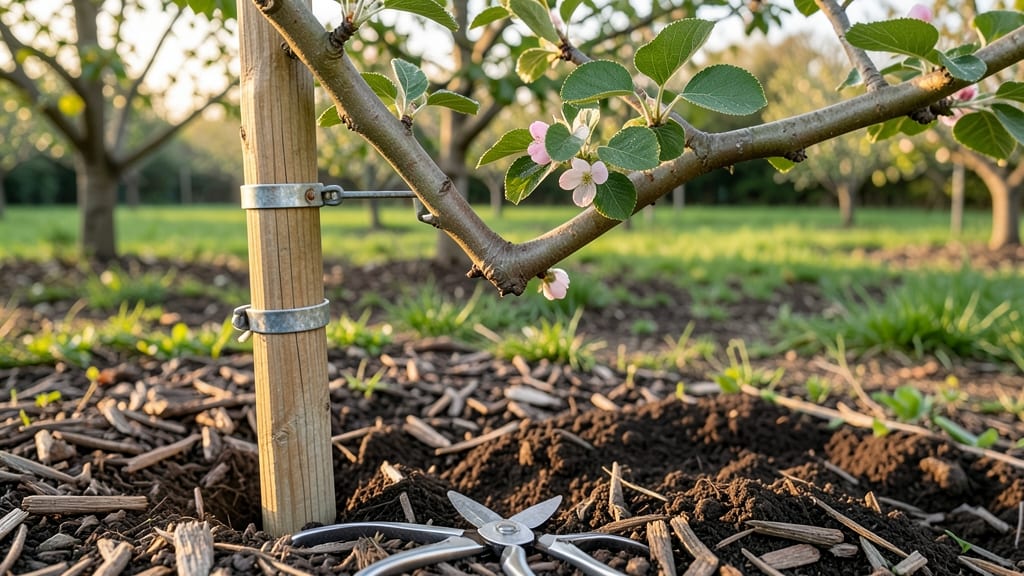
Apple tree branches that sag under fruit weight will snap like dry twigs—unless you install proper support early. 🌳 I’ve lost count of the times I’ve watched heavy limbs droop, only to hear a sickening crack later when the fruit load became too much.
The right stakes, spreaders, and installation timing can turn a weak branch into a sturdy, productive framework that lasts for years.
You’ll need 3/4-inch wooden or metal stakes, tree ties or spreaders (the kind with adjustable arms), and a pruning saw for any branches that need trimming to fit the support.
The key is acting in late winter or early spring before the tree breaks dormancy—this gives the wood time to heal and the branches time to grow into the support system without resistance.
When you’re done, you’ll have branches that hold 100+ pounds of fruit without bending, plus a tree that grows stronger each year. The spreaders keep limbs evenly spaced, preventing rubbing that creates wounds where diseases can enter, and the stakes provide the leverage needed to lift heavy loads.
This system works for young trees, newly grafted branches, or even mature trees with weak limbs. The investment of 30 minutes now saves you from years of weak growth and lost harvests. Let’s get those branches supported before the fruit sets in.
📚 In This Guide
- What you need
- Instructions
- Tips and common mistakes
- Wrapping up and next steps
What you need
- ● Stakes: 3–5 wooden or metal stakes (1–2 inches in diameter, 4–6 feet tall). Opt for untreated cedar or pressure-treated wood for longevity.
- ● Spreaders: 2–3 adjustable tree ties or spreaders (made of rubber or fabric to avoid damaging bark).
- ● Tie Material: Soft tree straps or nylon ties (avoid wire—it can cut into branches!).
- ● Hammer or Mallet: For driving stakes into the ground without splintering.
- ● Measuring Tape: To ensure proper spacing (stakes should be 12–18 inches from the trunk).
- ● Gloves: Heavy-duty work gloves to protect your hands from splinters or rough bark.
- ● Stake Anchors: U-shaped metal stakes for extra stability in windy areas.
- ● Pruning Shears: For trimming excess branches before securing supports.
- ● Tree Guard: A protective wrap around the trunk to prevent damage from ties.
- ● Post Hole Digger: If your soil is hard-packed (though stakes can often be hand-driven).
How to install sturdy apple tree branch support
Here's the straightforward method I use to keep young apple trees growing strong without breaking branches.
🪴 Step 1: Choose the Right Support Materials
For a 4-foot-tall sapling, I use 3 wooden stakes (2x4s, 6 feet long) and 4 tree ties (1-inch wide fabric strips). Drive two stakes into the ground about 12 inches apart, positioned on opposite sides of the tree trunk. Place the third stake 18 inches away from the tree on the side where the main scaffold branches emerge.
I always pre-drill holes in the stakes if working with heavy clay soil—this prevents splitting when you hammer them in. Position the stakes so they form a triangle around the tree base. This creates a stable base that won't wobble when branches grow heavier.
🌱 Step 2: Install the Central Trunk Support
Attach the first tree tie around the trunk at about 12 inches above ground level. Thread the tie through the first stake's hole and pull snug, but not tight enough to constrict the trunk. The goal is to prevent swaying—not to strangle the tree. I like to make a loose figure-eight pattern with the tie to distribute pressure evenly.
Add a second tie at 24 inches high for extra stability. Here's the thing—you'll want to check these ties every 3-4 months because apple trees grow fast. If the ties cut into the bark, loosen them immediately to prevent girdling.
☀️ Step 3: Position Branch Spreaders for Scaffold Branches
Once the tree reaches 5-6 feet tall, identify the 3-4 main scaffold branches (the ones growing at 45-60° angles from the trunk). These are your future fruit-bearing branches. Use the third stake to create a spreader system by attaching it to each scaffold branch with separate tree ties.
Gently bend each branch outward to form a 60° angle from the trunk. Secure with a tie positioned 6 inches from the branch collar. The spreader stake should be angled outward slightly to encourage upward growth. You'll see new side branches form within 2-3 weeks—that's your sign the system is working.
✂️ Step 4: Adjust and Maintain Seasonally
In early spring, before buds swell, check all ties for tightness. Remove any ties that have cut into the bark and replace them higher up the branch. I also prune any branches growing straight up (called "water sprouts")—they drain energy from your fruit-bearing scaffold.
After summer storms, inspect the support system immediately. Wind can loosen stakes or break ties. If a branch grows too heavy for its support, add an extra tie 12 inches above the first one. The key is to adjust gradually—never force branches into position.
⏰ Step 5: Remove Supports at the Right Time
When your tree reaches 8-10 feet tall with a well-established scaffold, it's time to wean it from supports. Start by removing one stake in early spring, then the others over the next two years. I always remove ties first, then stakes—this prevents sudden stress on the trunk.
You'll know the tree is ready when the trunk diameter reaches 3-4 inches and the scaffold branches show 1-2 inches of new growth annually**. At this point, the tree's own strength will handle wind and fruit weight without help.
Tips & tricks for sturdy apple tree branch support
These simple adjustments will help you build a support system that lasts through years of growth.
Material Selection: For the 3 wooden stakes, I recommend cedar or pressure-treated pine—these resist rot better than untreated wood. If you're working with sandy soil, you can reduce stakes to 5 feet long since they won't need to penetrate as deeply. The 1-inch wide fabric tree ties are ideal because they're soft enough not to damage bark while still providing strong support.
Stake Placement Strategy: When positioning your stakes in Step 1, imagine the tree's growth pattern. The two stakes on opposite sides of the trunk should be angled slightly outward at the top—this creates a natural funnel shape that guides branches upward. The third stake should be positioned where your main scaffold branches are emerging, even if they're not fully developed yet. This proactive placement prevents future adjustments.
Tie Tightness Check: In Step 2, when attaching the first tie at 12 inches, make sure you can fit about a quarter-inch gap between the tie and the bark. You want enough give that the tree can grow without restriction, but tight enough to prevent excessive swaying. I test this by gently pushing the trunk—if it moves more than an inch, the tie needs to be snugger. Remember, these ties need to last through seasonal growth spurts.
Seasonal Maintenance: The 3-4 month check-in mentioned in Step 2 is crucial, but don't wait until then to notice problems. After heavy rain or wind, do a quick visual inspection. Look for ties that have stretched or bark that's been damaged. If you notice any water sprouts (those straight-up branches) in Step 4, prune them back to just above a leaf bud—this redirects the tree's energy to your scaffold branches.
Pro Tips for Apple Tree Branch Support
- These simple adjustments will help you build a support system that lasts through years of growth.
- Material Selection: For the 3 wooden stakes, I recommend cedar or pressure-treated pine—these resist rot better than untreated wood.
- Stake Placement Strategy: When positioning your stakes in Step 1, imagine the tree's growth pattern.
Frequently asked questions
Got questions about keeping your apple tree branches strong and supported? Here are some of the most common concerns—plus quick, actionable answers to help you grow a thriving orchard!
When is the best time to add branch supports to an apple tree?
Install supports early—ideally in late winter or early spring before new growth begins. This gives stakes or spreaders time to stabilize the tree as it expands. For young trees, add supports within the first year to prevent wind damage. If you’re working with mature trees, fall or early winter (after leaf drop) is ideal to minimize stress.
What’s the difference between stakes and spreaders for apple tree branches?
Stakes
(like T-posts) are best for upright support, especially for young trees or heavy fruit loads. Spreaders (horizontal braces) work well for spreading branches outward to improve sunlight exposure and air circulation. Use both if your tree has weak limbs—stakes for vertical support and spreaders to train growth patterns.
How do I know if my apple tree branches need extra support?
Watch for these red flags: bending or drooping limbs, cracks in the bark, or branches that rub together (which can cause wounds). If your tree is top-heavy with fruit or grows in a windy area, preemptive support is key. Even healthy trees benefit from guidance—prevention is easier than repair!
Can I use DIY materials (like bamboo stakes or clothespins) instead of commercial supports?
Bamboo stakes, wooden dowels, or even sturdy garden twine
can work for small trees or light branches. For clothespins or wire spreaders, ensure they’re galvanized or coated to prevent rust. Just avoid plastic ties that can girdle the branch over time—opt for soft, flexible materials like tree tape or rubber guards.
What should I do if a supported branch suddenly breaks or sags?
Act fast! Remove the fruit from the damaged branch to reduce weight, then secure a temporary support (like a broomstick or extra stake) while you assess. If the break is clean, you can prune it back to a strong fork and reinforce the remaining structure. For splits or tears, use pruning sealant and monitor for disease. If the damage is severe, consult a local arborist.
Wrapping up and next steps
Supporting your apple tree’s branches isn’t just about aesthetics—it’s a game-changer for fruit production and long-term health! 🍏 By investing in sturdy stakes, spreaders, or pruning techniques, you’re giving your tree the best chance to thrive, resist wind damage, and bear bountiful harvests.
With the right tools and a little patience, even young saplings can grow into robust, productive trees.
Ready to take action? Start small: assess your tree’s needs, gather your supplies, and implement support this season. Whether you’re a beginner or a seasoned gardener, every step you take brings your apple tree one step closer to flourishing—and that’s something to celebrate! 🌱