
Trees
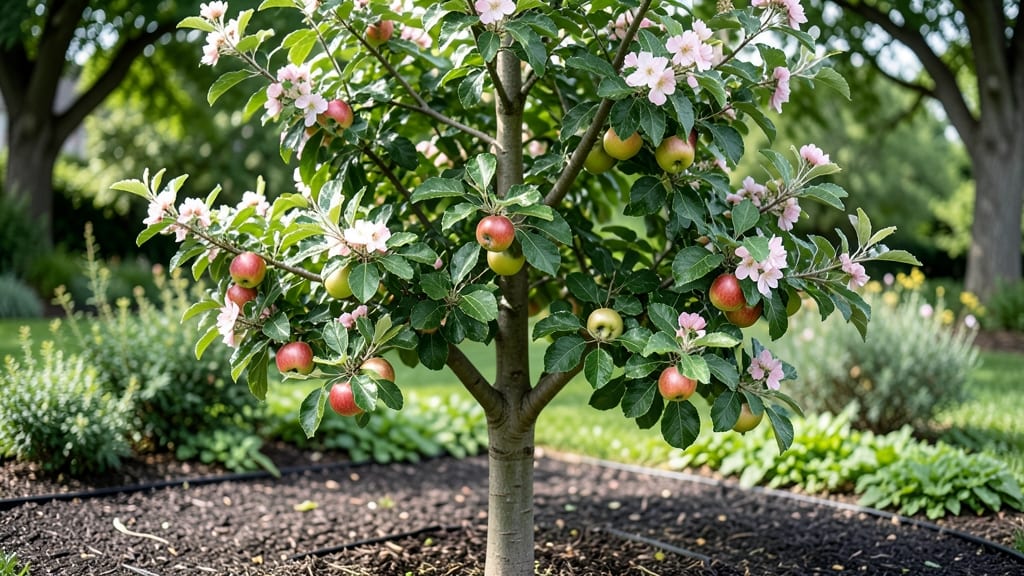
Growing apple trees in Zone 9 requires selecting cold-hardy varieties like Anna, Dorsett Golden, or GoldRush, planting in late winter/early spring, and providing afternoon shade to prevent sunburn while ensuring well-draining soil and consistent watering during dry spells.
Zone 9's intense heat and low winter chills create unique challenges for apple cultivation, but the right approach makes it absolutely doable. 🍏 The key lies in choosing varieties bred for minimal chill hours (300-500) and implementing smart microclimate strategies.
For example, Anna apples thrive in these conditions with their crisp, honey-sweet flavor profile that develops even in warm winters. Proper watering techniques—like deep, infrequent soakings—prevent root stress while maintaining fruit quality during our long, dry summers.
What sets successful Zone 9 orchards apart is understanding how to work with the climate rather than against it. The afternoon shade I mentioned isn't just about preventing sunburn—it also helps maintain consistent soil moisture levels, which is critical during our 100°F+ heatwaves.
Many growers use reflective mulches or strategic planting near taller shade trees to create cooler microenvironments where apple trees can thrive without constant stress.
💡 In This Article
- Why Zone 9 Heat Challenges Apple Tree Cultivation
- Top Low-Chill Apple Varieties for Hot Climates
Why Zone 9 heat challenges apple tree cultivation
Apple trees evolved in temperate climates where winter chills trigger dormancy and spring blooms. Zone 9's warm winters often provide fewer than 500 chill hours (below 45°F), while most standard apple varieties need 800-1,200 hours. This mismatch causes two major problems: poor flowering and irregular fruit set.
When trees don't get enough cold exposure, their blossoms may fail to open properly, or the fruit that does form often stays small and underdeveloped. The science behind this involves hormonal changes—apple trees require vernalization (a cold period) to produce the proper balance of flowering hormones.
Heat stress also disrupts the delicate process of pollination. Bees become less active above 90°F, reducing cross-pollination between varieties. Even if flowers open, high daytime temperatures can cause flower abortion—where buds simply drop off before setting fruit.
The ripening process suffers too: apples grown in hot climates often develop lower sugar content (below 12% Brix) and higher acidity, making them taste bland or tart. This is why specialty low-chill varieties like Dorsett Golden (with 300 chill hours) produce sweeter, more flavorful fruit despite the heat.
Humidity plays a critical role in disease susceptibility. Zone 9's combination of heat and high humidity creates perfect conditions for fire blight (a bacterial infection) and powdery mildew. The warm nights prevent proper drying between rain showers, allowing fungal spores to thrive.
For example, fire blight spreads most aggressively when daytime temps hit 85°F with high humidity—common in Southern California's summer afternoons. The bacteria Erwinia amylovora exploits these conditions to infect blossoms and young fruit, often leading to 30-50% crop loss if not managed properly.
Root zone temperature is another critical factor. Soil temperatures above 85°F stress apple roots, reducing their ability to absorb water and nutrients. This is why mulching with 4-6 inches of organic material (like wood chips) helps maintain cooler soil temps by 10-15°F during peak summer.
The mulch also conserves moisture, which is essential since Zone 9's dry spells can cause water stress that leads to sunburned fruit—where apples develop pale, leathery patches from excessive sunlight exposure.
Even the timing of fruit development matters. Apples in Zone 9 often ripen 2-3 weeks earlier than their northern counterparts, which affects their flavor and storage potential. The accelerated growth cycle means less time for sugars to develop, and the fruit becomes more susceptible to cracking from rapid moisture changes.
This is why growers in hot climates often use drip irrigation systems to deliver water directly to the root zone while keeping foliage dry—reducing both fungal diseases and sunburn risk.
One surprising adaptation is how apple trees respond to afternoon shade. When temperatures exceed 95°F, the leaves' stomata (pores) close to prevent water loss, which in turn reduces photosynthesis.
Providing 30-50% shade during peak afternoon sun helps maintain leaf temperatures below 90°F, keeping the tree's metabolic processes functioning optimally. This simple strategy can improve fruit quality by 15-20% in extreme heat conditions.