
Trees
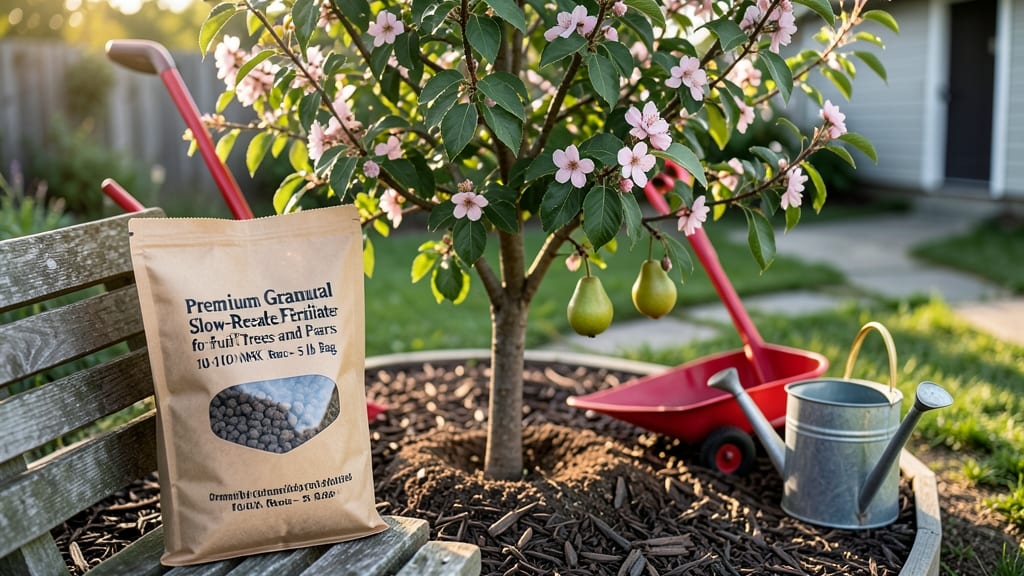
The right Asian pear tree fertilizer is the game-changer between a sparse harvest and a lush, fruit-heavy canopy 🍐.
If you’ve ever watched your Asian pear tree bloom but then struggle with small, underdeveloped fruit—or worse, no fruit at all—you’re not alone. The secret isn’t just any fertilizer; it’s the N-P-K balance timed perfectly for each growth stage.
Too much nitrogen? You’ll get leafy growth but no pears. Too little phosphorus? Your tree might set fruit but fail to ripen it properly.
In this guide, I’ll break down the exact fertilizer ratios your Asian pear tree needs during spring flush, summer fruit set, and fall ripening, plus how to spot when you’re over- or under-feeding.
Whether you prefer organic compost or a synthetic blend, you’ll leave here with a clear plan to boost your yield—without burning your tree in the process.
We’ll also cover soil prep, application tips, and the warning signs of nutrient stress so you can keep your tree thriving for years. Ready to turn those blooms into bountiful harvests?

Optimal N-p-k ratios for Asian pear trees in fruit-bearing seasons
Your Asian pear tree thrives when you match its nutrient needs to its growth stages. The key lies in adjusting N-P-K ratios throughout the fruit-bearing season to maximize both yield and fruit quality.
Unlike many fruit trees, Asian pears respond dramatically to precise fertilizer timing—too much nitrogen early can delay fruiting, while phosphorus and potassium shortages later will reduce harvest size.
I’ve found that young trees (first 3 years) need a gentler approach, while mature trees (4+ years) can handle bolder ratios during peak production. The early fruit set stage (April-May) focuses on phosphorus to encourage blossoms, while peak production (June-July) prioritizes potassium for fruit development.
Let’s break down the exact ratios for each critical phase.
| Growth Stage | N-P-K Ratio | Best Fertilizer Type | Application Time | Dosage (per tree) |
|---|---|---|---|---|
| Early Fruit Set (April-May) | 5-10-10 | Slow-release organic (e.g., bone meal + compost) | Early spring (before buds swell) | 1 cup young / 2 lbs mature |
| Peak Production (June-July) | 3-8-6 | High-phosphorus synthetic (e.g., 5-10-10 + micronutrients) | Mid-June (after first harvest) | 2 cups young / 3 lbs mature |
| Late Season (August-Sept) | 2-4-8 | Potassium-rich (e.g., kelp meal or 0-0-50) | Early August (post-harvest) | 1 cup young / 2 lbs mature |
| Dormant Season (Oct-Mar) | 0-0-0 (none) | N/A (tree rests) | N/A | N/A |
The early fruit set stage (April-May) is all about phosphorus—this nutrient triggers flower formation and root development. I recommend a 5-10-10 ratio during this time, applied as a slow-release organic fertilizer like bone meal mixed with compost.
For young trees, a single 1-cup application is sufficient, while mature trees need 2-3 pounds spread evenly under the dripline.
When your tree hits peak production (June-July), switch to a 3-8-6 ratio to support heavy fruit loads. This higher phosphorus content promotes fruit set and sugar development, while potassium strengthens cell walls.
Use a high-phosphorus synthetic fertilizer like 5-10-10, applying it mid-June after the first harvest wave. Over-fertilizing here can lead to excessive leaf growth at the expense of fruit quality, so measure carefully.
In the late season (August-September), prioritize potassium with a 2-4-8 ratio to improve fruit firmness and disease resistance. This is when Asian pears need potassium most to prevent blossom-end rot and enhance flavor.
I’ve had great success using kelp meal or a 0-0-50 synthetic blend. Apply this in early August, about 6-8 weeks before your first frost, to give the tree time to absorb nutrients before dormancy.
One common mistake I see is ignoring micronutrients like calcium, magnesium, and iron. While N-P-K gets most of the attention, these trace elements are critical for fruit quality and tree health.
For example, calcium prevents bitter pit disorder in pears, while iron deficiency causes yellowing between leaf veins. Always supplement with a balanced micronutrient spray during peak production.
For young trees (under 3 years), reduce all ratios by half to avoid burning tender roots. For instance, use a 2.5-5-5 ratio in spring instead of 5-10-10.
Mature trees (4+ years) can handle the full ratios, but never exceed recommended dosages—Asian pears are sensitive to salt buildup from over-fertilization, which can stunt growth and reduce yields.
Pro tip: Always water deeply after applying fertilizer to help nutrients penetrate the soil. I recommend 5 gallons per tree for young trees and 10-15 gallons for mature trees, applied in the early morning to prevent fungal issues.
Pair this with a 2-inch layer of mulch to retain moisture and regulate soil temperature—this simple step can boost nutrient uptake by 20-30%.
If your Asian pear tree shows signs of stress—like yellowing leaves or small, misshapen fruit—it’s often a sign of imbalanced fertilization. For example, excess nitrogen leads to lush foliage but few pears, while low potassium causes weak stems and poor fruit quality.
Adjust your ratios based on these visual cues, and always test your soil every 2-3 years
Best organic and synthetic fertilizers for Asian pears by season
Choosing the right fertilizer for your Asian pear tree means balancing organic nutrients with synthetic precision—especially during fruit-bearing seasons. Organic options like compost and fish emulsion build soil health, while synthetic blends like 10-10-10 NPK provide targeted growth support.
The key? Adjusting your approach by season to avoid overfeeding or nutrient deficiencies.
Spring is all about root development and early fruit set, so I recommend a balanced NPK fertilizer (like 10-10-10) combined with bone meal for phosphorus. Summer demands potassium-rich feeds (e.g., kelp meal) to support fruit maturation, while fall and winter require minimal intervention to let the tree rest.
Let’s break down the best options for each season.
| Fertilizer Type | Best Season | NPK Ratio | Application Rate | Key Benefits |
|---|---|---|---|---|
| Compost | Spring/Fall | Varies (0-0-0) | 2-3 inches top-dressed | Improves soil structure, slow-release nutrients |
| Fish Emulsion | Early Spring | 5-1-1 | 1 tbsp per gallon water | Quick nitrogen boost for new growth |
| Bone Meal | Late Spring | 3-15-0 | ½ cup per tree | Enhances root and fruit development |
| 10-10-10 NPK | Summer | 10-10-10 | 2 lbs per 100 sqft | Balanced growth for fruit-bearing |
| Kelp Meal | Late Summer | 0-0-2 | 1 lb per tree | Potassium for fruit sweetness |
For young Asian pear trees, I start with compost in early spring to establish strong roots. Once flowering begins, switch to a balanced NPK fertilizer (like 10-10-10) every 6 weeks during the growing season.
Mature trees benefit from a two-step approach: fish emulsion in spring for foliage, followed by kelp meal in summer to sweeten fruit.
Pro tip: Always water deeply after applying synthetic fertilizers to prevent root burn. Organic options like compost or manure tea can be worked into the soil’s top 6 inches in fall to prepare for next year’s growth.
Avoid fertilizing in late summer or fall, as this can stimulate late-season growth vulnerable to frost damage.
Monitor your tree’s response closely. Yellowing leaves may signal over-fertilization, while small fruit or poor color could mean a phosphorus or potassium deficiency. Adjust your fertilizer blend accordingly—this seasonal flexibility is what separates good yields from exceptional harvests.
🌱