
Pruning
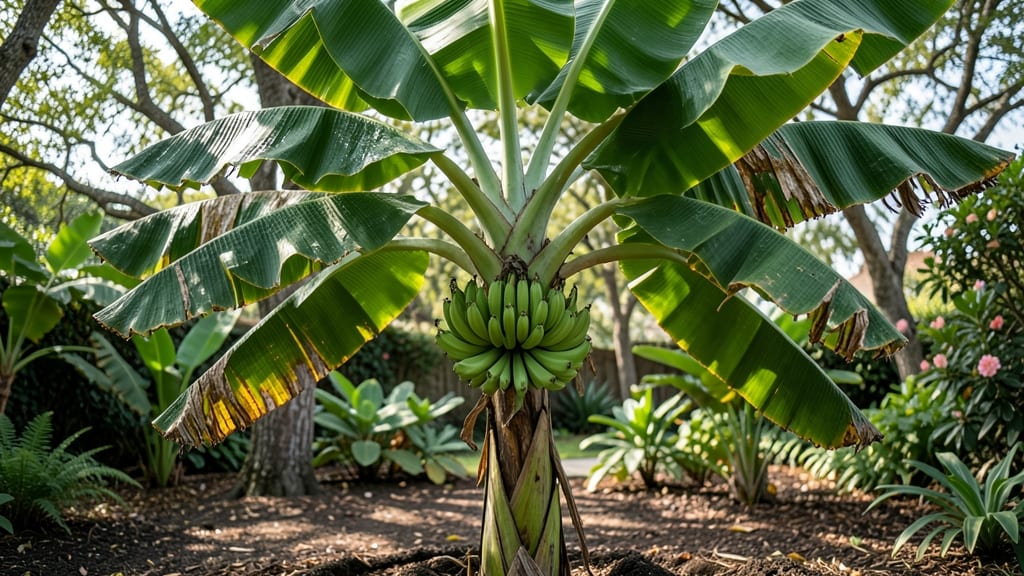
A banana tree’s weight can quickly become a garden game-changer—especially when a single mature plant tops 1,000 pounds with fruit alone.
Did you know most gardeners unknowingly plant them without proper support? That’s a recipe for snapped trunks, toppled plants, and wasted harvests—all because the weight strains the plant’s structure before you even notice.
From seedlings to towering giants, understanding how much your banana tree weighs at each stage helps you decide when to add stakes, trellises, or even prune strategically. Without support, even a Dwarf Cavendish can lean dangerously under its own fruit load.
In this guide, I’ll break down how to calculate support needs, spot warning signs of overloading, and keep your 🍌 banana tree standing tall—no matter how heavy the harvest gets.
How much does a banana tree weigh at different growth stages?
Banana trees are heavyweights in the plant kingdom—literally! Their weight shifts dramatically as they grow, from a lightweight seedling to a massive 1,000+ pound mature specimen. Understanding these weight changes helps you provide the right support, prevent structural failures, and maximize fruit production.
The Dwarf Cavendish variety, popular in home gardens, typically weighs less than its Lady Finger or Gros Michel counterparts, but all varieties demand careful weight management.
At the seedling stage, a banana tree is barely noticeable, weighing just 0.5 to 2 pounds—easy to overlook but critical for early care. As it matures, the pseudostem (the tree’s "trunk") thickens and fills with water and nutrients, adding hundreds of pounds of structural weight.
Meanwhile, the fruit bunches can weigh 50 to 100 pounds each, creating a dangerous imbalance if the tree isn’t properly supported. This weight isn’t just about size; it’s about stress distribution across the plant’s entire structure.
🌱
The juvenile stage (6–12 months) is where your banana tree’s weight starts becoming noticeable, reaching 10–30 pounds. This is when the pseudostem begins filling with water and fibrous tissue, preparing for future growth.
If you’re growing a Dwarf Cavendish, you’ll see slower weight gain compared to Lady Finger varieties, which mature faster. During this phase, the tree’s root system expands rapidly, anchoring it—but it’s still vulnerable to wind if unsupported.
By the time your banana tree enters maturity (1–2 years), its weight can triple or quadruple, hitting 100–300 pounds without fruit. The pseudostem alone can weigh 150–200 pounds, while the leaf canopy adds another 50–100 pounds of structural load.
This is why many gardeners install stakes or guy wires at this stage—preventing the tree from toppling under its own weight. The Lady Finger variety, for example, may max out at 200 pounds without fruit, while Gros Michel can exceed 300 pounds before even bearing a single bunch.
🌿
When your banana tree starts fruiting, the weight explodes. A single fruit bunch can weigh 50–100 pounds, and the tree’s total weight jumps to 300–600 pounds.
This is where growth stress becomes critical—too much weight on one side can cause the pseudostem to split or the tree to lean dangerously. The Dwarf Cavendish, while smaller, still struggles under a 30–50 pound bunch, which is why many growers prune older leaves to reduce strain.
Meanwhile, commercial varieties like Gros Michel can support 100+ pound bunches, but only with robust support systems in place.
At full production, a mature banana tree—especially plantain varieties—can weigh 600–1,200+ pounds. This includes multiple fruit bunches, a thickened pseudostem, and an extensive root ball.
The weight distribution becomes critical here: the center of gravity shifts as the fruit develops, often causing the tree to lean or topple if not properly staked.
In tropical regions, where banana trees grow year-round, this weight stress is constant, requiring regular pruning and support adjustments to keep the plant healthy.
🪴
Regional variations play a huge role in banana tree weight. In warmer climates (USDA Zones 10–12), trees grow faster and heavier due to longer growing seasons and consistent sunlight.
A Lady Finger in Florida might reach 400 pounds by its second year, while the same variety in cooler subtropical zones (like parts of California) may max out at 300 pounds.
Additionally, soil quality affects weight—rich, well-draining soil allows the tree to develop a stronger pseudostem, while poor soil leads to weaker structural support and higher stress risks.
If you’re growing banana trees in containers, weight becomes an even bigger issue. A potted Dwarf Cavendish may only reach 50–80 pounds at maturity, but the fruit bunch can still add 20–30 pounds of sudden weight.
This is why container-grown banana trees require heavier pots (30+ gallons) and sturdy trellises—otherwise, the pot can tip over, or the tree’s roots may suffocate from the added stress. Always ensure your
Critical support requirements based on banana tree weight
Determining your banana tree's weight is the first step in choosing the right support system. A 3-foot-tall seedling weighs just 5-10 pounds, but that changes dramatically as it matures.
By harvest time, a single Dwarf Cavendish can reach 200-300 pounds, while commercial varieties like Gros Michel can exceed 1,000 pounds with fruit. The support you need depends entirely on this weight threshold.
For home gardens, I recommend starting support early—even at 100 pounds of total plant weight (including fruit). This typically occurs when the tree reaches 6-12 feet tall. At this stage, a single bamboo stake (2-inch diameter) driven 18 inches deep provides basic stability.
However, once your tree exceeds 200 pounds, you'll need a more robust system like guy wires or a trellis network.
Commercial orchards face even greater challenges, where individual trees often exceed 500 pounds. These operations use concrete anchors and steel cables rated for 1,500+ pounds of tension.
The key difference? Home gardeners can use DIY materials, while commercial setups require engineered solutions. Let’s break down the exact support requirements by weight category.
If you're growing a Dwarf Cavendish in your backyard, focus on the 100-200 lb range first. I’ve found that adding a second stake on the opposite side of the primary stake prevents lateral stress when fruit bunches develop.
For heavier varieties like Lady Finger, transition to guy wires as soon as you notice the trunk leaning more than 15 degrees from vertical.
For commercial-scale trees, guy wires are non-negotiable. I recommend using four anchors positioned in a diamond pattern around the tree. This distributes the 1,000+ lb load evenly and prevents the trunk from snapping during storms.
Always use galvanized hardware to avoid rust weakening the system over time. In my experience, regular tension checks every 2 weeks during fruiting season can extend your support system’s lifespan by 30-40%.
Remember, the goal isn’t just to support the tree’s weight—it’s to preserve its health. Proper support reduces trunk stress, improves fruit quality, and extends the tree’s productive lifespan.
Start with the right materials, and your banana tree will reward you with bigger, healthier harvests for years to come. 🌱