
Container Gardens
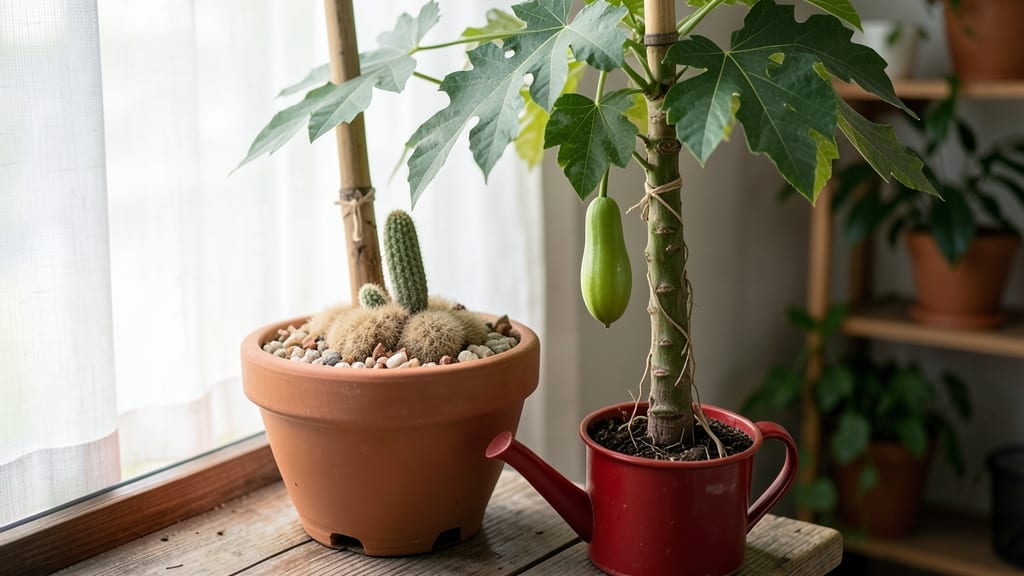
You can grow a papaya tree in pots as long as you use a container at least 18-24 inches in diameter with proper drainage. Opt for a deep pot, well-draining soil mix, and place it in full sunlight while maintaining a regular fertilization schedule to support healthy growth.
Papaya trees thrive in containers when given the right conditions, especially since their root systems can spread quickly.
A minimum 18-inch diameter pot prevents root binding, while deeper containers (24+ inches) allow better nutrient uptake and fruit development. 🌱 The key is replicating tropical conditions—bright, indirect sunlight for 6-8 hours daily and soil that drains excess water to avoid root rot.
I've had the best success with fabric grow bags, which improve aeration while allowing roots to breathe.
Regular fertilization is non-negotiable for fruiting—use a balanced 10-10-10 formula every 4-6 weeks during growing season. Prune leggy branches to encourage bushier growth, and rotate the pot occasionally to ensure even sunlight exposure. With these adjustments, container-grown papaya trees can produce fruit in 1-2 years, just like their in-ground counterparts.
💡 In This Article
- Papaya Tree Growth Requirements in Containers
- Best Practices for Potted Papaya Tree Care
Papaya tree growth requirements in containers
Papaya trees thrive in containers because they're tropical plants that prioritize root aeration and nutrient access. Their fibrous root system spreads aggressively in search of moisture and nutrients, which is why a minimum 18-inch diameter pot becomes critical—any smaller, and roots will circle tightly, stunting growth.
The ideal depth should be 24+ inches to accommodate the taproot that develops as the tree matures, allowing it to anchor properly and access deeper soil layers where nutrients accumulate.
The science behind container size lies in the plant's vascular system. Papaya trees transport water and nutrients through xylem vessels that can reach 10+ feet in height in their native environments. In pots, this system must function within confined space, making soil aeration through proper drainage essential.
Without it, roots suffocate from excess moisture, leading to fungal infections. 🌱 Fabric grow bags solve this by allowing roots to breathe while preventing compaction that ceramic pots often cause.
Sunlight exposure directly impacts fruit production through photosynthesis efficiency. Papaya trees need 6-8 hours of direct sunlight daily to develop the energy required for flowering and fruiting.
In containers, this means positioning them where they receive morning sun (to prevent afternoon heat stress) and supplementing with grow lights if natural light falls short. The fruit's vibrant orange color comes from carotenoids produced through photosynthesis—without adequate light, fruits become pale and underdeveloped.
Soil composition plays a dual role: it must retain enough moisture for tropical growth while preventing waterlogging. A mix of 60% coconut coir, 20% perlite, and 20% compost creates the perfect balance.
The coir holds moisture while perlite prevents compaction, mimicking the airy, nutrient-rich volcanic soil papayas grow in naturally. This combination also supports beneficial microbial activity that breaks down organic matter into plant-available nutrients.
Temperature regulation becomes another container-specific challenge. Papaya trees prefer 75-85°F daytime temperatures and won't tolerate drops below 50°F. In pots, they cool down faster at night, which is why moving them to sheltered locations during cooler months is crucial.
The container's material affects this—clay pots absorb heat during the day but release it slowly, while plastic pots insulate poorly. This thermal fluctuation can stress the plant, reducing flowering potential.
What most gardeners overlook is how container size affects flowering triggers. Papaya trees only produce flowers when they sense sufficient root space and nutrient availability. In cramped pots, the plant diverts energy toward root growth instead of reproductive development.
This is why repotting every 1-2 years into slightly larger containers stimulates flowering—it mimics the natural expansion of root zones in the wild.