
Pruning
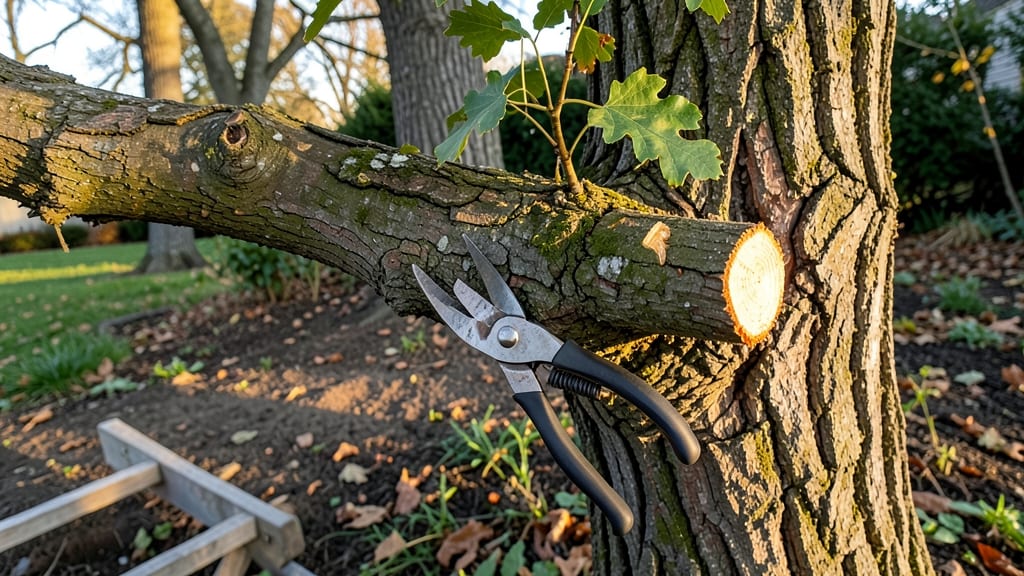
To cut off a tree branch in a crossword puzzle, choose the right tool (like pruners or loppers) and follow proper pruning techniques—correct blade angles, weight distribution, and avoiding bark damage—while ensuring the answer fits the grid's letter count.
Crossword clues often demand precise answers, so knowing the right pruning terminology is key. 🌳 For example, a 5-letter answer might require "loppers" instead of "pruners," while a 7-letter answer could be "bypass pruners."
The technique matters too—cutting at the branch collar (the swollen area where the branch meets the trunk) prevents damage and keeps the tree healthy. I always check the grid's letter count first to narrow down the tool name, then verify the technique matches common crossword definitions.
For thicker branches, a hand saw might be needed, but that's usually a longer answer (like "pruning saw"). The angle of the cut also affects the answer—crossword clues often expect terms like "clean cut" or "proper angle."
Always think about how the clue is phrased: if it mentions "safety," you might need to include terms like "weight distribution" or "bark rip."
💡 In This Article
- How to Prune Tree Branches Like a Pro
- Best Pruning Tools for Crossword Clue Accuracy
How to prune tree branches like a pro
Pruning a tree branch correctly involves more than just swinging a saw—it’s about understanding the branch collar, the swollen area where the branch meets the trunk.
This collar contains protective cells that help the tree heal, so cutting here (about 1/8 inch above the collar) prevents damage and promotes faster recovery.
The angle matters too: make a 45-degree cut from the underside of the branch to avoid tearing the bark, which would leave the tree vulnerable to disease. 🌿 Think of it like following a recipe—precision is everything.
Tool selection depends on branch thickness. For branches under 1/4 inch thick, bypass pruners (with two sharp blades that slide past each other) are ideal—they create clean cuts without crushing the branch.
Anvil pruners (with a single blade pressing against a flat surface) work for thicker branches but can damage the bark. Loppers, with longer handles, handle branches up to 2 inches thick, while a handsaw is needed for anything larger.
Crossword clues often test this knowledge, so knowing the exact tool name (e.g., "loppers" for medium branches) can be the difference between a correct answer and a guess.
Weight distribution is critical when cutting larger branches. Start by making a notch cut on the underside of the branch (about 1/3 of the way through
This prevents the branch from tearing the bark as it falls. For crossword clues, terms like "notch cut" or "weight distribution" might appear—visualizing the technique helps match the answer to the grid. Always prioritize safety: wear gloves and eye protection, and never stand directly below the branch as it falls. Bark tears happen when the weight of the branch pulls the bark as it’s cut, exposing the tree to pests and rot. To avoid this, make sure your cuts are precise and follow the natural shape of the branch. For example, if the branch is 1.5 inches thick, use loppers and cut at a 45-degree angle—this reduces the risk of tearing. In crossword puzzles, clues might hint at this with phrases like "avoid bark damage" or "clean cut," so understanding the mechanics helps you spot the right answer. 🌳 The goal is to leave the tree looking as natural as possible while ensuring it stays healthy. Timing also plays a role in pruning. The best time to prune is during the dormant season (late fall or winter), when the tree isn’t actively growing. This reduces stress on the tree and minimizes sap loss. However, if you’re solving a crossword puzzle, timing might not be a factor—unless the clue references "seasonal pruning." For example, a clue like "best time to prune trees" would likely have the answer "winter." Always think about the context of the clue to narrow down the answer. Finally, consider the tree’s overall health. Removing too many branches at once can stress the tree, so limit cuts to 25% of the foliage** in a single session. For crossword clues, this might translate to terms like "selective pruning" or "gradual removal." Pay attention to the grid’s letter count—shorter answers might refer to basic tools like "pruners," while longer clues could involve techniques like "thinning" or "heading back." The key is to match the clue’s phrasing with the correct pruning terminology.