
Pruning
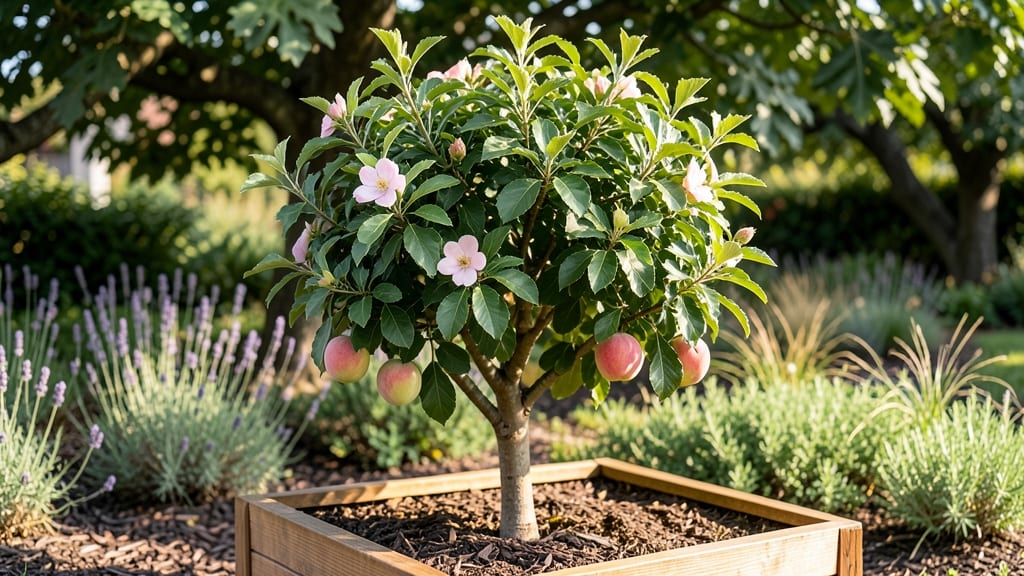
Family Tree Donut peaches grown from seed need cold stratification for 3-4 months to break dormancy, followed by planting in well-draining soil with full sun exposure. Germination rates average 5-10%, with fruit production taking 5-7 years, so annual pruning is essential for shaping and disease prevention.
These heirloom peaches thrive when you mimic their natural winter chilling cycle through cold stratification—a process that tricks seeds into thinking they've survived winter. 🌱 The 3-4 month period at 34-40°F replicates the conditions these trees need to sprout, while well-draining soil prevents root rot.
What's fascinating is how these trees reward patience: once established, they produce fruit with a unique, sweet-tart flavor that's perfect for fresh eating or preserving.
For best results, plant seeds in early spring after stratification, ensuring they get 6-8 hours of sunlight daily. Young trees benefit from annual pruning to remove dead wood and encourage strong branching—this isn't just about aesthetics, it's about directing energy toward fruit production.
Many growers report their Donut peach trees develop a spreading canopy over time, making them a stunning addition to orchards or large gardens.
💡 In This Article
- Cold Stratification and Germination Process for Donut Peach Seeds
- Soil, Sunlight, and Pruning Tips for Healthy Donut Peach Trees
Cold stratification and germination process for Donut peach seeds
The cold stratification process mimics the natural winter cycle these peach seeds would experience in their native habitat. This 3-4 month period at 34-40°F triggers hormonal changes within the seed, specifically breaking down abscisic acid (a growth inhibitor) while activating gibberellins (growth promoters).
Without this chilling period, seeds often remain dormant or sprout weakly, with germination rates dropping below 1-2%—a dramatic contrast to the 5-10% success rate achieved with proper stratification.
There are three reliable methods to stratify Donut peach seeds: the moist paper towel method, peat moss/vermiculite mix, or refrigerator stratification.
For the paper towel method, wrap seeds in damp paper towels and place them in a sealed plastic bag with small air holes—this maintains 80-90% humidity while preventing mold.
The peat moss method involves mixing seeds with moistened peat moss in a container, which provides better aeration and mimics natural soil conditions. 🌱 Temperature consistency is critical: fluctuations above 45°F can prematurely end dormancy, while below 30°F risks frost damage to emerging roots.
Once stratified, seeds should be planted ¼ inch deep in well-draining seed-starting mix at 70-75°F soil temperatures. Light requirements are minimal during germination—seeds actually prefer darkness initially, with light exposure becoming beneficial only after the first true leaves appear.
This two-phase approach (darkness for root development, then light for photosynthesis) explains why many growers see faster, stronger seedlings when they provide 12-14 hours of artificial light after germination begins.
The germination window for Donut peach seeds typically occurs within 4-8 weeks after planting, though some seeds may take up to 12 weeks. What's fascinating is how the seed's internal clock—controlled by a protein called DELLA—regulates this timing. During stratification, DELLA proteins degrade, allowing growth hormones to activate.
Without this process, seeds remain in a suspended state, unable to break through their tough seed coats. 💫 This biological mechanism is why some gardeners report seeing seeds sprout in clusters: the stratification period synchronizes their internal clocks.
For best results, maintain soil moisture at 60-70% capacity during germination—neither too wet (which causes rot) nor too dry (which halts growth). A simple way to monitor this is to check if the top inch of soil feels like a wrung-out sponge.
Once seedlings emerge, transplant them to individual pots when they reach 2-3 inches tall, being careful not to disturb the delicate root systems that develop during the stratification process. This careful handling increases the likelihood of healthy, vigorous young trees ready for outdoor planting.