
Pruning
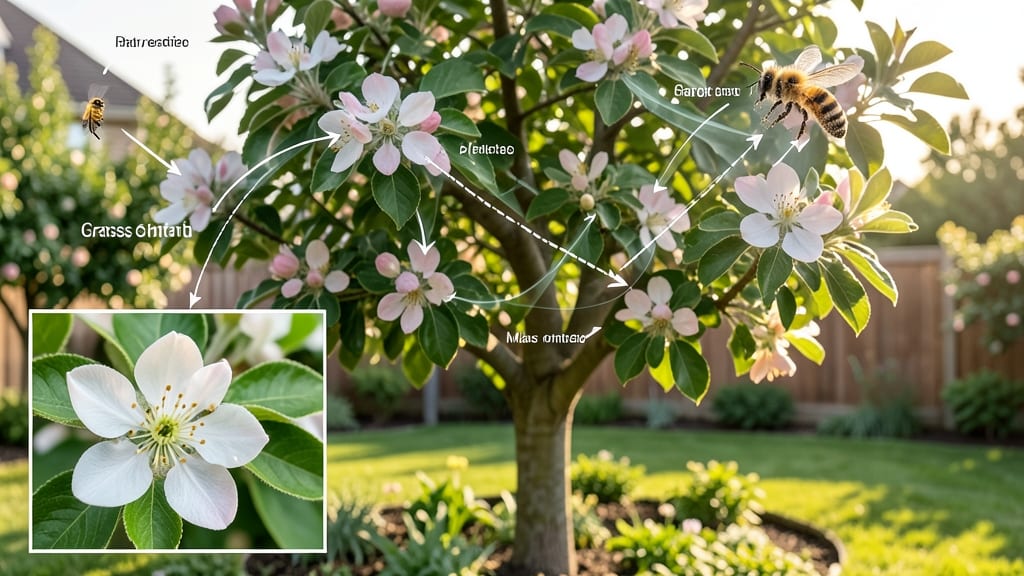
A Granny Smith apple tree pollination chart reveals it needs cross-pollination with compatible varieties like Golden Delicious, Fuji, or Gala to bear fruit. Plant two different apple trees within 50 feet for best results.
A Granny Smith apple tree won't set fruit without another variety nearby because its blossoms need pollen from a different genetic line. 🌸 The best pollinators share overlapping bloom times, typically between late April and early May in most climates.
I've found that Honeycrisp and Braeburn make excellent partners—they not only provide pollen but also create a stunning visual contrast in your orchard. Just remember that wind and bees handle most of the work, so proper spacing is key to ensuring both trees can access each other's flowers.
What many gardeners overlook is that some varieties pollinate more effectively than others.
For example, Fuji apples bloom slightly later than Granny Smith, which can create a longer pollination window. 🌿 If you're in a cooler region, consider planting early-blooming varieties like Gala alongside your Granny Smith to extend the pollination period.
The goal is to have at least two trees flowering simultaneously, which maximizes your chances of a successful harvest.
💡 In This Article
- Understanding Granny Smith Apple Tree Pollination Requirements
- Best Companion Trees for Granny Smith Apple Orchards
Understanding Granny Smith apple tree pollination requirements
Granny Smith apple trees are self-incompatible, meaning their pollen won't fertilize their own blossoms.
This biological quirk stems from genetic self-protection mechanisms that prevent inbreeding. 🌸 When a bee or wind carries pollen from one Granny Smith tree to another, the flowers still won't set fruit because they share identical genetic markers.
The magic happens when pollen from a genetically distinct variety—like Golden Delicious or Fuji—lands on the stigma of a Granny Smith blossom, triggering fertilization and fruit development.
The pollination process relies on two primary vectors: bees and wind.
Bees, particularly honeybees, are far more efficient at transferring pollen between apple varieties because they collect nectar from multiple blossoms in a single flight. 🐝 In fact, one honeybee can pollinate up to 50 apple blossoms in a single day.
Wind becomes the secondary pollinator, especially in orchards where bee activity is limited. However, wind-pollinated trees require closer spacing (50 feet) to ensure pollen reaches receptive stigmas before it settles on the ground or other surfaces.
Seasonal timing is another critical factor.
Granny Smith trees typically bloom between late April and early May in most temperate climates, but this window can shift by 2-3 weeks depending on your region's microclimate. 🌿 If you pair Granny Smith with a late-blooming variety like Fuji, you create a longer pollination period—Fuji's blossoms open about 7-10 days after Granny Smith, ensuring overlapping bloom times.
In contrast, early-blooming varieties like Gala might finish flowering before Granny Smith even opens, reducing pollination effectiveness.
Temperature also plays a surprising role. Apple blossoms require 50-70°F during the day and above 40°F at night to open properly. 🌡️ Cold snaps or late frosts can delay blooming, creating a mismatch between pollinator activity and flower receptivity.
This is why gardeners in colder climates often choose varieties with staggered bloom times—like planting Braeburn alongside Granny Smith—to account for unpredictable weather patterns.
What most people don't realize is that even compatible pollinators must share the same subspecies group.
For example, Granny Smith belongs to the Malus domestica subspecies, but some crabapple varieties (like Malus floribunda) won't cross-pollinate effectively. 🍏 This genetic compatibility is why pollination charts often group apple varieties by bloom time and subspecies.
Always verify compatibility before planting—some nurseries provide charts that list both bloom periods and genetic groups.
Finally, consider the role of pollen quantity. A single apple blossom produces about 20,000 pollen grains, but only a fraction reaches compatible stigmas. 🌿 This is why planting at least two different varieties within 50 feet ensures sufficient pollen transfer.
In larger orchards, maintaining a 1:1 ratio of pollinator varieties (e.g., one Granny Smith for every Golden Delicious) maximizes fruit set. The key takeaway? Don't just plant any apple tree nearby—choose wisely to guarantee both beauty and bounty in your orchard.