
Pruning
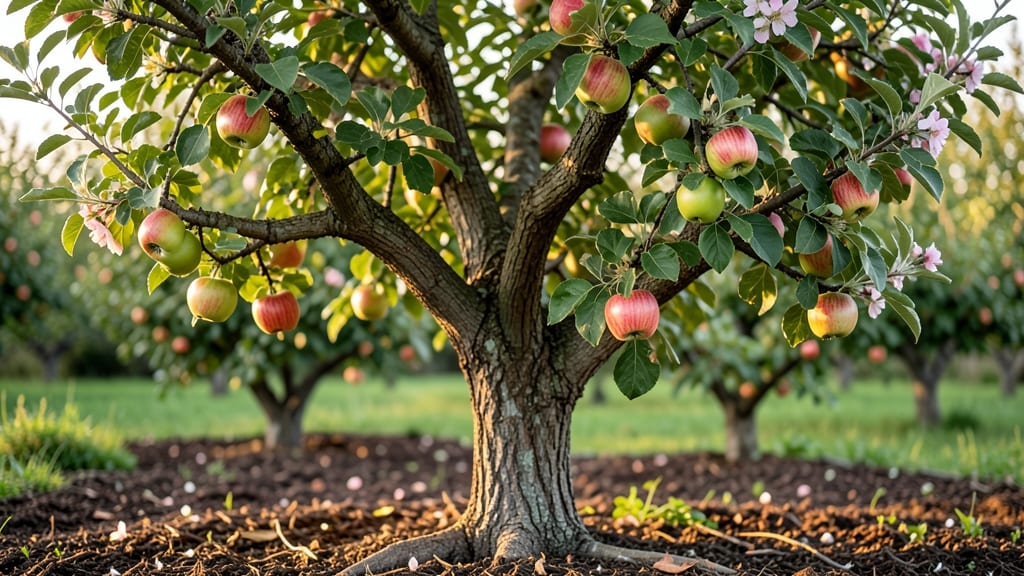
Honeycrisp apple trees grow best in USDA zones 3-8, where they get 400-900 chill hours annually. Plant them in early spring before buds break or in fall after leaves drop for cooler climates.
Honeycrisp apples demand these specific conditions because their fruiting cycle depends on winter dormancy. 🍏 Without enough chill hours, trees may produce smaller fruit or even skip flowering entirely.
In my experience, northern growers (zones 3-5) often face late spring frost risks, while southern gardeners (zones 6-8) need to protect young trees from winter dieback. The right planting window—whether spring or fall—directly impacts root establishment and first-year survival.
For zone-specific timing, I recommend planting in late March to May in northern climates (zones 3-5) when soil warms to 50°F, while southern gardeners (zones 6-8) should plant in October to November to avoid summer heat stress.
Always choose a site with well-draining soil and afternoon shade if your region gets intense summer sun.
💡 In This Article
- Understanding Honeycrisp Apple Tree Climate Requirements
- Best Planting Months for Honeycrisp Trees by USDA Zone
Understanding Honeycrisp apple tree climate requirements
The Honeycrisp variety thrives specifically in USDA zones 3-8 because its growth cycle depends on 400-900 hours of winter chill—temperatures between 32°F and 45°F that trigger dormancy. Without sufficient chill hours, the tree's internal biological clock fails to reset properly, leading to poor flowering or fruit development.
For example, in zone 5, where winter temperatures often dip below 0°F, the tree enters dormancy more reliably than in zone 8, where mild winters (rarely below 20°F) can cause inconsistent fruit set.
Frost sensitivity is another critical factor. Honeycrisp blooms in early spring, making it vulnerable to late frosts (28°F or lower) that can destroy flower buds before pollination.
In northern zones (3-5), this risk is highest, while southern zones (6-8) face different challenges like summer heat stress, which can reduce fruit quality if temperatures exceed 90°F during ripening. The tree's ideal temperature range for fruit development is 65°F to 85°F, making microclimate selection crucial in hotter regions.
Climate also affects fruit quality. Cooler zones (3-5) produce apples with higher acidity and firmer texture, while warmer zones (6-8) yield sweeter, softer fruit due to slower sugar accumulation.
The Honeycrisp's signature crispness and juiciness develop best in areas with moderate summer heat and adequate rainfall (30-50 inches annually). In my experience, gardeners in zone 7 often achieve the best balance—cool enough for winter dormancy but warm enough for full flavor development.
Regional growing challenges vary dramatically. Northern growers must protect young trees from winter desiccation (dry winds that damage bark), while southern gardeners face issues like fire blight—a bacterial disease exacerbated by warm, humid springs.
The tree's root system also adapts differently: in colder zones, roots grow deeper to escape frost, while in warmer zones, they spread wider to access moisture. These adaptations explain why Honeycrisp performs poorly outside zones 3-8.
Soil temperature plays a hidden but vital role. For optimal root growth, soil should reach 50°F in spring or 60°F in fall before planting. In zone 4, this might mean waiting until late May, while zone 7 gardeners can plant as early as March.
The tree's sensitivity to soil temperature is why fall planting in warmer zones (6-8) is often preferred—cooler ground temperatures reduce transplant shock compared to summer heat.
What most gardeners overlook is how elevation modifies these requirements. A zone 6 garden at 2,000 feet may experience 10-15°F colder winters than one at sea level, effectively shifting it closer to zone 5.
This is why microclimate adjustments—like planting near a south-facing wall or in a sheltered valley—can expand successful growing ranges by 1-2 zones in marginal areas.