
Trees
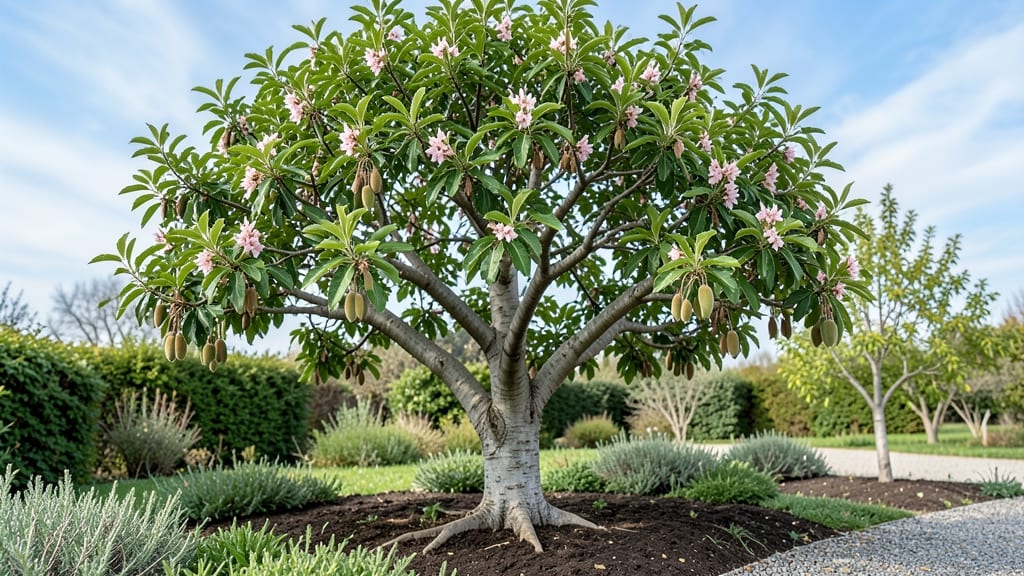
An almond tree grows to between 20 and 40 feet at maturity, towering over most backyard spaces unless you choose a dwarf variety.
Picture this: your 6-foot fence suddenly looks like a child’s play structure next to a fully grown almond tree 🌳. That’s the reality for most standard varieties, which can reach the height of a two-story house if left unpruned.
But don’t let that intimidate you—there are ways to manage its size, especially if you’re working with limited space.
What you plant and where you plant it makes all the difference. Dwarf varieties stay between 12 and 18 feet, while semi-dwarfs hit 18 to 25 feet.
Standard trees, on the other hand, can stretch toward 40 feet in ideal Mediterranean climates, where they thrive with full sun and well-draining soil. If you’re in USDA Zone 6a, like many backyard gardeners, you’ll need to choose carefully and plan for proper spacing from the start.
In this guide, I’ll break down the exact heights you can expect from popular varieties, how to control growth naturally, and whether a dwarf almond tree is the right fit for your backyard—or if you’re better off dreaming big (and planting near your neighbor’s property line).
Almond tree mature heights by popular variety: what to expect
When planning your almond orchard, knowing the mature height of your chosen variety is crucial. Standard almond trees can reach 20 to 40 feet tall, while dwarf varieties stay compact at 6 to 12 feet.
The right variety ensures your backyard or orchard fits your space without sacrificing productivity. Let’s explore the most popular varieties and their growth expectations.
From the Nonpareil, a classic commercial favorite, to the Fritz, a cold-hardy option, each variety has distinct growth habits. Some varieties like Carmel or Butte grow upright, while others spread wider, affecting how close you can plant them.
Understanding these differences helps you avoid overcrowding and ensures proper airflow for healthier trees.
Here’s a quick comparison of mature heights for popular almond varieties to help you visualize their growth potential:
| Variety | Mature Height | Spread | Growth Habit | Best For |
|---|---|---|---|---|
| Nonpareil | 25-35 ft | 20-25 ft | Upright | Commercial orchards |
| Carmel | 20-30 ft | 18-22 ft | Semi-dwarf | Home orchards |
| Butte | 25-35 ft | 20-25 ft | Upright | Drought-prone areas |
| Fritz | 20-25 ft | 15-20 ft | Cold-hardy | Northern climates |
| Price | 20-25 ft | 18-22 ft | Semi-dwarf | Early harvest |
| Dwarf Varieties (e.g., Texas) | 6-12 ft | 6-10 ft | Compact | Containers, small yards |
The Nonpareil variety is a staple in commercial orchards due to its 25 to 35 feet height and upright growth. If you’re working with limited space, consider dwarf varieties like the Texas almond, which stays between 6 to 12 feet tall.
These are perfect for container gardening or small backyards, allowing you to enjoy almonds without sacrificing space for other plants.
For home gardeners in USDA Zone 6a or warmer, the Carmel variety is an excellent choice. Its 20 to 30 feet height and semi-dwarf growth habit make it manageable for backyard orchards.
Plus, its spreading branches create a beautiful canopy while producing abundant nuts. Always ensure you plant it at least 20 feet apart to avoid shading issues.
If you’re in a drought-prone area, the Butte variety is a resilient pick. It thrives with minimal water once established and reaches 25 to 35 feet tall. Its upright form also makes it easier to harvest nuts with a ladder or mechanical shaker.
For colder climates, the Fritz variety is cold-hardy and grows to 20 to 25 feet, making it ideal for Zone 6a gardeners.
When selecting a variety, consider not just height but also spread and growth habit. A tree with a wide spread, like the Carmel
How growing conditions affect almond tree size: sun, soil & space
Almond trees thrive when given the right conditions, but their mature height can vary dramatically based on what you provide.
In my experience, full sun exposure and well-draining soil are non-negotiable for healthy growth, but even these factors can influence whether your tree reaches 20 feet or stays compact at 12 feet. The key is understanding how each growing condition interacts with your tree's natural growth habits.
For example, a standard almond tree planted in USDA Zone 7-9 with 6+ hours of sun will naturally grow taller, while the same tree in cooler climates or with limited space may stay shorter.
Pruning also plays a huge role—aggressive pruning can keep a tree 30% smaller than its natural height. Let’s break down the critical factors that shape your almond tree’s size.
One of the biggest myths I’ve seen is that almond trees are one-size-fits-all in terms of space. In reality, a dwarf variety like ‘Nonpareil’ can stay under 12 feet with proper pruning, while a standard variety like ‘Carmel’ will easily hit 25+ feet without intervention.
If you’re working with limited space, focus on pruning in early spring and training young branches to grow upward.
Another critical factor is watering consistency. While almond trees are drought-tolerant once established, deep, infrequent watering encourages stronger root systems and taller growth. Overwatering, on the other hand, can lead to weak, leggy trees that struggle to support their own weight.
Aim for 1-2 inches of water per week during the growing season, and reduce in winter months.
For home gardeners, the best way to control size is to combine pruning with proper spacing. Plant your tree 15-20 feet from structures or other trees if you’re growing a standard variety, but only 8-10 feet for dwarf types.
Remember, almond trees have deep roots, so avoid planting near sidewalks or foundations—root damage can stunt growth permanently.
If you’re still unsure about your tree’s potential size, start with a dwarf rootstock grafted onto a desirable variety. This hybrid approach gives you the best of both worlds: the flavor and productivity of a named cultivar with the compact size of a dwarf tree.
Just be prepared to prune annually to maintain the shape you want.