
Trees
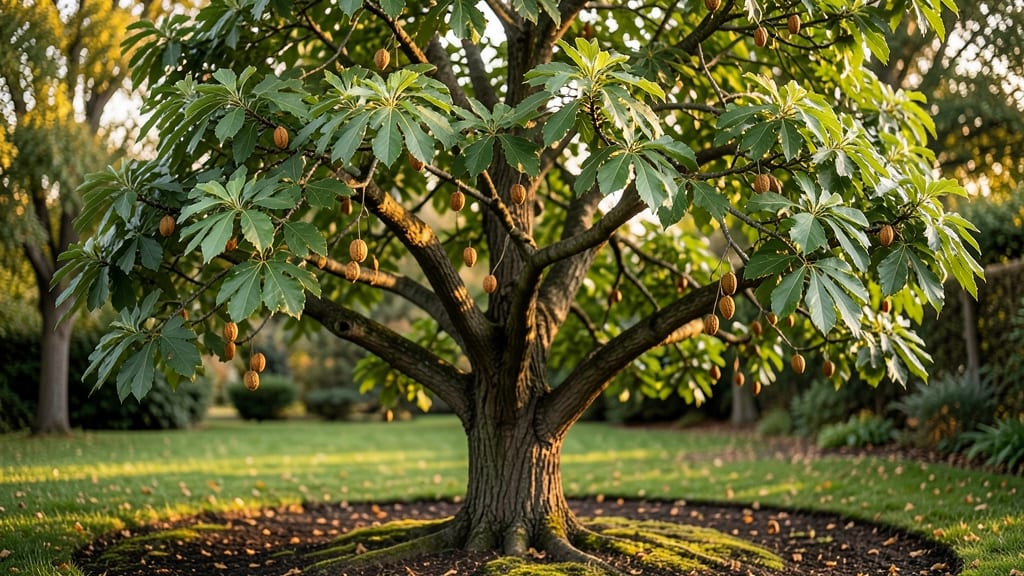
The big green tree nut you're looking for is the pecan, a native North American nut with a thick, textured shell and rich, buttery flavor that sets it apart from walnuts' thinner shells and stronger, earthier taste. These trees thrive in warm climates with well-drained soil and need cross-pollination to produce optimal yields.
The pecan tree, Carya illinoinensis, produces these distinctive nuts that grow in a papery, oblong husk. 🌳 Unlike walnuts, pecans have a smoother, more buttery flavor that works beautifully in both sweet and savory dishes.
Native to the southern United States, pecan trees require specific growing conditions—warm summers, minimal frost, and slightly acidic soil—to develop their signature rich taste and thick shells that protect the nut inside.
What makes pecans unique isn't just their flavor but also their cultivation. These trees can live for over 100 years and produce nuts for decades, making them a favorite for commercial orchards in states like Georgia and Texas.
The cross-pollination requirement means you'll need at least two trees for a good harvest, and proper spacing (30-50 feet apart) ensures optimal growth and nut development.
💡 In This Article
- Pecan vs Walnut: Key Differences in Flavor, Texture, and Shell Structure
- Best Climates and Soil for Growing Pecan Trees
Pecan vs walnut: key differences in flavor, texture, and shell structure
The most striking difference between pecans and walnuts starts with their tree characteristics. Pecan trees (Carya illinoinensis) grow 60-100 feet tall with compound leaves featuring 9-17 leaflets, while walnut trees (Juglans spp.) typically reach 50-75 feet with 5-9 leaflets.
This botanical distinction directly impacts the nut's development—pecan trees develop thicker, more textured shells (0.08-0.12 inches thick) compared to walnuts' thinner, smoother shells (0.04-0.08 inches). 🌳
Flavor-wise, pecans deliver a rich, buttery sweetness with subtle caramel notes, thanks to their 60-70% oil content and lower tannin levels. Walnuts, with 65% oil but higher tannins, offer a stronger, earthier taste and slightly bitter finish.
Texture plays a role too—pecans have a finer, more granular crumb when cracked, while walnuts break into larger, irregular pieces. This makes pecans ideal for baking (pies, pralines) where texture matters, while walnuts shine in savory dishes needing bold flavor.
The shell structure reveals why pecans are more delicate during harvest. Their thick, fibrous shells require 120-150 days of dry weather post-pollination to fully mature, making them sensitive to moisture above 50% humidity during this period.
Walnuts, with thinner shells, tolerate slightly higher humidity (60% max) but risk cracking if harvested too early. This explains why commercial pecan orchards use artificial drying systems during wet seasons—a luxury walnut growers rarely need. 💧
Culinarily, these differences create distinct uses: pecans' smooth flavor pairs perfectly with chocolate (2:1 pecan-to-chocolate ratio in pralines) or maple syrup, while walnuts' boldness works better in pesto or marinated dishes.
The shell hardness also affects processing—pecans require hydraulic crackers (100+ tons of pressure) due to their density, whereas walnuts use simpler mechanical rollers. This technical difference explains why pecans cost 30-50% more to process commercially.
One often-overlooked factor is the nut-to-shell ratio: pecans yield 50-60% edible meat compared to walnuts' 40-50%. This efficiency makes pecans more profitable for growers despite their delicate nature.
The thicker shells also provide better protection against pests like pecan weevils, which rarely target walnuts. This natural defense reduces chemical treatments needed in pecan orchards. 🐛
For home growers, the choice between these nuts depends on your climate and patience. Pecans demand full sun (8+ hours/day) and frost-free winters (USDA zones 6-9), while walnuts tolerate slightly cooler zones (5-8).
The trade-off? Pecan trees take 5-7 years to bear nuts versus walnuts' 4-5 years, but their longer lifespan (100+ years) makes them a better long-term investment for orchards. 🌱