
Light Requirements
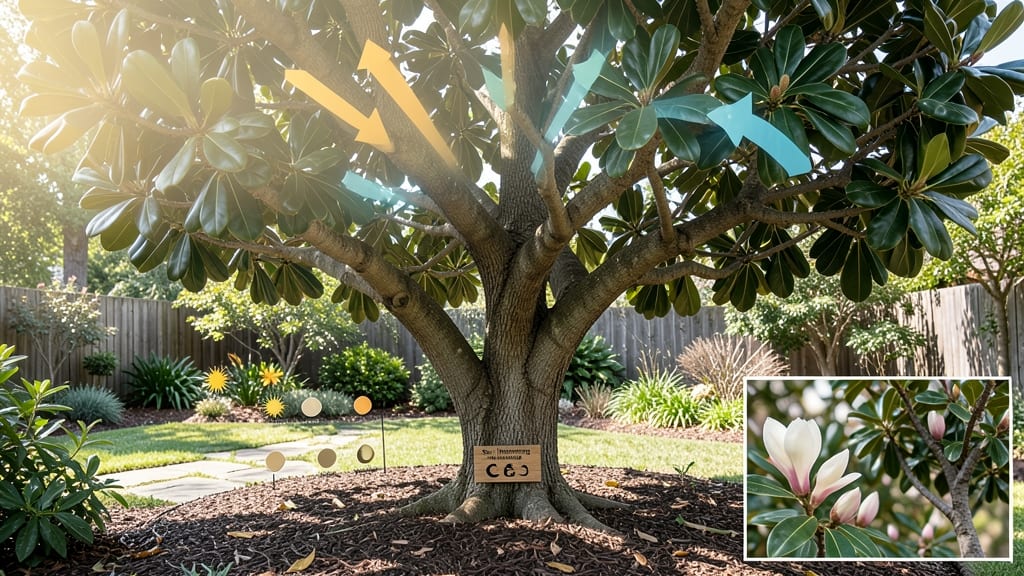
A magnolia tree needs how much sun does a magnolia tree need—specifically 4 to 8 hours daily—but the timing and type of light make all the difference for those stunning 🌸 blooms.
Struggling to keep your magnolia tree blooming year after year? The secret might be hiding in its sunlight habits—specifically, how morning sun can transform its growth and flower production.
Most magnolias thrive with partial shade, especially in hot climates where afternoon sun can scorch delicate leaves. That means placing your tree where it gets gentle morning rays and afternoon relief from direct heat.
In this guide, I’ll break down the exact sunlight needs by variety, how to spot if your tree is getting too much (or too little) light, and simple adjustments to keep it happy and blooming for years.


Optimal sunlight requirements for magnolia trees by variety
Magnolia trees are stunning additions to any landscape, but their sunlight needs vary dramatically by variety. Understanding these differences is key to maximizing bloom frequency and maintaining leaf health. Most magnolias thrive in partial shade, but some varieties—like the Southern magnolia—can handle full sun with afternoon protection.
The science behind this? Chlorophyll production peaks in moderate light, while excessive afternoon sun can cause leaf scorch and stress.
For example, Star magnolias (Magnolia stellata) prefer morning sun and afternoon shade, while Saucer magnolias (Magnolia × soulangeana) tolerate more sun but still need filtered light in hot climates.
Let’s break down the ideal sunlight conditions for popular magnolia varieties to help you choose the perfect spot in your garden.
| Variety | Ideal Sunlight | Bloom Frequency | Leaf Health Notes |
|---|---|---|---|
| Southern Magnolia (Magnolia grandiflora) | Full sun to partial shade (afternoon shade in hot zones) | Year-round blooms (spring-summer peak) | Thick, glossy leaves; leaf scorch risk in intense afternoon sun |
| Star Magnolia (Magnolia stellata) | Morning sun, afternoon shade (4-6 hours total) | Late winter-early spring (prolific blooms) | Delicate foliage; avoid direct afternoon sun to prevent browning |
| Saucer Magnolia (Magnolia × soulangeana) | Partial shade to morning sun (6 hours max) | Spring blooms (less frequent than Southern) | Medium-sized leaves; yellowing if over-exposed |
| Sweetbay Magnolia (Magnolia virginiana) | Partial shade (tolerates wet soil) | Summer blooms (fragrant, less showy) | Adaptable to low-light areas; avoids leaf burn |
| Cucumbertree Magnolia (Magnolia acuminata) | Full sun to partial shade (tolerates heat) | Summer blooms (less frequent) | Large leaves; drought-tolerant once established |
The photosynthesis efficiency of magnolias is directly tied to sunlight exposure. Too little light reduces chlorophyll production, leading to pale leaves and fewer blooms. Conversely, excessive afternoon sun (especially in hot climates) can cause oxidative stress, resulting in crispy leaf edges.
The goal is to balance light exposure with temperature moderation, which is why morning sun is ideal—it provides energy without the heat stress of afternoon rays.
If you’re planting a Southern magnolia in a hot, dry climate, prioritize afternoon shade from nearby trees or structures. For Star magnolias, an east-facing location ensures gentle morning light while shielding from harsh afternoon heat.
Always observe your tree’s leaf color and growth rate to fine-tune its position over time.
Pro tip: Use a light meter or observe your magnolia’s leaves at different times of day. If leaves appear yellow or wilted by midday, it’s getting too much sun. If growth is slow and sparse, it needs more light. Adjust gradually—sudden changes can shock the tree’s root system.
For container-grown magnolias, rotate the pot every few weeks to ensure even light exposure. This prevents one-sided growth and keeps the tree balanced. Remember, magnolias are slow growers, so patience is key when adjusting their environment for optimal sunlight.
In regions with high humidity, like the Southeast U.S., magnolias thrive with dappled shade from overhead canopies. This mimics their natural understory habitat, where they receive filtered sunlight through taller trees. Mimic this effect in your garden by planting near deciduous trees that provide seasonal shade.
Finally, consider your local microclimate. A magnolia in a coastal area may tolerate more sun due to moderate temperatures, while one in a desert-like zone will need afternoon protection. Always monitor your tree’s response and adjust its placement seasonally if needed.
By tailoring sunlight to your magnolia’s variety, you’ll unlock its full potential—think vibrant blooms, lush foliage, and a tree that thrives for decades. Start with the right spot, and
Morning sun vs. afternoon sun: why timing matters for magnolias
Magnolias are stunning ornamental trees, but their sunlight needs are more nuanced than you might think. While they require 6+ hours of sunlight daily, the timing of that light can make or break their health.
Morning sun—especially between 6-9 AM—provides the perfect balance of light and warmth without the harsh intensity of afternoon rays. This timing helps prevent leaf scorch and ensures your magnolia thrives, not just survives.
Think about it: morning sunlight gently warms the soil and foliage, kickstarting photosynthesis early in the day. This gives magnolias a head start in energy production, leading to healthier leaves and more abundant blooms.
In contrast, afternoon sun—especially in hot climates—can act like a magnifying glass, burning delicate leaves and stressing the tree. The difference in growth and bloom quality is often dramatic.
⚠️ callout warning
Magnolias need 4-8 hours of morning sun (6 AM–2 PM) but avoid intense afternoon sun (2 PM–6 PM). In USDA Zones 8-10, afternoon shade is non-negotiable—even 3 hours of direct afternoon sun can cause leaf burn and reduced blooming. For Zone 7 and cooler, partial afternoon sun (up to 2 hours) is safer.
💡 Pro Tip: Use a light meter or observe your magnolia’s leaves at noon—if they look dull or wilted, it’s getting too much sun.
Regional adjustments are key. In hot climates (Zones 8-10), magnolias often perform best with morning sun and afternoon shade. A nearby tree, lattice, or even a well-placed perennial shrub can provide that critical shade.
In cooler climates (Zones 5-7), magnolias can handle a bit more afternoon sun—up to 2-3 hours—but morning light remains the priority for optimal flower production.
If your garden lacks natural morning sun, don’t despair! You can supplement light with a reflective surface, like a white wall or light-colored mulch, to bounce extra light onto the tree.
For container-grown magnolias, rotate the pot every few weeks to ensure even light exposure. Even small adjustments can make a big difference in your magnolia’s health and blooming potential.
Watch for signs of sun stress, like crispy leaf edges or yellowing foliage, which often appear after too much afternoon sun. These issues aren’t just cosmetic—they signal reduced energy reserves, meaning fewer blooms next season.
By prioritizing morning sun, you’re essentially giving your magnolia a competitive edge in both growth and beauty.
Remember, magnolias are not one-size-fits-all when it comes to sun. Some varieties, like the Southern Magnolia, are more tolerant of full sun, while others, such as the Star Magnolia, prefer partial shade.
Always check your specific variety’s needs, but start with morning sun as your baseline. Your magnolia will thank you with vibrant blooms and lush foliage for years to come. 🌸