
Planting
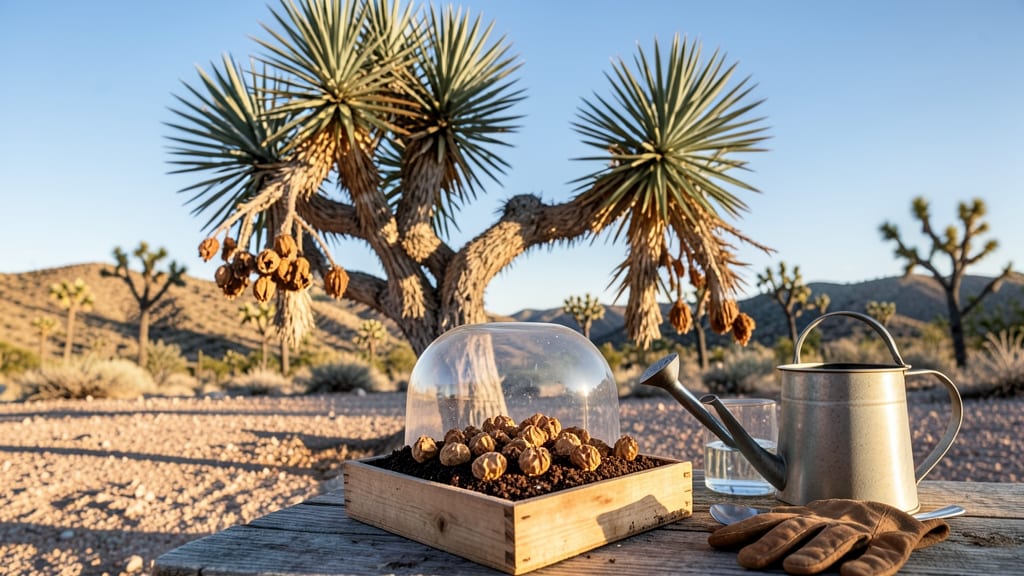
Planting Joshua tree seeds requires patience and the right tricks. 🌵 Cold stratification mimics nature’s winter cycle, breaking dormancy so seeds finally sprout—something I learned after my first batch sat dry for months.
The key is recreating the Mojave’s harsh winters in your own setup, whether you’re in a desert or a suburban backyard.
You’ll need just three things: a sealed plastic bag, a damp paper towel, and a freezer. Skip the fancy equipment—this method works because it’s simple, not complicated. Most seeds need 6-8 weeks in the fridge before planting, and even then, germination can take 6 months or more.
That’s why timing matters: start in early fall for spring blooms.
Once stratified, plant seeds 1/4 inch deep in well-draining soil under bright light. They’ll need consistent moisture but no soggy soil—overwatering is the fastest way to kill them.
The first green shoots might not appear for months, but when they do, you’ll know you’ve cracked the code for growing these iconic desert plants.
This method works for gardeners in any climate, though desert dwellers have the advantage. If you’re outside the Southwest, just extend the cold stratification to 10-12 weeks and provide extra heat once sprouted. The payoff? A slow-growing but rewarding addition to your landscape that thrives on neglect once established.
📚 In This Guide
- What you need
- Instructions
- Tips and common mistakes
- Wrapping up and next steps
What you need
- ● Joshua Tree Seeds – Fresh or properly stored seeds (10–20 seeds for best results). Ensure they’re viable—test by floating them in water (sinkers are good!).
- ● Cold Stratification Supplies: Small paper towels or coffee filters (2–3 sheets per batch of seeds).
- ● Sealed ziplock bags (quart-sized, 1–2 per batch).
- ● Refrigerator (set to 35–45°F (2–7°C)) for 30–90 days.
- ● Potting Mix – Well-draining cactus/succulent mix (avoid heavy garden soil!). A 5–10 gallon pot works for 10–20 seeds.
- ● Small Pots or Trays – 2–4 inch pots or a seed tray with drainage holes (1–2 seeds per pot).
- ● Grow Lights or Sunny Window – 12–16 hours of bright light daily (south-facing window or LED grow lights).
- ● Spray Bottle – For gentle watering (avoid over-saturating the soil!).
- ○ Heat Mat (Optional but Helpful) – Bottom heat (75–85°F) speeds up germination (not required but speeds up the process!).
- ● Humidity Dome or Plastic Wrap – Creates a mini greenhouse effect during germination.
- ● pH Test Kit – Ensures your soil is slightly acidic to neutral (6.0–7.0).
- ● Fertilizer (Low-Nitrogen) – Diluted cactus fertilizer (1/4 strength) after 3–4 months.
- ● Label & Marker – To track planting dates and seed batches!
Step-by-step instructions for planting Joshua tree seeds
Here's how I break down the cold stratification process—critical for breaking Joshua tree seed dormancy.
🌱 Step 1: Collect and Prepare the Seeds
Joshua tree seeds must come from ripe, dry fruit pods—never fresh ones, as they won't germinate. Collect pods after they've fallen naturally in late summer or early fall, when they're fully brown and brittle. Crack open the pods with a hammer or pry them apart with a screwdriver to extract the 1-2 inch black seeds inside. Store them in a paper bag at room temperature until stratification.
I always remove any seeds with visible damage or insect holes—these won't sprout. The best seeds are plump, glossy, and uniformly dark. If you're working with store-bought seeds, skip to stratification; they're typically pre-cleaned. Handle seeds gently—they're delicate and bruise easily.
❄️ Step 2: Perform Cold Stratification
Place the seeds in a sealed plastic bag with a damp paper towel—just enough moisture to keep the towel damp, not soggy. I use a 1:1 mix of peat moss and perlite in a shallow container instead of towels for better airflow, then refrigerate the entire setup at 35-40°Fg> for 60-90 days. This mimics winter conditions in the Mojave Desert and breaks dormancy.
Check the seeds every 2-3 weeks—if mold appears, discard the batch immediately. You'll know stratification is working when the seeds begin to soften slightly and lose their hard outer shell. Don't skip this step; without it, seeds may take years—or never—germinate.
🌿 Step 3: Sow Stratified Seeds
After stratification, fill 4-inch deep pots with a 50/50 mix of cactus/succulent soil and coarse sand. Joshua trees hate soggy roots, so drainage is non-negotiable. Plant seeds ½ inch deep—too shallow and they'll dry out; too deep and they'll struggle to emerge. Space them 2 inches apart in each pot.
Water gently with a spray bottle until the soil surface looks damp but not wet. Place pots in a warm, bright location with indirect light—direct sun will scorch the tiny seedlings. Keep soil consistently moist but never waterlogged; let the top inch dry slightly between waterings. Germination can take 2-4 weeks.
☀️ Step 4: Transition to Desert Conditions
Once seedlings reach 2-3 inches tall with 2-3 true leaves, gradually introduce them to full sun over 7-10 days. Start with 2 hours of morning sun daily, then increase by 1 hour every 2 days. Joshua trees are drought-tolerant but need time to acclimate—sudden exposure causes leaf scorch.
Reduce watering to every 2-3 weeks once hardened off. You'll know they're ready for outdoor planting when they show new growth after a dry spell. Transplant in late spring after the last frost, spacing them 6-8 feet apart in well-draining soil. Mulch lightly with 1 inch of gravel to prevent rot.
Tips & tricks for perfect Joshua tree seed planting
These desert-growing secrets will help you avoid common pitfalls and maximize your Joshua tree seed success rate.
The Seed Selection Secret: When collecting seeds from pods, look for the ones that sink in water—they're the healthiest and most likely to germinate. I've found that seeds with a slight sheen (not sticky) and uniform dark color have the highest viability. Store them in a paper bag to allow airflow while keeping them dry until stratification.
Stratification Setup: For better airflow during the 60-90 day cold stratification, I recommend using a shallow container with drainage holes rather than just a sealed bag. Place a layer of the 1:1 peat moss and perlite mix at the bottom, then place seeds on top with just enough moisture to dampen the mix—not soak it. This prevents mold while maintaining consistent moisture.
Germination Timing: The 2-4 week germination window can feel like an eternity, but patience is key. I've noticed that seeds stratified for the full 90 days often germinate faster than those removed at 60 days. Keep the soil consistently moist (not soggy) during this period—this is where most failures happen. A spray bottle helps maintain even moisture without overwatering.
Light Transition: When moving seedlings from indirect to full sun, I use a small shade cloth over the pots for the first 3 days. This gradual transition prevents leaf scorch while still allowing them to acclimate to brighter conditions. The 2-hour morning sun starting point is perfect—it gives them gentle exposure without the intense afternoon heat.
Pro Tips for Plant Joshua Tree Seeds
- These desert-growing secrets will help you avoid common pitfalls and maximize your Joshua tree seed success rate.
- The Seed Selection Secret: When collecting seeds from pods, look for the ones that sink in water—they're the healthiest and most likely to germinate.
- Stratification Setup: For better airflow during the 60-90 day cold stratification, I recommend using a shallow container with drainage holes rather than just a sealed bag.
Frequently asked questions
Got questions about growing Joshua trees from seeds? You’re not alone—these hardy desert plants have a few quirks! Here are answers to the most common questions to help you succeed.
How long does cold stratification take for Joshua tree seeds?
Cold stratification typically requires 60–90 days in the fridge (34–40°F). Some gardeners extend it to 120 days for better germination. Place seeds in a moist paper towel or sand, then check monthly for sprouting. Patience is key—rushing this step often leads to failure!
Can I skip cold stratification and plant seeds directly?
While possible, skipping stratification drastically reduces success rates (often <10% germination). If you’re in a hurry, try soaking seeds in warm water for 24 hours first, but combine this with a short 30-day cold period for best results. Desert conditions alone won’t break dormancy effectively.
What’s the best soil mix for Joshua tree seedlings?
Use a well-draining blend of 50% cactus/succulent mix and 50% coarse sand or perlite. Avoid rich soil—Joshua trees hate soggy roots! Add a thin layer of gravel on top to mimic their natural rocky habitat and prevent fungal issues.
How long until Joshua tree seeds germinate after stratification?
Germination can take 2 weeks to 6 months, depending on conditions. Keep soil consistently moist (not soggy) and warm (70–80°F) during this time. If nothing sprouts after 6 months, the seeds may be non-viable—try a fresh batch!
What’s a good alternative if my seeds won’t germinate?
Try layering (burying a branch tip in moist soil) or buying pre-stratified seeds from specialty nurseries. You can also propagate from cuttings (though it’s trickier). For instant results, consider adopting a small potted Joshua tree from a local grower!
Why are my seedlings dying after germination?
Overwatering is the #1 killer—let soil dry completely between waterings. Other culprits: low light (they need bright, indirect sun) or cold drafts. If leaves turn yellow or mushy, reduce water and improve airflow. Harden off seedlings gradually before transplanting outdoors!
Wrapping up and next steps
Growing a Joshua Tree from seed is a rewarding journey that blends patience with the magic of desert gardening! 🌵✨ By mastering cold stratification and nurturing your seedlings with care, you’re not just planting a tree—you’re cultivating a piece of the Southwest’s iconic landscape.
Whether you’re a seasoned gardener or a curious beginner, every small step brings you closer to those striking, spiky blooms.
Ready to watch your desert oasis flourish? Start small: gather your supplies, follow the stratification process, and give your seedlings the love they need. Before you know it, you’ll be standing tall among your very own Joshua Trees! 🌱💚