
How To
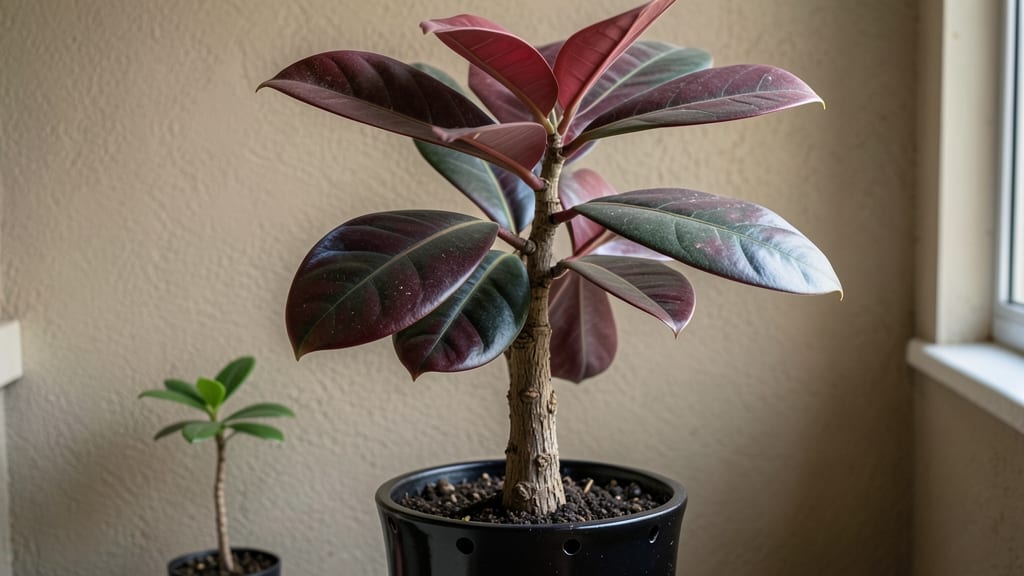
A rubber tree can grow indoors up to 10–30 feet tall with the right conditions — and yes, that includes your living room ceiling.
If you’ve ever dreamed of having a towering indoor jungle but worried about ceiling heights, the rubber tree (Ficus elastica) might be your perfect match — it can grow surprisingly tall indoors with the right care.
But here’s the catch: most indoor rubber trees stay between 5–12 feet unless you’re actively encouraging vertical growth. Varieties like ‘Decora’ or ‘Black Prince’ lean toward the taller side, while others can be pruned to stay compact.
In this guide, I’ll break down how height works for your rubber tree 🌿 — from growth rates to pruning tricks — so you can decide whether to let it reach for the sky or keep it at a manageable size.

Indoor rubber tree height limits by variety: what to expect over time
If you’ve ever wondered how tall can a rubber tree grow indoors, the answer depends entirely on the variety you choose and the care you provide. Rubber trees (Ficus elastica) are known for their impressive vertical growth, but their final height varies dramatically between cultivars.
Some varieties stay compact at 5 feet, while others can reach ceiling heights of 12 feet or more indoors with ideal conditions.
Understanding these differences helps you plan for your space. For example, the ‘Black Prince’ variety often tops out at 6-8 feet, making it perfect for standard ceilings, while the ‘Decora’ can grow twice that tall if left unpruned.
Even the ‘Tineke’ with its striking variegation can surprise you with its height potential if given enough time and light.
Here’s what you need to know about realistic height expectations for popular rubber tree varieties, including their growth rates and mature sizes:
Notice how the growth rates slow down as the tree matures. In their first few years, rubber trees can shoot up 6–12 inches annually, but this pace typically halves after reaching 5 feet tall.
This means a ‘Decora’ could hit 8 feet in 5 years but may only add 2–4 inches per year afterward unless you prune aggressively.
Another critical factor is the juvenile vs. mature growth phases. Young rubber trees focus energy on height, while older plants prioritize leaf production and stem thickening.
This shift often happens around 3–5 years of age, which is why many growers prune their trees during this transition to maintain manageable heights.
Light exposure plays a huge role in height control. Rubber trees grown in low-light conditions (like a north-facing window) may stretch excessively, reaching for light and growing taller but leggier. In contrast, those in bright indirect light (east or west windows) tend to grow stockier and more compact.
If you notice your tree developing long, thin stems, it’s a sign it needs more light or a pruning session.
Pot size also influences height. Root-bound rubber trees often grow taller faster as they compete for nutrients. If you want to limit height, choose a pot that’s 1–2 inches wider than the root ball and repot only when necessary.
For taller varieties like ‘Decora’, consider using a heavier pot to stabilize the plant as it grows.
Finally, remember that pruning isn’t just for height control—it also encourages bushier growth. If you trim the top 2–3 inches of a rubber tree, it will typically sprout new branches below the cut, creating a fuller, more balanced shape.
This technique is especially useful for ‘Tineke’ or ‘Burgundy’, where the variegation or color makes a bushy form more visually appealing.
With the right variety and care, your rubber tree can become a stunning indoor centerpiece—whether you prefer a towering statement plant or a compact tabletop specimen. The key is understanding its growth potential early and adjusting your care routine accordingly. 🌿
How to maximize (or control) your rubber tree’s indoor height
Want your rubber tree (Ficus elastica) to reach for the ceiling—or stay compact like a tabletop plant? The key lies in understanding how to manipulate its growth signals.
Whether you're aiming for a 10-foot indoor giant or a 3-foot statement piece, the same principles apply: light, pruning, and pot size. Let’s break down how to shape your rubber tree’s future.
First, recognize that rubber trees grow 6–12 inches per year indoors, with some varieties like ‘Black Prince’ reaching 12 feet in ideal conditions. The secret to controlling height isn’t just cutting branches—it’s about timing and technique.
For example, pruning in spring or early summer encourages bushier growth, while topping (cutting the stem flat) forces multiple stems to sprout, creating a fuller, shorter plant.
⚠️ callout-warning
Cutting back more than 1/3 of the plant’s height at once can shock your rubber tree, leading to leaf drop or stunted growth. Always prune just above a leaf node (the bump where leaves attach) to encourage new shoots. If your tree is under 3 feet tall, avoid heavy pruning—focus on light pinching instead.
To maximize height, place your rubber tree near an east or north-facing window for bright indirect light. Rotate the pot quarter-turns every 2 weeks to ensure even growth.
For a taller, leggier look, reduce light slightly and fertilize with a balanced 10-10-10 mix every 6 weeks during spring and summer. Avoid overcrowding roots—repot every 2–3 years into a container only 1–2 inches larger than the previous one.
For compact growth, use topping techniques: Cut the main stem just above a leaf node when it reaches your desired height. Within 4–6 weeks, new shoots will sprout from the cut.
Choose the strongest shoot to be your new leader and prune the others to maintain shape. This method works best on trees under 5 feet tall—larger cuts may stress mature plants.
Pro tip: Use smaller pots to naturally limit height. When roots fill the container, the tree focuses on leaf and branch growth rather than vertical expansion. Pair this with moderate watering (let the top 1–2 inches of soil dry between waterings) to slow growth further.
With these adjustments, you can keep your rubber tree at desk height or let it stretch toward your ceiling beams.
Remember, rubber trees respond best to gradual changes. Whether you’re encouraging height or keeping it compact, patience and consistency are key. Start with small adjustments, monitor your plant’s reaction, and refine your approach over time.
Your rubber tree will thank you with lush, healthy growth—no matter the direction! 🌿