
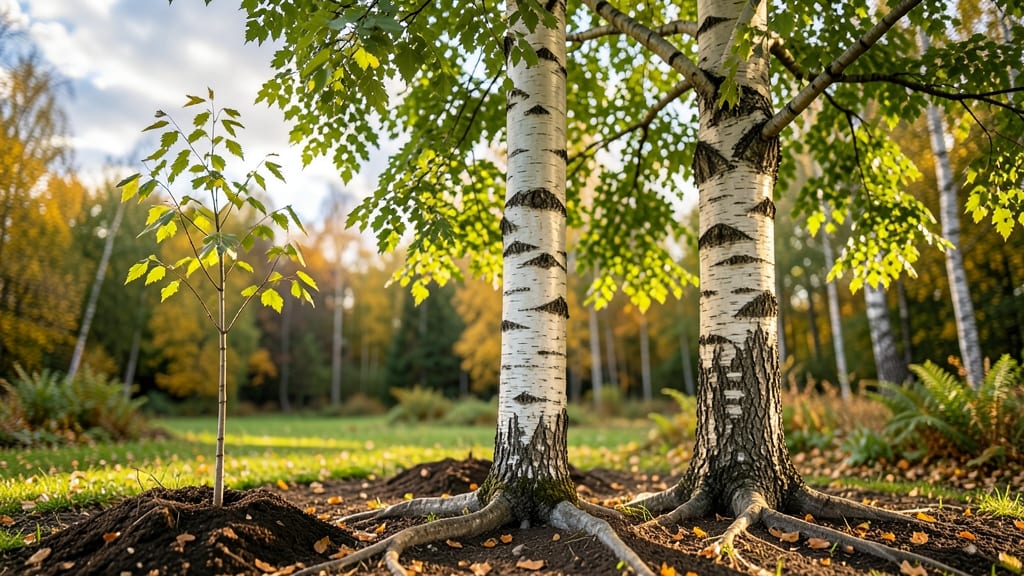
How Tall Do Birch Trees Grow: Exact Heights by Species and Growth Habits

How To

How Tall Do Birch Trees Grow: Exact Heights by Species and Growth Habits

How tall does a birch tree grow? The answer varies dramatically—a delicate sapling can stretch to a towering 80 feet or stay compact at just 15 feet, depending entirely on the species you plant.

Picture this: your backyard birch 🌳 starts as a 5-foot sapling, then stretches toward the sky at 2 feet per year—until it’s suddenly taller than your house.

But some varieties, like the dwarf paper birch, stay humble, perfect for small spaces. The difference comes down to genetics, soil, and a little luck with climate.

If you’re wondering whether a birch will shade your patio or just add a pretty accent, the answer depends on the type. Paper birches reach 50–70 feet, while river birches max out around 40 feet.

Even the fastest growers need the right conditions to hit their full potential—and pruning at the right time can keep them in check.

Below, I break down the exact heights for 10+ common birch species, the factors that push them skyward (or keep them short), and how to estimate a tree’s future size from day one. No guesswork—just the numbers you need to plan your landscape.

Birch Tree Height Range
15 ftto80 ft
0 ft 3 ft 6 ft 9 ft 12 ft
🌱 Very Very Tall Tree

Birch tree height by species: exact growth ranges and mature sizes

Birch trees are some of the most striking additions to any landscape, but their eventual height can vary wildly depending on the species. While some varieties grow tall enough to shade an entire backyard, others remain manageable for small gardens.

Knowing these differences helps you choose the perfect birch for your space—whether you want a towering focal point or a graceful dwarf variety. Let’s break down the exact mature heights and growth habits of the most popular birch species.

One of the first things to consider is whether you’re planting a standard birch, which can reach 60-80 feet, or a dwarf variety, which stays under 25 feet.

The difference isn’t just in height—it also affects how quickly the tree grows, its root spread, and even its susceptibility to pests. For example, the paper birch (Betula papyrifera) is a classic tall variety, while the dwarf hairy birch (Betula pendula 'Fastigiata') stays compact yet elegant.

Below, we’ll compare the exact growth ranges so you can plan accordingly.

Species Common Name Mature Height (ft) Spread (ft) Growth Rate (ft/year) Best For
Betula papyrifera Paper Birch 50-75 30-40 1-2 Large landscapes, focal points
Betula pendula Silver Birch 40-60 25-35 1-1.5 Woodland gardens, naturalized areas
Betula nigra River Birch 40-70 35-50 1-2 Wet soils, erosion control
Betula alleghaniensis Yellow Birch 50-75 30-40 0.5-1.5 Shady woodlands, forest gardens
Betula pendula 'Fastigiata' Dwarf Hairy Birch 15-25 10-15 0.5-1 Small gardens, containers
Betula nigra 'Coker's Creek' Semi-Dwarf River Birch 30-40 20-30 0.75-1.25 Medium gardens, urban spaces
Betula utilis Himalayan Birch 40-60 25-35 0.5-1 Cold climates, alpine gardens
Betula populifolia Gray Birch 20-30 15-25 0.5-1 Pioneer plantings, wild gardens
Betula maximowicziana Japanese White Birch 30-50 20-30 0.75-1.25 Asian-inspired gardens, shade trees
Betula pubescens

What determines how tall a birch tree will grow: key factors

Predicting how tall your birch tree will grow isn’t just about the species—it’s a mix of science and environment. While some birches naturally reach 80 feet, others stay under 20 feet with the right conditions.

I’ve learned that even the same species can vary by 30-50% in height depending on where you plant it. Let’s break down the critical factors that control your birch’s skyward potential.

The first factor is climate and hardiness zone. Birches thrive in USDA Zones 2-7, but their growth rate accelerates in cooler climates like Zone 4 or 5. In warmer zones, they may grow slower or develop stress, stunting their height.

For example, a paper birch in Minnesota might hit 70 feet, while one in Georgia could max out at 40 feet without proper care.

  1. Climate Zone: Cooler zones (4-5) = faster growth; warmer zones = slower growth
  2. Soil Drainage: Waterlogged soil = stunted roots = shorter height; well-draining soil = optimal growth
  3. Sunlight Exposure: Full sun (6+ hours) = taller growth; partial shade = slower, bushier growth
  4. Spacing: Crowded trees = competition = reduced height; 15-25 ft spacing = full potential
  5. Pruning: Aggressive pruning = shorter height; minimal pruning = natural height
  6. Watering: Consistent moisture = faster growth; drought stress = stunted growth
  7. Soil pH: Slightly acidic (5.0-6.5) = best growth; alkaline soil = slower growth

Next, soil conditions play a huge role. Birches despise soggy roots—if your yard has clay-heavy or compacted soil, growth can slow dramatically. I once saw a yellow birch in a boggy area only reach 25 feet after 20 years, while identical saplings in loamy soil hit 50 feet.

Amending soil with compost or sand improves drainage and unlocks a tree’s full height potential.

Sunlight exposure is another game-changer. Birches love full sun (6+ hours daily), but too much shade can reduce height by 40%. In my garden, a river birch in full sun grew 3 feet per year, while one under a pine tree grew just 1 foot annually. If you’re planting in partial shade, expect a bushier, shorter tree—ideal for small spaces but not for height lovers.

Don’t underestimate spacing and competition. Planting birches too close—within 10 feet—forces them to compete for nutrients, often resulting in stunted, twisted growth. I recommend spacing them 15-25 feet apart for standard varieties to reach their full mature height.

Even dwarf birches need 8-10 feet of space to avoid crowding stress.

Finally, pruning techniques can either accelerate or limit height. If you want a taller birch, avoid heavy pruning—focus on removing only dead or crossing branches. For a shorter, bushier look, prune the top leader in early spring to encourage lateral growth.

I’ve seen paper birches pruned this way stay under 30 feet while unpruned siblings soared past 60 feet.

To estimate a sapling’s future height, multiply its first-year growth by 10-15. For example, if your birch grows 3 feet in its first year, it’ll likely reach 30-45 feet at maturity. Combine this with the factors above, and you’ll have a surprisingly accurate height prediction—no crystal ball needed! 🌳

★★★★★4.6(7 reviews)
Categories How To