
Pruning
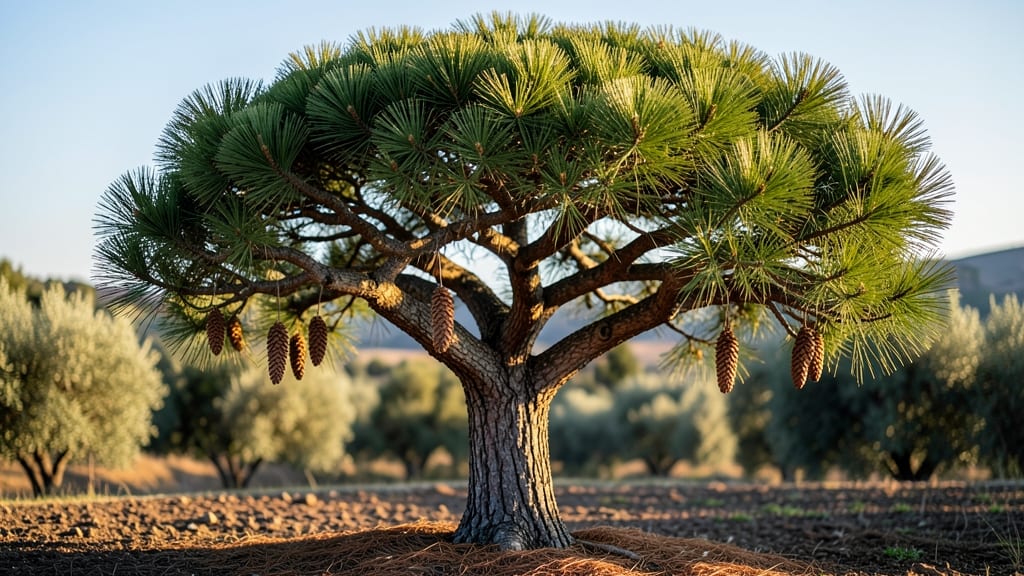
A full-grown Italian Stone Pine Tree 🌲 can reach heights of 30 to 60 feet, making it a true Mediterranean giant—but its size isn’t the only thing that surprises gardeners.
Picture this: a towering, umbrella-shaped tree with silvery-blue needles and edible pine nuts, thriving in your backyard or lining a coastal road. Yet, many homeowners hesitate because they don’t realize how adaptable this tree can be once mature.
From its slow but steady growth rate to its drought-resistant nature, the Italian Stone Pine is far easier to care for than most people assume. With the right placement and minimal pruning, you can enjoy its majestic presence without the high-maintenance hassle.
In this guide, I’ll break down everything you need to know about its full-grown size, ideal growing conditions, and the simple care routine that keeps it healthy for decades. Let’s get started!
Italian Stone Pine full grown: exact height, spread & growth rate explained
The Italian Stone Pine (Pinus pinea) is a Mediterranean powerhouse that can reach impressive mature dimensions, making it a stunning focal point in any landscape.
When fully grown, these trees typically stand between 30 to 60 feet tall, with some exceptional specimens exceeding 70 feet in ideal conditions. Their spread can range from 20 to 40 feet wide, creating a broad, umbrella-like canopy that provides ample shade.
Understanding these dimensions is crucial for planning your landscape, especially if you're considering this tree for urban streetscapes, coastal windbreaks, or large garden specimens.
The growth rate varies significantly by region, with Mediterranean climates fostering faster, more robust growth compared to temperate zones, where growth may be slower but still substantial over time.
| Characteristic | Mediterranean Climate | Temperate Climate | Key Notes |
|---|---|---|---|
| Mature Height | 50–70 ft | 30–50 ft | Warmer climates accelerate growth; cooler zones slow maturation. |
| Canopy Spread | 30–40 ft | 20–30 ft | Pruning can reduce spread by up to 30% without harming health. |
| Growth Rate (Annual) | 12–24 in | 6–12 in | Young trees grow fastest; mature growth slows to 1–2 in/year. |
| Time to Maturity | 20–30 years | 30–40 years | Cold winters delay full maturity; coastal areas speed up development. |
| Canopy Density | Very Dense | Moderate-Dense | Thinning pruning improves airflow; reduces pest risks. |
In Mediterranean climates, like those found in Southern California, Spain, or Italy, Italian Stone Pines thrive with rapid early growth and can reach 50 feet in just 20–30 years.
These regions provide the perfect combination of warm temperatures, minimal frost, and consistent sunlight, which are ideal for this species. For example, a 20-year-old tree in Tuscany might already stand 40 feet tall with a 25-foot spread, showcasing its potential as a quick-growing shade provider.
Conversely, in temperate climates, such as USDA Zones 6–8 (e.g., Portland, Oregon, or Boston, Massachusetts), growth is slower but still substantial. Here, cold winters and shorter growing seasons can delay maturation by 10–15 years.
A 30-year-old tree in Zone 7 might only reach 35–40 feet tall, with a 20-foot spread. However, once established, these trees become highly drought-tolerant, making them resilient in water-scarce regions.
One of the most striking features of a mature Italian Stone Pine is its canopy structure. The tree develops a rounded, umbrella-like shape with horizontal branches that create a dense, shade-providing canopy.
In coastal areas, the salt tolerance of this species allows it to thrive near oceanfront properties, where it can grow 10–15% taller due to enhanced humidity and nutrient-rich soil from seabird activity.
If you're planting an Italian Stone Pine in an urban setting, be mindful of its mature spread. A 40-foot-wide canopy requires ample space, so avoid planting it too close to sidewalks, driveways, or other structures.
In smaller landscapes, consider regular pruning to control spread while maintaining the tree's iconic silhouette. For instance, structural pruning in early spring can reduce the spread by up to 30% without sacrificing height.
The growth rate of an Italian Stone Pine is also influenced by soil quality and water availability. In well-draining, sandy soils (common in Mediterranean regions), growth is faster and more vigorous.
However, in clay-heavy or waterlogged soils, root development slows, leading to stunted growth and potential disease risks. To maximize growth, amend soil with compost or sand before planting and ensure adequate drainage
Optimal care for mature Italian Stone Pine trees: pruning, soil & water needs
Once your Italian Stone Pine reaches maturity—typically between 30 to 60 feet tall—its care shifts from nurturing growth to maintaining structural integrity and health.
This Mediterranean native thrives with minimal intervention but requires strategic pruning, well-draining soil, and smart watering to prevent common issues like root rot or pest infestations. Let’s dive into the essentials for keeping your towering beauty flourishing for decades.
Mature Italian Stone Pines develop a wide-spreading canopy that can reach 20 to 30 feet wide, making pruning a critical task to control its size and shape.
Unlike fast-growing species, this tree grows slowly—about 1 to 2 feet per year—so pruning should be done selectively to avoid stressing the tree. Focus on removing dead or diseased branches first, followed by thinning to improve air circulation and sunlight penetration to the lower canopy.
⚠️ callout warning
Avoid these common mistakes when pruning your full-grown Italian Stone Pine:
- Over-pruning: Never remove more than 25% of the canopy in one session—this can shock the tree and invite pests.
- Topping the tree: Cutting the main trunk or large branches flat can lead to weak regrowth and structural instability.
- Pruning in winter: Avoid heavy pruning during dormant months (Dec-Feb)—this stresses the tree when it’s least resilient.
- Ignoring deadwood: Leaving diseased or dead branches can spread fungal infections like needle blight.
Pro Tip: Use sterilized pruning tools and seal cuts with pruning sealant to prevent sap leakage and infections.
For soil conditions, mature Italian Stone Pines prefer sandy, well-draining soil with a slightly acidic to neutral pH (6.0–7.5). Amend heavy clay soils with organic matter like compost or pine bark to improve drainage—waterlogged roots are a leading cause of decline.
If your tree is planted in urban areas with compacted soil, consider deep mulching with wood chips to mimic its natural Mediterranean habitat.
Watering needs change dramatically once your tree is established. While young Italian Stone Pines require regular watering, mature trees are drought-tolerant and only need deep watering every 2–4 weeks during dry spells.
In drought-prone areas, reduce watering to once a month unless the soil is extremely dry. Always water deeply—aim for 10–20 gallons per tree—to encourage deep root growth and resilience.
Pest and disease prevention focuses on monitoring and proactive care. Watch for signs of aphids, spider mites, or white pine weevils, which can stress mature trees. Apply neem oil or insecticidal soap as a preventive spray in early spring.
For fungal issues like root rot, ensure proper drainage and avoid overwatering. A balanced fertilizer (5-10-10) applied every 2–3 years in early spring supports overall health without overstimulating growth.
With the right pruning schedule, soil management, and watering discipline, your mature Italian Stone Pine will remain a stunning focal point for generations. Remember, patience is key—this slow-growing beauty rewards careful, low-intervention care with decades of Mediterranean elegance.