
How Tall Do Red Maple Trees Grow: Mature Height Ranges by Variety and Climate

How To

How Tall Do Red Maple Trees Grow: Mature Height Ranges by Variety and Climate

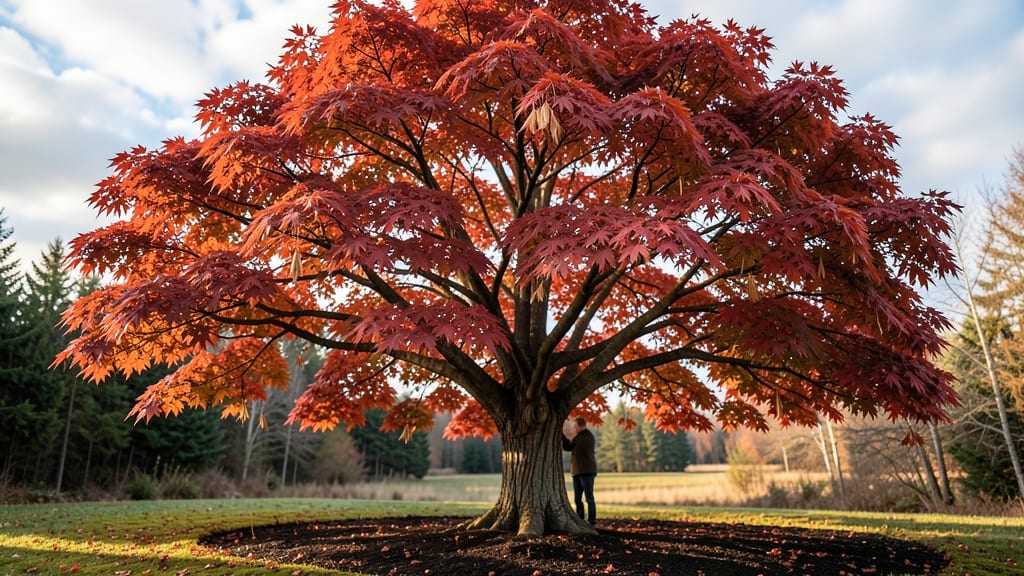
A red maple tree can grow anywhere from 30 to 60 feet tall, depending on the variety and growing conditions, so planning your landscape around it is a must.

If you're considering planting a red maple tree 🌳, knowing its mature height is crucial—some varieties reach towering heights while others stay compact, making all the difference for your landscape design.

Standard cultivars like 'Autumn Flame' or 'October Glory' often hit that 40- to 60-foot range, while dwarf varieties like 'Armstrong' stay a more manageable 15 to 25 feet tall.

Below, I break down how climate, soil, and pruning habits influence height, plus how to pick the perfect variety for your space—whether you want a shade tree or a statement piece.

Red Maple Tree Height Range
30 ftto60 ft
0 ft 3 ft 6 ft 9 ft 12 ft
🌱 Very Very Tall Tree

Red maple tree height ranges by common varieties (with mature dimensions)

Red maple trees (Acer rubrum) are among the most popular shade trees in North America, prized for their vibrant fall foliage and adaptability. But if you're planning your landscape, knowing exactly how tall your chosen variety will grow is essential for spacing and long-term design.

Some cultivars reach 60 feet or more, while others stay under 25 feet, making the difference between a towering centerpiece and a manageable accent.

The mature height of a red maple depends heavily on its cultivar, with some varieties bred specifically for smaller spaces. For example, the 'Armstrong' red maple stays compact at 15-25 feet, while the classic 'October Glory' can soar to 50-60 feet.

Understanding these differences helps you avoid overcrowding or underutilizing your yard—especially when planting near structures, power lines, or other trees.

Below is a detailed comparison of 10 popular red maple varieties, including their mature heights, spreads, and growth habits. These dimensions account for ideal growing conditions in USDA Zones 3-9, where red maples thrive.

Always check your local climate zone to adjust expectations, as northern vs. southern growing conditions can influence height by 10-20%.

Variety
Mature Height
Spread
Notes
'Autumn Flame'
40-50 ft
30-40 ft
Moderate
✅ Bright red foliage
'October Glory'
50-60 ft
35-45 ft
Fast
✅ Disease-resistant
'Armstrong'
15-25 ft
15-20 ft
Slow
✅ Dwarf variety
'Red Sunset'
40-50 ft
30-35 ft
Moderate
✅ Cold-hardy
'Franks Red'
45-55 ft
30-40 ft
Fast
✅ Early spring color
'Black Tower'
30-40 ft
10-15 ft
Slow
✅ Narrow form
'Scarlet Sentinel'
35-45 ft

How climate and growing conditions affect red maple tree height

The height of a red maple tree isn't set in stone—it’s heavily influenced by your local climate zone and growing conditions. In warmer southern climates, like USDA Zones 7-9, these trees often grow taller and faster due to longer growing seasons.

Meanwhile, in cooler northern zones (Zones 4-6), growth may be slower, with trees reaching maturity at a more moderate pace. Understanding these factors helps you predict whether your red maple will become a towering shade provider or a more manageable landscape feature.

Soil type and drainage also play a critical role. Red maples thrive in moist, well-draining soils but can struggle in waterlogged or rocky terrain. In sandy soils, roots spread wider to access moisture, potentially slowing vertical growth.

Conversely, rich loamy soil fuels faster height increases, especially when paired with adequate sunlight exposure. If your garden has poor soil, amending it with compost can give your tree a growth boost over time.

🌳

Key Takeaway: Red Maple Height by Climate

Climate Factor Effect on Height Example Region
USDA Zone 4-6 Slower growth; 30-45 ft mature height Northern New England, Upper Midwest
USDA Zone 7-9 Faster growth; 50-60 ft mature height Southeast U.S., California coast
Full Sun (6+ hrs/day) Maximizes growth; 2-3 ft/year in ideal conditions Southern exposure gardens
Partial Shade Slower growth; 1-2 ft/year typical Wooded backyard edges

💡 Pro Tip: In drought-prone areas, mulching retains moisture and can add 5-10 ft to mature height by reducing stress.

Sunlight exposure is another game-changer. Red maples crave full sun, and trees planted in 6+ hours of direct sunlight daily can grow 2-3 feet per year in their youth. In shadier conditions, like under other trees, growth slows dramatically—sometimes by 50%.

For example, a red maple in North Carolina’s Piedmont region (Zone 7) might hit 55 feet in full sun but only 35 feet if planted near a dense evergreen hedge.

Water availability also shapes your tree’s destiny. While red maples are drought-tolerant once established, young trees need consistent moisture to reach their full height potential.

In arid climates, like parts of Texas or Arizona, supplemental watering during dry spells can mean the difference between a 40-foot tree and a stunted 25-footer. Overwatering, however, can be just as harmful—it causes root rot and weakens structural growth.

Even wind exposure matters. Trees in open, windy areas (like coastal regions) often grow shorter and stockier to resist storm damage. In contrast, red maples in protected inland gardens stretch taller with minimal branching.

For instance, a red maple in Maine’s coastal zones might max out at 35 feet due to salt spray and wind, while its counterpart in Michigan’s sheltered valleys could easily surpass 50 feet.

Finally, pruning habits (or lack thereof) can alter height. Regular crown thinning encourages upward growth, while aggressive topping stunts height but weakens the tree. If you’re aiming for a shorter red maple, focus on selective pruning in late winter—this redirects energy to lateral branches rather than vertical growth.

With the right conditions, even a 60-foot giant can become a 30-foot statement piece with patience and precision.

★★★★★4.7(13 reviews)
Categories How To