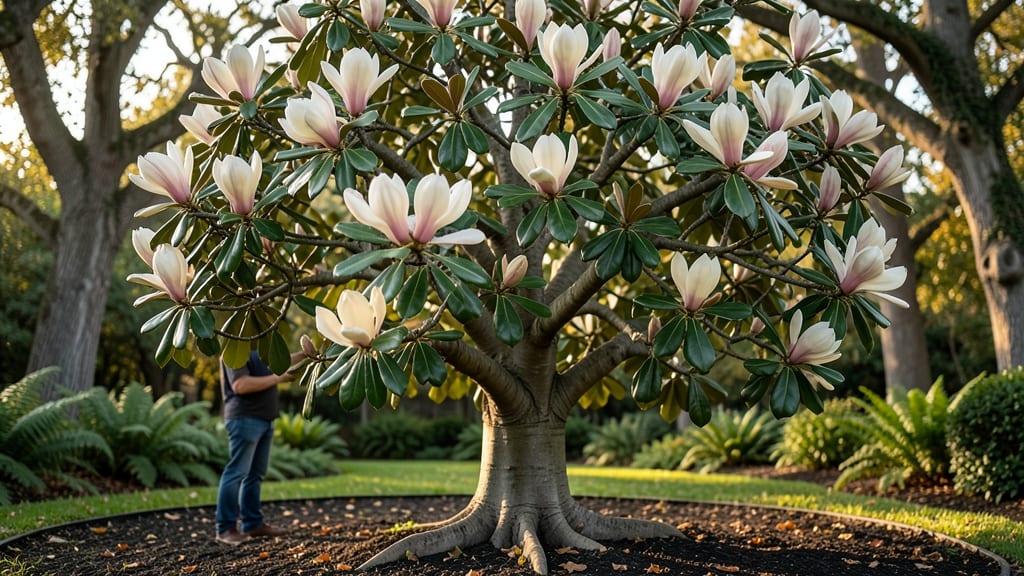
A magnolia tree can grow how tall does a magnolia tree grow to heights ranging from 10 feet to over 80 feet, depending on the species—so your choice could mean a compact accent plant or a towering backyard centerpiece.
Picture this: a dwarf variety like Magnolia stellata hugging your front porch at just 10–12 feet, while a Southern magnolia stretches toward the sky like a living cathedral. The difference isn’t just aesthetics—it’s about space planning, pruning needs, and even your neighborhood’s HOA rules.
Fast-growing magnolias can add 2–4 feet per year in ideal conditions, but soil, sunlight, and climate play huge roles. A semi-dwarf might top out at 25 feet, while standard types dwarf two-story homes. Here’s how to match the right size to your yard—without sacrificing those showstopping blooms.
Below, I break down the fastest-growing varieties, their mature heights, and how to keep them from outgrowing your garden. Spoiler: pruning isn’t just for height control—it’s about shaping their future.
Magnolia Tree Height Range
10 ftto80 ft
0 ft
3 ft
6 ft
9 ft
12 ft
🌱
Very Very Tall Tree
Magnolia tree height guide: fastest-growing varieties and their mature sizes
Magnolias are some of the most majestic trees in any garden, but their height varies wildly depending on the species. If you're planning your landscape, knowing exactly how tall a magnolia will grow helps you choose the perfect fit for your space.
Some varieties stay compact at just 10 feet tall, while others can reach over 100 feet—like the towering Southern magnolia. Let’s explore the fastest-growing magnolias and their mature sizes to help you decide.
Fast growth doesn’t always mean giant size—some magnolias grow quickly but stay relatively small, making them ideal for smaller yards. Others shoot up 2–3 feet per year and need plenty of space.
Below, I’ve ranked the top 10 fastest-growing magnolias by height and growth rate, along with their ideal planting zones. Whether you want a dwarf magnolia for a patio or a tall specimen for a statement, this guide covers it all.
Pro Tip: Always check your USDA hardiness zone before planting. Most magnolias thrive in zones 5–9, but some varieties, like the saucer magnolia, can handle colder climates down to zone 4. A quick zone check ensures your tree grows to its full potential without stress.
| Variety |
Mature Height |
Annual Growth Rate |
Best For |
USDA Zones |
| Southern Magnolia (Magnolia grandiflora) |
60–80 ft |
1–2 ft/year |
Large estates, privacy screens |
6–10 |
| Sweetbay Magnolia (Magnolia virginiana) |
30–50 ft |
1–1.5 ft/year |
Suburban yards, wet areas |
5–9 |
| Saucer Magnolia (Magnolia × soulangeana) |
20–30 ft |
1.5–2 ft/year |
Small gardens, urban landscapes |
4–9 |
| Star Magnolia (Magnolia stellata) |
15–25 ft |
1–1.5 ft/year |
Dwarf varieties for patios |
5–8 |
| Little Gem (Magnolia grandiflora 'Little Gem') |
20–25 ft |
1.5 ft/year |
Small spaces, container growing |
7–10 |
| Jane (Magnolia grandiflora 'Jane') |
15–20 ft |
1–1.5 ft/year |
Dwarf magnolia for small yards |
7–10 |
| Black Tulip (Magnolia liliiflora 'Nigra') |
10–15 ft |
1 ft/year |
Containers, bonsai-style gardens |
6–9 |
| Yulan Magnolia (Magnolia denudata) |
20–30 ft |
1.5 ft/year |
Traditional gardens, early blooms |
5–9 |
| Loebner Magnolia (Magnolia × loebneri) |
15–25 ft |
1–2 ft/year |
Hybrid varieties for fast growth |
5–9 |
| Teddy Bear (Magnolia stellata 'Royal Star') |
8–12 ft |
0.8–1 ft/year |
Dwarf magnolia for small gardens |
5–
How to choose a magnolia tree based on height and garden space
Selecting the right magnolia tree for your space starts with understanding its mature height. Your garden’s size, sunlight exposure, and long-term vision all play critical roles. A small backyard might only accommodate a dwarf variety, while a rural property could easily handle a towering Southern magnolia.
Let’s break down how to match your space to the perfect magnolia.
First, measure your available space—both horizontally and vertically. Magnolia trees need room to spread their roots and branches, so planting too close to structures or other plants can stunt growth or cause damage.
For example, a 15-foot magnolia needs at least 10 feet of clearance all around, while a 60-foot giant requires a full acre or more.
Consider your garden’s sunlight conditions too. Most magnolias thrive in partial shade, but taller varieties like Magnolia grandiflora can tolerate full sun in cooler climates. If your space is shady, opt for smaller varieties like Magnolia stellata, which flourish with just 3-4 hours of sunlight daily.
-
🌱 Dwarf Magnolias (8-12 ft)
Perfect for small gardens or containers. Varieties like Magnolia 'Little Gem' or 'Black Tulip' reach maturity in 5-10 years and require minimal pruning.
-
🌳 Medium Magnolias (15-25 ft)
Ideal for suburban yards. Examples include Magnolia 'Ann' or 'Elizabeth', which add drama without overwhelming smaller spaces. Space them 12-15 feet apart.
-
🌲 Giant Magnolias (30-80 ft)
Best for large properties or as specimen trees. Southern magnolias grow 2-3 feet per year and need 20+ feet of clearance. Prune young for shape control.
-
✂️ Pruning Tips by Size
Dwarf/medium: Prune in late winter to shape. Giant: Avoid heavy pruning—focus on removing dead branches and thinning for airflow.
Think long-term about your magnolia’s growth expectations. A fast-growing variety like Magnolia 'Jane' can reach 15 feet in 5 years, while slower growers like Magnolia 'Nigra' take 15+ years to mature.
If you’re planting near a driveway or sidewalk, choose a smaller variety to avoid root conflicts or overhanging branches.
Finally, check your USDA hardiness zone. Most magnolias thrive in zones 5-9, but taller varieties like Magnolia grandiflora prefer zones 7-10. Smaller varieties are often more cold-hardy, making them better for northern climates. Always verify the specific variety’s zone range before purchasing.
With the right magnolia size and placement, you’ll enjoy decades of fragrant blooms and lush foliage—without the headache of overgrowth. Start small, plan ahead, and your garden will thank you! 🌿
★★★★★4.5(12 reviews)
|