
How To
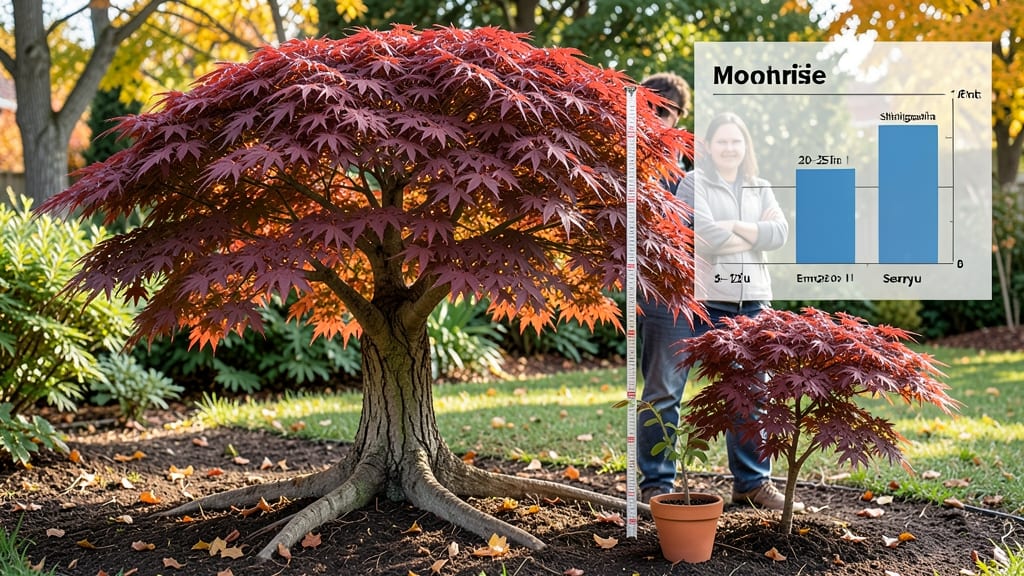
A Japanese maple tree grows anywhere from 10 to 30 feet tall, depending on the variety and how you care for it.
If you're dreaming of a stunning Japanese maple tree but wondering how tall it will grow, the answer depends on the variety—and proper care can make all the difference.
Some cultivars, like the Bloodgood, reach towering heights of 20 to 30 feet, while others, such as the dwarf varieties, stay a modest 8 to 12 feet tall.
In this guide, I’ll break down the height ranges by popular types, share the key factors that influence growth, and show you how to manage size through smart pruning and cultivation.

Japanese maple tree height ranges by popular varieties
Japanese maples (Acer palmatum) are prized for their stunning foliage and graceful forms, but their mature height varies dramatically by cultivar. Some grow as small as 6 feet, while others tower over 30 feet.
Choosing the right variety ensures your tree fits your landscape vision while meeting your maintenance preferences.
Height isn't the only factor—growth habits differ too. Upright varieties like 'Bloodgood' reach impressive heights, while weeping types such as 'Crimson Queen' spread wider than they grow tall. Dwarf cultivars, like 'Bonfire,' stay manageable even in small gardens. Let's explore the most popular varieties and their mature sizes.
Understanding these ranges helps you plan spacing, pruning needs, and long-term care. For example, a 20-foot tree like 'Emperor I' requires more yard space than a 10-foot 'Dissectum' cultivar. Always check your local climate zone, as growth rates can vary by USDA hardiness zone.
| Variety | Type | Mature Height | Spread | Growth Rate |
|---|---|---|---|---|
| 'Bloodgood' | Upright | 20-25 ft | 15-20 ft | Moderate |
| 'Emperor I' | Upright | 20-30 ft | 15-25 ft | Fast |
| 'Dissectum' | Weeping | 10-15 ft | 10-12 ft | Slow |
| 'Crimson Queen' | Weeping | 10-12 ft | 12-15 ft | Moderate |
| 'Bonfire' | Dwarf | 6-8 ft | 8-10 ft | Slow |
| 'Shishigashira' | Upright | 15-20 ft | 10-15 ft | Moderate |
| 'Green Cascade' | Weeping | 6-10 ft | 8-12 ft | Slow |
| 'Orangeola' | Upright | 15-20 ft | 10-15 ft | Moderate |
If you're working with limited space, dwarf varieties like 'Bonfire' or 'Green Cascade' are excellent choices. These stay under 10 feet and thrive in containers or small gardens. Their slower growth rates also mean less pruning over time, making them ideal for low-maintenance landscapes.
For bold statements, upright varieties like 'Bloodgood' or 'Emperor I' deliver dramatic height and vibrant foliage. These trees grow 20-30 feet tall, perfect for anchoring large gardens or serving as focal points. Just be prepared for their expansive canopies and potential shade impact.
Weeping types, such as 'Dissectum' or 'Crimson Queen,' offer a graceful, cascading form. While they don't grow as tall—typically 10-15 feet—their horizontal spread can reach 12-15 feet, making them ideal for accentuating patios, decks, or entryways. Their delicate branches add a touch of elegance to any setting.
Remember, these are mature heights achieved over 15-20 years. Young trees grow slowly, especially in partial shade, which is their preferred light condition. Providing well-draining, acidic soil and consistent moisture will encourage healthier, more compact growth.
For container gardening, choose dwarf varieties and prune regularly to maintain size. Even standard-sized trees can be kept smaller with annual pruning in late winter or early spring. Always use sterilized pruning tools to prevent disease transmission between cuts.
If you're unsure which variety suits your space, consider starting with a smaller cultivar like 'Bonfire' or 'Green Cascade.' Their manageable size lets you enjoy the beauty of Japanese maples without long-term commitment. Plus, their vibrant colors—ranging from deep reds to bright oranges—add seasonal interest year-round.
Factors that influence Japanese maple tree height growth
Japanese maple trees (Acer palmatum) are prized for their stunning foliage and graceful forms, but their mature height varies dramatically based on variety selection and care practices.
Some dwarf varieties like 'Tamukeyama' stay under 10 feet tall, while standard types like 'Bloodgood' can reach 20-30 feet in ideal conditions. Understanding these growth factors lets you shape your tree's height to fit your landscape goals.
The most critical factor is sunlight exposure. Japanese maples thrive in partial shade (4-6 hours of sun daily), but too much direct sunlight—especially in hot climates—can stress the tree and stunt its growth.
In contrast, filtered light conditions (like morning sun with afternoon shade) encourage healthier, more controlled growth patterns. Your climate zone also plays a role, with cooler regions often yielding taller trees due to longer growing seasons.
Soil type directly impacts root development and nutrient uptake. Japanese maples prefer well-draining, acidic soil (pH 5.0-6.5) rich in organic matter. Compacted or alkaline soils restrict root growth, limiting the tree's ability to reach its full height potential.
Amending heavy clay with compost or peat moss can create the ideal growing medium for taller varieties, while well-draining soil is essential for dwarf types to maintain their compact form.
Maximizing vs. Controlling Japanese Maple Height
Maximizing Height
- Full sun exposure (6+ hours)
- Rich, acidic soil (pH 5.0-6.5)
- Minimal pruning (only to remove dead branches)
- Standard varieties (e.g., 'Bloodgood')
- Consistent watering (deep soaks weekly)
Ideal for: Large landscapes, privacy screens, or focal points.
Controlling Height
- Partial shade (4-6 hours sun)
- Dwarf varieties (e.g., 'Tamukeyama')
- Regular pruning (late winter/early spring)
- Well-draining soil (prevents overgrowth)
- Container growth (root-bound trees stay small)
Ideal for: Small yards, patios, or bonsai-style gardens.
Pruning techniques are your most powerful tool for managing height. For taller growth, avoid heavy pruning—focus on removing only dead, diseased, or crossing branches in late winter.
To control height, prune in late winter or early spring before new growth begins, cutting back 1/3 of the previous year's growth to encourage bushier, shorter development. Over-pruning weakens the tree and can reduce its overall vitality, so always use sharp, sterilized tools.
Climate zones also play a surprising role in height development. Japanese maples grow best in USDA zones 5-8, where they experience distinct seasons. In warmer zones (9+), growth may become more vigorous but less controlled, while colder zones (below 5) can slow growth significantly.
If you're in a marginal zone, choose cold-hardy varieties like 'Emperor I' or provide winter protection with burlap wraps to ensure consistent growth patterns.
For container-grown Japanese maples, height control is even easier. Root-bound trees naturally stay smaller, making them perfect for patios or small gardens. Use well-draining potting mix and repot every 2-3 years to refresh the soil.
If you notice the tree outgrowing its space, prune roots gently during repotting to maintain compact growth. Always water containers thoroughly in the morning to prevent fungal issues that can stress the tree and affect height development.
With the right combination of variety selection, sunlight management, soil care, and pruning, you can grow a Japanese maple that perfectly fits your space—whether you're aiming for a towering specimen or a delicate dwarf.
Start with the right variety for your goals, then adjust care practices as the tree matures to keep it thriving at your desired height. 🌿