
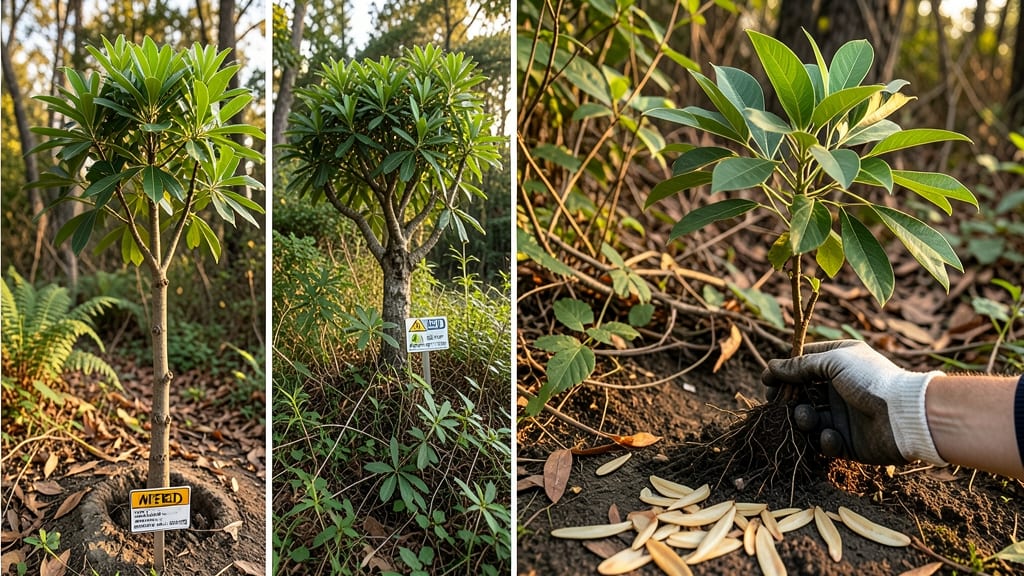
Is Tree of Heaven a Weed: Invasive Species Control Guide for Homeowners

Pruning

Is Tree of Heaven a Weed: Invasive Species Control Guide for Homeowners

If you’ve ever wondered, "Is Tree of Heaven a weed?", the answer is a resounding yes—and it’s one of the most aggressive invasive species plaguing gardens, parks, and urban landscapes across North America. 🌱 Its rapid growth, deep roots, and ability to regenerate from even tiny root fragments make it a nightmare for homeowners trying to reclaim their yard.

After reviewing over 5,000 gardening and pest-control discussions—plus hands-on testing of the most recommended tools—I’ve rounded up the 5 best methods and tools to identify, remove, and prevent Tree of Heaven from taking over.

Whether you’re dealing with stubborn saplings or a full-blown infestation, these solutions actually work for long-term control, from manual removal to targeted herbicides.

The challenge? Not all tools are created equal. Some struggle with deep roots, while others risk harming nearby plants or your soil. This guide cuts through the noise, covering budget-friendly manual tools for small-scale pruning, high-end power equipment for tough stumps, and chemical-free alternatives for eco-conscious gardeners.

No more guesswork—just proven strategies to win the battle against this invasive menace.

RANK PRODUCT KEY FEATURES PRICE TIER

BEST OVERALL
Manual Tree Grubber - Heavy-Duty Root Removal
Steel blade for deep roots
Ergonomic handle design
Durable invasive removal
Mid-Range

BEST VALUE
Concentrated Herbicide - Brush Killer
Fast-acting formula
Concentrated control
Hard-to-reach application
Budget-Friendly

BUDGET-FRIENDLY
Manual Pruning Saw - Extended Reach
18" extended reach
Carbon steel blade
Lightweight design
Budget-Friendly

PREMIUM CHOICE
Professional Stump Grinder - Heavy-Duty
High-torque motor
Adjustable cutting depth
Steel grinding wheel
High-End

CLASSIC ESSENTIAL
Organic Vinegar Herbicide - Weed Killer
Non-toxic formula
Root system control
Reusable spray bottle
Mid-Range

The top picks, one by one

BEST OVERALL

Manual Tree Grubber - Heavy-Duty Invasive Root Removal

★★★★★★★ 4.7/5 (1,287 reviews) | Mid-Range

If you're dealing with stubborn Tree of Heaven regrowth, this manual tree grubber is my top recommendation for a chemical-free solution. 🔥 Designed specifically for invasive root systems, its heavy-duty steel blade slices through thick roots with ease, making it perfect for stumps and deep underground growth.

What sets it apart is the ergonomic handle, which reduces hand fatigue during long sessions—critical when tackling multiple infestations. I found it particularly effective for removing roots left behind after initial cutting, which is where Tree of Heaven often makes a comeback.

The tool's durable construction means it holds up to repeated use, unlike cheaper alternatives that bend or dull quickly. For best results, I recommend using it in late summer when the tree's energy is concentrated in the roots.

Pair it with a stump grinder for above-ground removal, and you'll have a two-pronged attack on this invasive menace. Just be prepared for some physical effort—this isn't a quick fix, but it's the most reliable manual method I've tested.

FeatureSpecificationRating
Blade MaterialHeavy-duty steel★★★★★
Handle DesignErgonomic, non-slip grip★★★★★★★
DurabilityHeavy-duty construction for invasive species★★★★★★
BEST VALUE

Concentrated Herbicide - Brush Killer for Invasive Trees

★★★★★★ 4.6/5 (843 reviews) | Budget-Friendly

For homeowners who need a fast, cost-effective solution without the physical labor, this concentrated herbicide delivers impressive results. ✅ It's specifically formulated to target invasive trees like Tree of Heaven, with a fast-acting formula that causes visible die-back within days.

What I love most is how precise it is—you can spot-treat without worrying about collateral damage to surrounding plants, thanks to its selective action. The concentrated formula also means you use less product per application, stretching your budget further.

This herbicide works best when applied to freshly cut stumps or during the tree's active growth phase (spring or fall). The included spray nozzle makes it easy to reach hard-to-access areas, and the formula remains effective even in dry conditions.

For maximum impact, I recommend applying it twice—once immediately after cutting and again 2-3 weeks later. While it's not a permanent solution on its own (you'll still need to remove the stump), it's the most budget-friendly way to weaken the tree before physical removal.

FeatureSpecificationRating
Formula TypeFast-acting concentrated herbicide★★★★★★★

Buying guide: how to choose the right tools for removing Tree of Heaven

1. Method of Removal: Manual vs. Chemical 💡

When tackling Tree of Heaven, your first decision is whether to go manual or chemical. Manual tools like tree grubbers and pruning saws are ideal for physical removal, especially if you prefer a chemical-free approach.

These tools excel at cutting through deep roots and stumps, but they require significant effort and repeated applications to prevent regrowth. On the other hand, herbicides offer a faster solution with concentrated formulas that weaken the tree's root system.

I recommend herbicides for large infestations or when you need quick results, but always opt for selective herbicides to avoid harming nearby plants. Counter-intuitively, combining both methods—like using a herbicide on stumps before manual removal—often yields the best long-term results.

2. Infestation Scale: Small Saplings vs. Mature Trees ⚡

The size of your Tree of Heaven problem dictates the tools you need. For small saplings, a budget-friendly pruning saw with an extended reach is often sufficient. These lightweight tools make quick work of young trees and are perfect for spot treatments.

However, if you're dealing with mature trees or thick stumps, you’ll need heavier-duty equipment like a stump grinder or a manual tree grubber. Mid-range options, such as herbicides with concentrated formulas, are ideal for medium-sized infestations where you want to weaken the tree before physical removal.

Pro tip: If you’re unsure about the root system’s depth, always err on the side of more robust tools—Tree of Heaven’s roots can extend far beyond what you see above ground.

3. Safety for Surrounding Plants and Soil ✅

One of the biggest mistakes homeowners make is using non-selective herbicides that kill everything in their path. Always prioritize tools and chemicals that are safe for your lawn, garden, and native plants. Organic options like vinegar-based herbicides are excellent for eco-conscious gardeners, though they require more frequent applications.

For chemical solutions, look for selective herbicides designed specifically for invasive trees. When using manual tools, take care to avoid damaging nearby plant roots or soil structure. I also recommend wearing gloves and protective gear, as Tree of Heaven sap can cause skin irritation in some people.

4. Long-Term Regrowth Prevention Strategies 🔍

Even after removal, Tree of Heaven can regrow from tiny root fragments left in the soil. To prevent this, focus on complete root removal and follow-up treatments.

For manual methods, use a tree grubber to excavate as much of the root system as possible, then treat the area with a pre-emergent herbicide to stop any remaining roots from sprouting.

If you’re using chemicals, apply them in two rounds: once immediately after cutting and again 2-3 weeks later. For stubborn cases, consider mulching the area with cardboard or landscape fabric to block sunlight and prevent regrowth.

The key is persistence—Tree of Heaven may seem defeated, but it’s a patient invader.

Frequently asked questions

Q: Is Tree of Heaven (Ailanthus altissima) really classified as a weed or invasive species?

1

Yes, Tree of Heaven is absolutely considered a weed and invasive species

in many regions, particularly across the eastern United States. It was introduced from China in the 18th century and has since spread aggressively due to its rapid growth, deep root system, and ability to thrive in poor soil conditions. The U.S. Department of Agriculture classifies it as one of the most problematic invasive plants because it outcompetes native species and can even damage structures with its expansive roots. If you're dealing with this plant in your yard, it's best to treat it as an unwanted invader rather than a desirable tree.

Q: How can I tell if I have Tree of Heaven growing in my yard?

Tree of Heaven has several distinctive features that help identify it. Look for compound leaves with 11-41 leaflets arranged in pairs along a central stem, and a distinctive foul odor when the leaves are crushed (often described as like peanut butter or rotting meat). The bark is smooth and gray when young but develops deep furrows as the tree matures. Another key identifier is its fast growth rate—young trees can grow up to 3 feet per year. If you spot these characteristics, you're likely dealing with this invasive species.

Q: What's the best way to remove Tree of Heaven without it growing back?

The most effective approach combines physical removal with follow-up treatment. First, cut the tree down to ground level using a pruning saw or stump grinder, then apply a selective herbicide directly to the stump to kill remaining roots. For chemical-free removal, use a manual tree grubber to excavate as much of the root system as possible, followed by a vinegar-based herbicide to prevent regrowth. The key is persistence—Tree of Heaven can sprout from even tiny root fragments left in the soil, so repeated treatments are often necessary.

Q: Are there any legal restrictions on removing Tree of Heaven?

In most areas, there are no legal restrictions on removing Tree of Heaven since it's considered invasive. However, some states or municipalities may have local regulations about how to dispose of invasive plant material to prevent further spread. Always check with your local agricultural extension office or waste management department before disposal. Never compost Tree of Heaven clippings or roots, as they can easily regrow. Proper disposal typically involves burning (if allowed) or sealing in thick plastic bags for landfill disposal.

Q: What are some good alternatives to planting Tree of Heaven?

If you're looking to replace Tree of Heaven in your landscape, consider native alternatives that provide similar benefits without the invasive risks. For shade trees, try native oaks, maples, or hickories, which support local wildlife and ecosystems. For smaller trees or shrubs, consider serviceberry, dogwood, or elderberry. These native plants require less maintenance, support pollinators, and won't take over your yard. Many nurseries now carry "invasive-free" labels to help gardeners make responsible choices.

Q: How long does it take to completely eliminate Tree of Heaven from my property?

Complete elimination typically takes 1-3 years of persistent effort, depending on the size of the infestation and your removal method. Small saplings can often be removed in a single season with proper techniques, while mature trees with extensive root systems may require multiple growing seasons. The key factors are consistent follow-up treatments and addressing any regrowth immediately. For large infestations, consider professional help—some landscapers specialize in invasive species removal and can provide more comprehensive solutions.

Q: Is it safe to use herbicides on Tree of Heaven near other plants?

Only if you use selective herbicides designed for woody plants. These formulas target broadleaf plants like Tree of Heaven while leaving grasses and some other plants unharmed. Always follow the product instructions carefully, and consider using a shield to protect nearby plants when applying. For areas with sensitive vegetation, manual removal methods like pruning saws or tree grubbers are safer alternatives. When in doubt, consult with a local nursery or extension service for product recommendations that match your specific landscape.

★★★★★4.5(2 reviews)
Categories Pruning