
Diseases
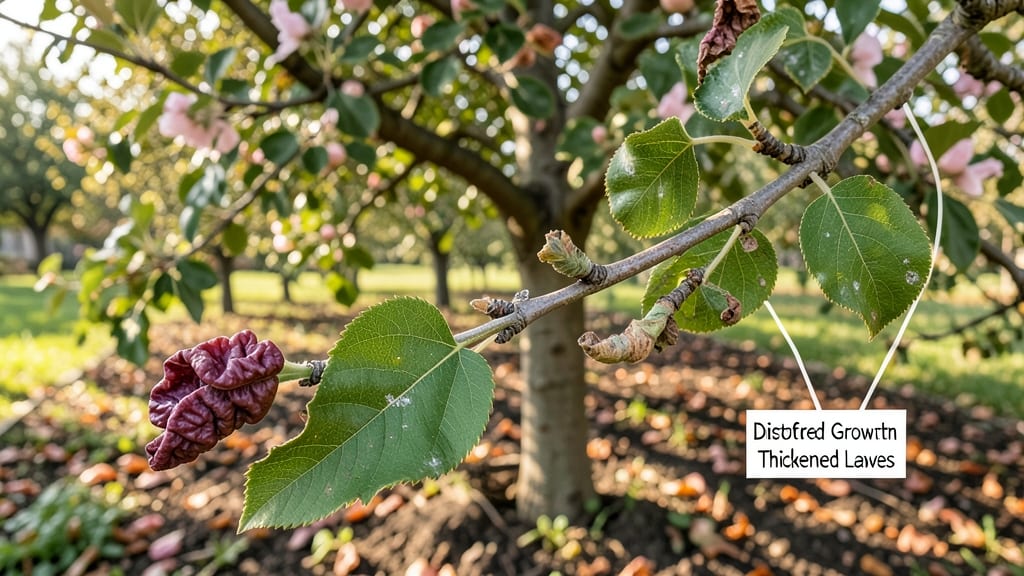
Your apple tree’s crinkled, curled leaves aren’t just ugly—they’re a red flag for fungal leaf curl, and ignoring it means lost fruit next season. 🌿 I’ve seen this disease turn lush orchards into sad shadows, but there’s hope: early action stops the spread and saves your harvest.
The problem starts when spores from infected leaves overwinter in bark crevices, then rain or splashing water spreads them in spring. Young leaves pucker, thicken, and turn red or purple—classic signs—while fruit may develop bitter pockets or drop early.
The good news? Organic copper sprays (applied before buds swell) and pruning out infected branches cut infection rates by nearly 70%.
By mid-summer, you’ll see new growth free of curl, with fruit ripening normally if you’ve stayed on top of cleanup. The key is timing: remove and destroy infected leaves in fall, then apply fungicide before buds break in spring. Your tree can bounce back stronger than ever.
This works for home orchards, community gardens, or even a single backyard tree. The secret’s in the timing—don’t wait until you see symptoms. Start now, and next year’s harvest will thank you.
Root Causes Of Leaf Curl
Leaf curl in apple trees isn’t just a random quirk of nature—it’s a strategic attack by pathogens that exploit weaknesses in your tree’s defenses. Understanding the why behind this disease helps you take targeted action to stop it before it spreads.
Let’s break down the key culprits and how they hijack your apple tree’s health.
Leaf curl is primarily caused by fungal pathogens, with Venturia inaequalis (apple scab fungus) and Venturia nashicola (Asian apple scab) being the most notorious. These fungi thrive in moist, cool conditions and spread via:
- Spores: Fungal spores hitchhike on wind, rain, or even your gardening tools, landing on young leaves and buds.
- Infection windows: Spores germinate best when temperatures hover between 50–70°F (10–21°C) and humidity stays high (think spring showers!).
- Overwintering: Fungal spores survive winter on fallen leaves, infected twigs, or even mummified fruit in the soil, ready to pounce when conditions improve.
Pro Tip: 🌡️ Monitor your local weather forecasts—if you see 5+ consecutive days of rain in early spring, that’s prime fungal real estate. Act fast with preventative sprays!
A healthy apple tree has natural physical and chemical barriers to fight off pathogens. But when these defenses falter, fungi move in like squatters. Common triggers include:
| Factor | How It Weakens the Tree |
|---|---|
| Nutrient Deficiencies (e.g., nitrogen, potassium, zinc) | Leaves turn yellow or grow poorly, making them easier targets for fungal spores. Think of it like a malnourished person catching every cold that comes their way. |
| Poor Air Circulation (dense planting, overgrown grass) | Stagnant, humid air traps moisture on leaves, creating a fungal paradise. Fungi love wet surfaces—like a sponge soaking up spores. |
| Physical Damage (pruning wounds, hail, pests) | Open wounds act as entry points for fungi. Even a small cut can let spores slip inside, starting an infection. |
| Stress from Drought or Overwatering | Both extremes throw a tree’s immune system into chaos. Drought weakens roots, while overwatering suffocates them, leaving the tree vulnerable. |
Fungi don’t just happen—they wait for the right moment. Leaf curl flares up when these factors align:
- Cool, Wet Springs: Ideal for spore germination. Example: A rainy April in the Pacific Northwest? Fungal feast.
- High Humidity at Night: Dew or fog lingers on leaves, giving spores 24+ hours of moisture to infect.
- Late Blooming Trees: If your apple tree blooms in May instead of April, it misses the first wave of spores but gets hit harder later.
Pro Tip: ✨ Adjust your pruning schedule—avoid heavy cuts in spring when spores are airborne. Wait until late summer or dormant season to minimize open wounds.
Fungal spores are tiny but tenacious. Even well-meaning gardeners can accidentally spread leaf curl by:
- Reusing pruners on infected branches, then clean ones.
- Moving mulch or compost from under infected trees to healthy ones.
- Planting new trees near old, diseased wood (spores linger for years in debris!).
Action Step: 🔪 Sanitize tools with a 10% bleach solution (1 part bleach to 9 parts water) or 70% rubbing alcohol between trees. Never compost infected leaves—bag and trash them instead.
Fixing Leaf Curl in Apple Trees
Leaf curl in apple trees might feel like a hopeless battle, but with the right approach, you can restore your tree’s health and prevent future outbreaks. Below are practical, step-by-step solutions tailored to the most common causes—fungal infections, environmental stress, and poor tree care.
Each fix includes prevention tips to keep your apple tree thriving long-term.
If leaf curl is caused by pathogens like Venturia inaequalis (apple scab) or Marssonina coronaria (cedar apple rust), aggressive fungicide treatment is key. Here’s how to tackle it:
🔥 Step 1: Prune Infected Branches
- Remove all leaves, twigs, and branches showing yellowing, curling, or black spots.
- Dispose of them in a sealed trash bag (not compost) to prevent spore spread.
- Sanitize pruners with 70% rubbing alcohol or a 10% bleach solution between cuts.
🍳 Step 2: Apply Fungicides at the Right Time
- Preventative spray (before symptoms appear):
- Use copper fungicides (like Copper Sulfate) or organic options such as neem oil or baking soda spray (1 tbsp baking soda + 1 tsp oil + 1 gallon water).
- Best timing: Apply before bud break (late winter/early spring) and every 7–14 days during wet seasons.
- Curative spray (if infection is present):
- Switch to synthetic fungicides like myclobutanil (Immunox) or propiconazole (Banner Maxx) for severe cases.
- Follow label instructions—overuse can harm beneficial insects.
🌡️ Step 3: Adjust Watering & Airflow
- Water at the base (avoid wetting leaves) to reduce fungal spores splashing onto foliage.
- Thin out dense branches to improve airflow—fungi thrive in humid, stagnant conditions.
- Mulch properly (2–4 inches of organic mulch) to keep soil moist but not soggy.
💡 Prevention Tip:
🔹 Plant resistant varieties like ‘Liberty’ or ‘Enterprise’ if fungal diseases are recurrent in your area.
If leaf curl stems from drought, extreme heat, or poor soil, focus on revitalizing your tree’s health rather than chemical fixes.
👨🍳 Step 1: Deep Watering & Soil Care
- Water deeply 1–2 times per week (1–2 inches per session) during dry spells.
- Test soil pH (ideal: 6.0–7.0 for apple trees).
Amend with lime (to raise pH) or sulfur (to lower pH) if needed. - Add compost or aged manure in early spring to improve nutrient uptake.
🥘 Step 2: Protect from Heat & Wind
- Shade cloth (30–50% coverage) can help during heatwaves (above 90°F/32°C).
- Windbreaks (like a fence or hedge) prevent desiccation (leaf drying).
- Avoid late-season fertilizing—it encourages tender new growth vulnerable to cold snaps.
✨ Prevention Tip:
🔹 Mulch with straw or wood chips to retain moisture and regulate soil temperature.
Neglect—like over-pruning, nutrient deficiencies, or compacted soil—weakens trees, making them susceptible to curl. Here’s how to fix it:
🔪 Step 1: Prune Correctly
- Remove dead, crossing, or diseased branches in late winter/early spring (dormant season).
- Avoid heavy pruning in summer—it stresses the tree and invites pests.
- Keep the canopy open to allow sunlight penetration (prevents fungal hotspots).
📊 Step 2: Fertilize Smartly
- Test soil for deficiencies (common issues: nitrogen, potassium, or magnesium).
- Use slow-release fertilizers (like 10-10-10 NPK) in early spring and fall.
- Avoid high-nitrogen fertilizers in late summer—they promote soft growth prone to damage.
🎯 Prevention Tip:
🔹 Plant apple trees in full sun (6+ hours/day) and well-draining soil to prevent stress-related curl.
- Inspect trees weekly during growing season for early signs of curl or spots.
- Clean up fallen leaves in autumn (a major fungal spore reservoir).
- Rotate fungicides if using chemicals to prevent resistance.
By addressing the root cause—whether fungal, environmental, or cultural—you can reverse leaf curl and keep your apple tree productive for years. Healthy trees are resilient trees! 🍏🌿
Frequently asked questions
What do leaf curl symptoms look like on apple trees?
Leaf curl starts with new leaves puckering and thickening into a cupped or curled shape, often turning red, purple, or bronze on the underside. Later stages show black spots (fungal fruiting bodies) on curled leaves. Don’t confuse it with heat stress—curl happens on young leaves in spring, while heat damage affects mature foliage.
Can I save my apple tree if it already has leaf curl?
Yes! Act fast by pruning infected branches immediately, applying copper fungicide (like Copper Sulfate), and improving airflow around the tree. For severe cases, repeat sprays every 10–14 days during wet weather. With consistent care, new growth can be disease-free by mid-summer.
Will leaf curl kill my apple tree?
Not necessarily—leaf curl rarely kills mature trees, but it weakens them over time, reducing fruit quality and yield. The real risk is secondary infections (like bacterial spot) entering through damaged leaves. Chronic infections can lead to premature leaf drop and stunted growth, so early treatment is critical.
How do I prevent leaf curl next year?
Focus on 3 key steps:
- Clean up—remove and trash all infected leaves and twigs (don’t compost!),
- Spray preventatively with copper fungicide or neem oil before buds swell in late winter, and
- Improve airflow by pruning dense branches. Bonus: Plant resistant varieties like ‘Liberty’ if your area is prone to fungal diseases.
Can I use homemade sprays for leaf curl?
Yes! A baking soda spray (1 tbsp baking soda + 1 tsp oil + 1 gallon water) or milk spray (1 part milk to 9 parts water) can help prevent mild infections when applied every 7–10 days during wet springs. For existing curl, though, copper-based fungicides are more effective—homemade options work best as a preventative measure.