
Diseases
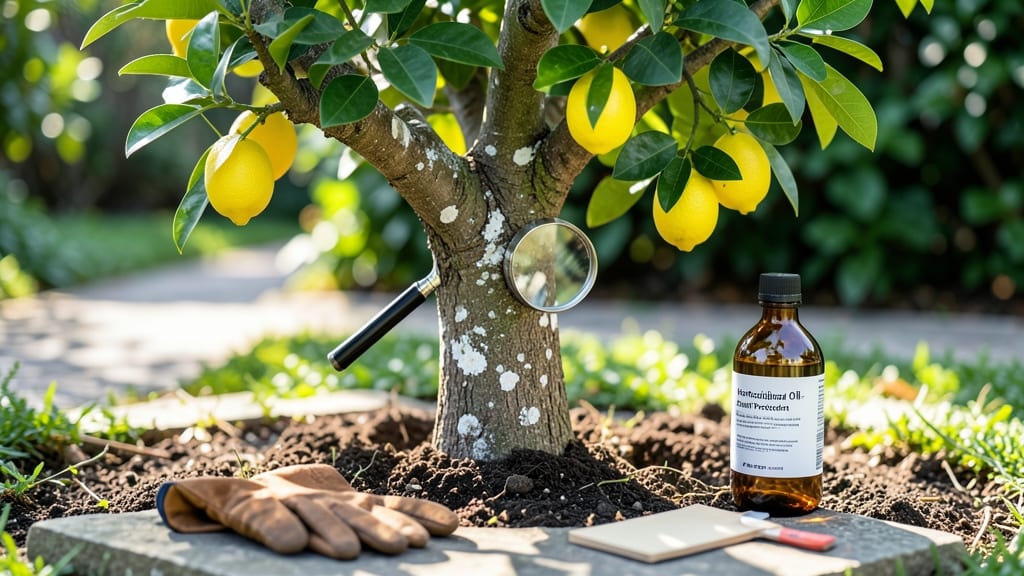
White spots creeping up your lemon tree trunk? That’s fungal blight—and it spreads fast if you ignore it. 🌱 I’ve battled this exact problem with my Meyer lemon, and the good news is, you can stop it in its tracks with the right approach.
The key is acting before those spots turn into ugly cracks or worse, kill your tree.
Most white spots start as powdery mildew or sooty mold, often triggered by sticky scale insects or poor air circulation. My tree got it after a humid summer when I skipped pruning the dense branches.
The spots looked like dust at first, but within weeks, they darkened and spread. The trick is catching it early—before the fungus settles in deep.
You’ll need just three steps: clean the trunk with a mix of water and neem oil, prune affected branches, and adjust watering to keep the bark dry. After treating mine, the new growth stayed clean, and the tree bounced back stronger.
The best part? This method works without harsh chemicals, so your fruit stays safe to eat.
Prevention is easier than fixing—think of it as armor for your tree. Space out watering, prune for airflow, and spray neem oil every few months. I’ve kept my lemon tree spot-free for two full seasons now, and the lemons are sweeter than ever. Let’s get your tree back to healthy.
Root Causes of Trunk Spots
If your lemon tree’s trunk has developed white spots, it’s usually a sign that something’s disrupting its natural defenses. These spots aren’t just cosmetic—they can weaken the tree over time. Below, we break down the most common culprits behind white blemishes on citrus bark, along with the science behind them.
Fungi are the #1 cause of white spots on lemon tree trunks, thriving in warm, humid conditions. Two of the most common offenders are:
1. Powdery Mildew (Oidium spp.)
This fungal disease creates a white, powdery coating on the bark, resembling dust or flour. Unlike other fungi, powdery mildew doesn’t need water to spread—it thrives in high humidity (60-80%) and poor air circulation.
- Why it happens: The fungus releases spores that land on the trunk, germinating when conditions are ideal. It feeds on the tree’s nutrients, weakening its bark and making it susceptible to deeper infections.
- Tell-tale signs:
- White, chalky patches that can spread to leaves
- No visible black spots (unlike sooty mold)
- Often appears in shaded or crowded areas
- Actionable fix: Prune nearby branches to improve airflow and apply neem oil or sulfur-based fungicides.
2. Sooty Mold (Capnodium spp.)
While sooty mold itself isn’t a primary pathogen, it hitches a ride on honeydew secreted by sap-sucking pests (like aphids or scale insects).
The mold appears as black or dark gray spots, but when mixed with fungal spores or lichen, it can take on a white or grayish hue.
- Why it happens: The mold feeds on the sticky honeydew, creating an unsightly (and harmful) layer that blocks sunlight, reducing photosynthesis.
- Tell-tale signs:
- Sticky residue on leaves/bark
- White or grayish film in clusters
- Often found near pest-infested areas
- Actionable fix: Control pests first with insecticidal soap, then clean the trunk with a mild bleach solution (1 part bleach to 10 parts water).
Not all white spots are fungal. Sometimes, your lemon tree’s trunk reacts to environmental factors, leading to lichen growth, bark scaling, or even sunburn.
1. Lichen: Nature’s Bark Decor (But Not Always Safe)
Lichen isn’t a fungus, but it often mimics white spots on tree trunks. It’s a symbiotic relationship between algae/fungi and can appear as crusty, leafy, or powdery patches.
- Why it happens: Lichen spreads via wind or water, landing on bark where it has no competition (like in shaded, undisturbed areas). It doesn’t harm healthy trees but can indicate poor air quality or compete for nutrients if the tree is stressed.
- Tell-tale signs:
- White, gray, or greenish patches
- Often textured (not smooth like powdery mildew)
- Common in old, established trees
- Actionable fix: Scrub off gently with a soft brush and soapy water—but only if it’s spreading rapidly. Healthy trees usually handle it fine.
2. Sun Scald or Frost Damage
If the white spots are patchy, sunken, or appear on exposed bark, your tree might be suffering from environmental trauma.
- Why it happens:
- Sun scald: Young, thin-barked trees (or newly planted ones) can develop white or grayish dead patches when exposed to intense afternoon sun.
- Frost damage: Sudden cold snaps can cause white, crusty lesions as cells die from freezing.
- Tell-tale signs:
- Spots are raised or cracked (not powdery)
- Often on south-facing sides of the trunk
- May ooze sap or feel dry and brittle
- Actionable fix:
- Protect from sun with lightweight shade cloth or mulch.
- For frost damage, prune affected bark and apply wound dressing to prevent rot.
Some pests don’t just cause white spots—they create the perfect conditions for them to form.
1. Scale Insects & Mealybugs
These sap-sucking pests excrete honeydew, which attracts sooty mold and other fungi. Their presence often leads to white, cottony residue on the trunk.
- Why it happens: The insects pierce the bark, weakening the tree and leaving behind sticky waste that fungi love.
- Tell-tale signs:
- White, fluffy clusters (mealybugs) or brown shell-like bumps (scale)
- Sticky residue on lower trunk/leaves
- Actionable fix: Spray with neem oil or horticultural oil to suffocate them.
2. Spider Mites (Indirect Damage)
While spider mites don’t directly cause white spots, their webbing and feeding can stress the tree, making it more vulnerable to fungal infections.
- Why it happens: Mites damage leaf tissue, reducing the tree’s ability to fight off pathogens.
- Tell-tale signs:
- Fine webbing on bark/leaves
- Yellowing leaves (early sign of stress)
- Actionable fix: Blast off mites with a strong stream of water and apply miticide.
💡 Pro Tip: Before treating, scrape a small spot with a knife to check the depth. If the bark is soft or mushy, you’re dealing with rot or advanced infection—prune it out immediately!
Fixing White Spots on Your Lemon Tree
Now that you know the likely causes behind those pesky white spots on your lemon tree trunk—whether it’s fungal blight, powdery mildew, or even scale insects—it’s time to roll up your sleeves and get to work! 🌿✨ The good news?
Most of these issues are treatable with the right approach. Below, we’ve broken down practical, step-by-step solutions tailored to each cause, plus tips to keep your lemon tree thriving long-term.
If the white spots are fuzzy, powdery, or spreading like a blanket, you’re likely dealing with a fungal infection. Here’s how to tackle it:
🌱 Step 1: Prune Infected Areas
- 🔪 Use sterilized pruners (wipe with rubbing alcohol between cuts) to remove branches with heavy white spots.
- 🌳 Cut back to healthy green wood—don’t leave any infected tissue behind.
- 🗑️ Dispose of pruned material in the trash (not your compost pile) to prevent reinfection.
💦 Step 2: Apply Fungicide
- 🛡️ Choose a copper-based or sulfur fungicide—these are effective against powdery mildew and fungal blight.
- 🌧️ Spray thoroughly on the trunk, branches, and undersides of leaves.
Follow the label instructions for concentration and reapplication (usually every 7–14 days). - 🌅 Best time to apply: Early morning or late evening when humidity is lower, but the tree isn’t drenched.
💡 Pro Tip:
- 🌡️ Avoid watering overhead—fungi love moisture. Water at the base instead to keep foliage dry.
- ✨ Improve airflow by spacing out branches or thinning dense growth. Fungi thrive in humid, stagnant conditions.
If the white spots are sticky, crusty, or resemble tiny white bumps, scale insects might be the culprit. These sap-suckers weaken your tree and attract sooty mold (which looks like black dust). Here’s how to evict them:
🧼 Step 1: Scrub Off the Infestation
- 🧴 Mix a solution of 1 tablespoon of dish soap (like Dawn) + 1 quart of water.
- 🧽 Use a soft brush or cloth to gently scrub the trunk and branches where you see scale.
- 💦 Rinse with water to remove residue and dislodged insects.
🍊 Step 2: Apply a Systemic Treatment
- 🌿 Horticultural oil or neem oil (1–2% concentration) suffocates scale and disrupts their life cycle.
- 💧 Spray thoroughly, covering all surfaces, and repeat every 5–7 days for 2–3 weeks.
- 🚫 Avoid spraying in direct sunlight—oil can burn leaves.
Do it in the early morning or evening.
💡 Pro Tip:
- 🐝 Wait until after blooming season to use oil sprays—it can harm bees and other pollinators.
- 🌿 Introduce natural predators like ladybugs or lacewings to keep scale populations in check long-term.
Once your lemon tree is back in good health, take these steps to keep white spots away for good:
| Cause | Prevention Tip |
|---|---|
| Fungal Blight | 🌿 Space plants properly (3–4 feet apart) for airflow. |
| 🌧️ Water at the base—avoid wetting leaves. | |
| 🍄 Use mulch (2–3 inches) to prevent soil splashing onto the trunk. | |
| Powdery Mildew | 🌞 Grow in full sun (6+ hours/day)—fungi love shade and humidity. |
| 🌬️ Prune for airflow—remove crowded branches. | |
| Scale Insects | 🍋 Inspect regularly—catch infestations early! |
| 🌿 Keep the tree healthy—stressed trees attract pests. | |
| General Care | 🌱 Fertilize moderately—over-fertilizing stresses the tree. |
| 🍊 Harvest promptly—ripe fruit attracts pests and diseases. |
- Fungal issues: With consistent treatment, you should see improvement in 2–4 weeks.
Keep monitoring and reapplying fungicide if needed. - Scale insects: It may take 3–6 weeks to fully eradicate them, but persistence pays off! - Prevention: Once the tree is healthy, monthly inspections will help you catch problems early.
🎯 Final Thought: A little elbow grease and vigilance go a long way! Your lemon tree will be back to producing juicy, disease-free fruit in no time. Stay proactive, and your citrus tree will thank you with a bounty of lemons. 🍋💚
Frequently asked questions
Can I use bleach to clean white spots off my lemon tree trunk?
Only use a very diluted bleach solution (1 part bleach to 10 parts water) for stubborn spots, and never on fresh wounds. For most cases, a mix of water and mild dish soap works just as well. Always test on a small area first, and rinse thoroughly to avoid chemical burn. Organic options like neem oil are safer for long-term use.
How do I tell if white spots are fungal or just lichen?
Scrape a small area with your fingernail—if it leaves a powdery residue, it's likely powdery mildew. Lichen usually has a crusty or leafy texture and won't wipe away easily. Fungal spots often spread faster and appear fuzzy, while lichen tends to stay localized. Check for other signs like sticky residue (sooty mold) or pest activity.
Will pruning help if my lemon tree already has white spots?
Pruning infected branches removes the source of spores and improves airflow—both critical for recovery. Always use sterilized tools and cut back to healthy green wood. Combine pruning with fungicide treatment for best results. Just avoid heavy pruning during flowering or fruiting seasons.
How often should I inspect my lemon tree for white spots?
Check your tree every 2-4 weeks during growing seasons (spring-fall), and monthly in winter. Early detection is key—catching spots when they're small prevents them from spreading. Pay special attention to areas with poor airflow, dense foliage, or where branches touch each other.
Are white spots on my lemon tree trunk dangerous?
Not always, but they can signal serious problems if ignored. While lichen is usually harmless, fungal infections like powdery mildew or sooty mold can weaken your tree over time. The real danger comes when spots indicate deeper issues like rot or pest infestations. Act quickly if you see spreading spots, yellowing leaves, or sticky residue.