
Container Gardens
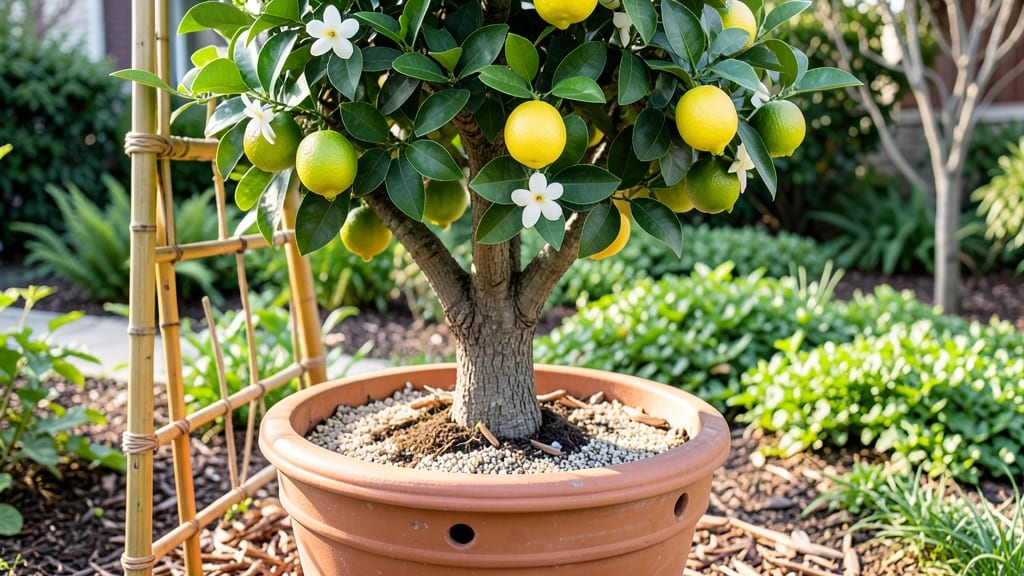
Growing a Meyer lemon tree in containers means sweet, fragrant fruit even in small spaces. 🌱 I've watched mine produce lemons in pots for years—now I'm sharing the exact method that keeps them thriving, from sunny windowsills to patio corners.
The secret starts with the right 15-25 gallon pot (bigger is better for fruit production) and a well-draining soil mix. Meyer lemons need full sun (6+ hours daily) and consistent moisture, but they hate soggy roots—so drainage holes are non-negotiable.
I use a mix of potting soil, perlite, and compost to keep roots happy without waterlogging. By summer, you'll see glossy new leaves and tiny blossoms that develop into juicy, fragrant lemons—though fruit takes 2-3 years to appear.
The real magic happens when you prune regularly to encourage bushier growth and prevent leggy stems from stretching toward the light. Even in cold climates, a container lets you move your tree indoors near a sunny window or into a garage during winter.
With proper care, your Meyer lemon can live for decades and keep producing fruit year after year.
📚 In This Guide
- What you need
- Instructions
- Tips and common mistakes
- Wrapping up and next steps
What you need
- ● Container: A 5-gallon or larger pot with drainage holes (14–18" in diameter for mature trees). Material: Terracotta (breathable) or plastic (retains moisture).
- ● Well-draining potting mix: 50% cactus/succulent mix + 50% organic compost (avoid garden soil!). Quantity: 2–3 bags (2–3 cubic feet total).
- ● Meyer lemon tree: A 1–2 year-old nursery-grown sapling (choose a dwarf or semi-dwarf variety for containers).
- ● Drainage layer: 1–2 inches of pebbles, gravel, or broken pottery at the container’s bottom.
- ● Fertilizer: Balanced citrus fertilizer (e.g., 6-6-6 NPK) or organic options like fish emulsion. Quantity: 1–2 applications per growing season.
- ● Watering can: With a narrow spout for precise watering (avoid overhead spraying).
- ● Pruning shears: Sharp, sterilized shears for trimming (sanitize with rubbing alcohol).
- ○ Support stake (optional but helpful): A 3–4 ft tall bamboo or metal stake for young trees.
- ● Self-watering system: A wicking bed or drip irrigation kit to maintain moisture.
- ● Grow lights: LED full-spectrum bulbs (12–14 hours/day) for indoor setups.
- ● Mulch: Straw or bark chips to retain soil moisture (apply lightly on top).
- ● Citrus food supplements: Epsom salt (1 tbsp/month) for magnesium or seaweed extract for micronutrients.
- ● Pest control: Neem oil or insecticidal soap for aphids/spider mites.
- ● Humidity tray: A pebble tray with water to boost humidity in dry climates.
Step-by-Step instructions for growing a Meyer lemon tree in containers
Here’s my foolproof method for growing a thriving Meyer lemon tree indoors—no green thumb required.
🪴 Step 1: Choose the Right Container and Drainage
Start with a 5-gallon pot (or larger) that has multiple drainage holes—Meyer lemons hate soggy roots. I always use unglazed terra cotta because it breathes and prevents root rot. If your pot lacks holes, drill 3-4 extra ones near the bottom to ensure excess water escapes.
Place a 2-inch layer of gravel or broken pottery at the bottom before adding soil. This creates a reservoir for water while keeping roots dry. Skip this, and you’ll risk root rot within weeks. I also add a 1-inch layer of perlite on top of the gravel to improve aeration.
🌱 Step 2: Use Well-Draining Soil and Plant Correctly
Fill the pot with a mix of 50% premium potting soil and 50% perlite or coarse sand—this keeps roots oxygenated and prevents compaction. Avoid garden soil; it’s too dense and can suffocate roots. Gently loosen the soil with your fingers before planting to create space for roots to spread.
Remove your Meyer lemon tree from its nursery pot and tease the roots apart if they’re circling. Place the tree in the center of the container, ensuring the root flare (where roots meet trunk) sits just above soil level. Fill in around the roots with your soil mix, pressing lightly to eliminate air pockets.
☀️ Step 3: Position for Maximum Light and Warmth
Meyer lemons need 6-8 hours of direct sunlight daily—a south-facing window is ideal. If your space lacks bright light, supplement with a grow light placed 12-18 inches away for 14-16 hours per day. I notice leaves yellowing or stretching toward light? That’s your cue to move the plant closer or add artificial light.
Keep temperatures between 65-85°F—below 55°F, growth slows, and fruit may drop. Avoid drafts (like near AC vents) or sudden temperature swings. A heating mat in winter helps maintain root warmth, especially if your home runs cool.
💧 Step 4: Water Deeply and Maintain Humidity
Water when the top 2 inches of soil feel dry—stick your finger in to check. Pour water slowly until it drains freely from the bottom holes, then empty the saucer to prevent root rot. Overwatering is the #1 killer of container-grown citrus, so let the soil dry slightly between waterings.
Meyer lemons love humidity. Place the pot on a tray of pebbles with water (ensure the pot sits above the waterline) or mist leaves 2-3 times weekly. You’ll see new growth within weeks if humidity is right—leaves stay glossy and vibrant.
✂️ Step 5: Fertilize and Prune for Healthy Growth
Feed every 4-6 weeks with a balanced citrus fertilizer (like 6-6-6) diluted to half strength. I skip fertilizing in winter when growth slows. Flush the soil with water every 3 months to prevent salt buildup from fertilizer—just run water through the pot until it drains clean.
Prune in late winter or early spring to shape the tree and remove dead/diseased branches. Cut just above a leaf node at a 45-degree angle to encourage new growth. Never prune more than 25% of the canopy at once—Meyer lemons are sensitive to heavy pruning.
Tips & tricks for thriving container-grown Meyer lemon trees
Here's what I've learned after watching my Meyer lemon trees flourish—and fail—over the years.
Drainage is Non-Negotiable: In Step 1, when setting up your 5-gallon pot, I can't stress enough how critical those drainage holes are. I've seen root rot develop within weeks when people skip this step. If your pot doesn't have holes, drill them yourself—your tree's life depends on it. The 2-inch gravel layer at the bottom serves as a water reservoir while preventing soggy roots, and that 1-inch perlite layer on top improves aeration dramatically. Think of it as your tree's built-in safety net.
Light Requirements Matter More Than You Think: The 6-8 hours of direct sunlight in Step 3 is non-negotiable for fruit production. I've noticed that when my trees get less than 6 hours, the leaves start stretching toward the light (a condition called etiolation), and new growth becomes leggy. If you're using a grow light, place it 12-18 inches away for those 14-16 hours—closer than that can scorch leaves, and farther means your tree won't get enough energy. Consider this your tree's daily vitamin D.
Soil Mix Secrets: That 50/50 mix of premium potting soil and perlite or coarse sand in Step 2 is crucial for preventing compaction. I've found that adding a handful of worm castings to the mix gives an extra nutrient boost without overwhelming the tree. When planting, make sure to loosen the soil with your fingers—this creates tiny air pockets that roots will thank you for later. And always position the root flare just above soil level; burying it can cause rot.
Winter Care is Critical: When temperatures drop below 55°F in Step 3, your tree's growth will slow dramatically. I've learned to move my trees to a sunny spot near a south-facing window during winter and use a heating mat to keep roots warm. The key is maintaining that 65-85°F range—any colder, and you'll see leaves yellowing or even dropping. A simple thermometer near your tree helps monitor this crucial range.
Pro Tips for Grow Meyer Lemon Tree In Container
- Here's what I've learned after watching my Meyer lemon trees flourish—and fail—over the years.
- Drainage is Non-Negotiable: In Step 1, when setting up your 5-gallon pot, I can't stress enough how critical those drainage holes are.
- Light Requirements Matter More Than You Think: The 6-8 hours of direct sunlight in Step 3 is non-negotiable for fruit production.
Frequently asked questions
Got questions about growing your Meyer lemon tree in a container?
You’re not alone! Here are some of the most common concerns—and their answers—to help you grow a thriving citrus tree with ease.
What’s the best container size for a Meyer lemon tree?
A Meyer lemon tree needs room to stretch its roots! Start with a 5-gallon container for young trees, then upgrade to at least 15-20 gallons as it matures. Deeper is better—aim for 12+ inches deep to prevent root binding. If you’re tight on space, opt for dwarf varieties (like ‘Improved Meyer’) and repot every 2-3 years.
Can I keep my Meyer lemon tree in a container over winter?
Meyer lemons are hardy to USDA Zone 9, but containers are vulnerable to cold. Move your tree indoors when temps drop below 40°F (4°C), near a sunny window or under grow lights. If you can’t bring it inside, wrap the container in bubble wrap or frost cloth and mulch the soil with straw. Just avoid fertilizing during dormancy—wait until spring!
Why aren’t my Meyer lemons ripening in a container?
Unripe lemons in containers usually mean lack of sunlight, water stress, or poor nutrition. Meyer lemons need 6-8+ hours of direct sun daily—if yours is indoors, supplement with a grow light. Check soil moisture (top inch should dry out between waterings) and feed with a citrus-specific fertilizer every 4-6 weeks in growing season. Pro tip: Thin out excess fruit to avoid overburdening the tree!
How do I prevent pests like aphids or spider mites on my container-grown Meyer lemon?
Container trees are prime targets for pests, but prevention is simple! Inspect leaves weekly (especially undersides) for sticky residue or tiny webs. Spray with a neem oil solution (1 tsp per quart of water) or introduce beneficial insects like ladybugs. Keep your tree well-watered (pests love drought stress) and avoid over-fertilizing. For severe infestations, try insecticidal soap—just test on a small leaf first!
Can I grow a Meyer lemon tree from a grocery store lemon?
While it’s possible, it’s not the most reliable method. Grocery lemons are often treated to prevent sprouting. For better success, buy a seed from a nursery or propagate from a healthy branch cutting (dip in rooting hormone, keep moist, and wait 4-6 weeks). If you try the grocery method, soak the seed in water for 24 hours, plant in well-draining soil, and be patient—it may take 6+ months to sprout!
Wrapping up and next steps
Growing a Meyer lemon tree in a container is a rewarding journey that brings sunshine, fresh citrus, and a touch of tropical charm to your space—no backyard required! 🌱 With the right pot, soil, sunlight, and care, you’ll enjoy sweet, fragrant lemons year after year.
Whether you’re a beginner or a seasoned gardener, this vibrant plant thrives with patience and love.
Now that you’re armed with the how-to, take the next step: pick your pot and plant your seedling! Start small, stay consistent with watering and feeding, and soon you’ll be harvesting lemons for homemade treats, gifts, or zesty cocktails. Happy growing—your citrus adventure begins today! 🍋✨