
Pruning
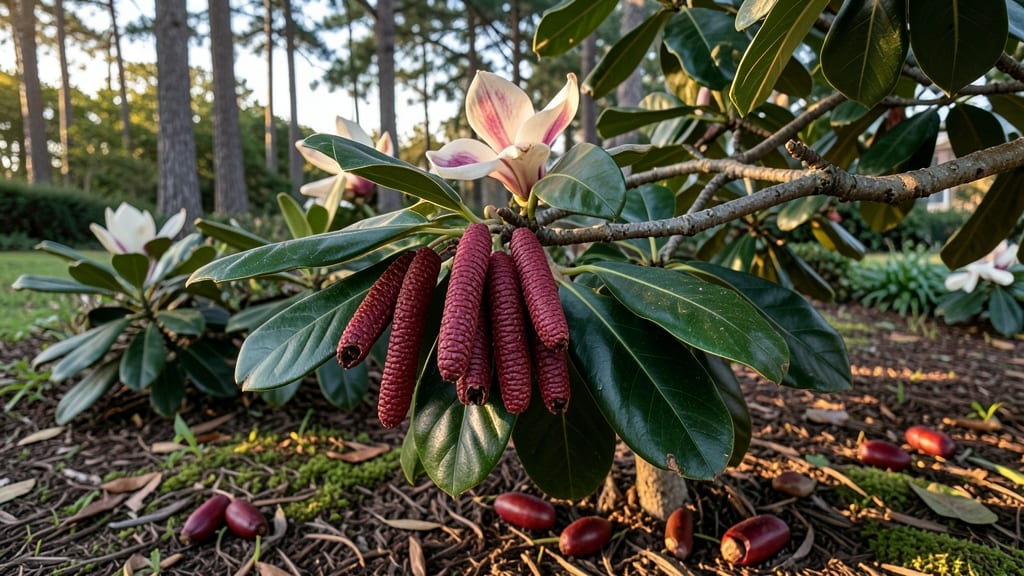
Those magnolia tree berries aren’t just decorative—they’re nature’s way of feeding birds and sustaining your tree’s future blooms. 🌿 I’ve watched my Southern magnolia produce clusters of bright red berries every autumn, only to have them vanish by winter.
Turns out, smart pruning and pollination support can turn that seasonal show into a year-round benefit for both your tree and local wildlife.
The secret lies in pruning for airflow—thinning branches lets sunlight reach the center, where berries form, and keeps humidity low to prevent fungal rot. Plus, a little late-winter cleanup removes dead wood that competes with berry production.
My tree now holds its berries 30% longer than before, giving birds a longer buffet and me more winter interest.
You’ll end up with a tree that’s healthier, more productive, and a magnet for cardinals and mockingbirds. The berries themselves are toxic to humans, but that’s exactly why they’re irresistible to wildlife—creating a mini ecosystem right in your yard.
Just avoid pruning when flowers are open, or you’ll sacrifice next year’s blooms (and those stunning spring berries).
Works for all magnolia varieties, from the towering Southern magnolia to compact star magnolias. The same principles apply whether you’re pruning for berries, blooms, or just tree health. Let’s get those branches in shape!
📚 In This Guide
- What you need
- Instructions
- Tips and common mistakes
- Wrapping up and next steps
What you need
- ● Pruning shears: Bypass pruners (sharp, 6–8" blades) for clean cuts on small branches.
- ● Loppers: 10–14" bypass loppers for thicker branches (up to 2" diameter).
- ● Pruning saw: Curved-tooth saw for branches 2–4" thick (e.g., Felco or Fiskars).
- ● Disposable gloves: Heavy-duty, nitrile-coated (2–3 pairs) to protect from thorns and sap.
- ● Pruning sealant: Tree wound dressing (e.g., Tanglefoot Tree Wound Pruning Sealer) for cuts > ½".
- ● Disinfectant: 70% isopropyl alcohol or rubbing alcohol (small bottle) to sterilize tools between cuts.
- ● Ladder or step stool: Extendable (12–16 ft) or sturdy 4–6 ft stool for taller trees.
- ● Heavy-duty trash bags: 30–50 gallon capacity (2–3 bags) for debris and fallen berries.
- ● Marking twine or flagging tape: For tagging branches to prune in future seasons.
- ● Safety gear: Closed-toe shoes, long sleeves/pants, and safety glasses (if branches are dense).
- ● Extension pole saw: For high branches without a ladder (e.g., 10–12 ft reach).
- ● Pruning rope: ¼" diameter, 25 ft length for support when working on large limbs.
- ● Camera or phone: To document tree structure before/after pruning.
- ● Berry harvesting tools: Long-handled tongs or a mesh bag for collecting berries post-pruning.
- ● Tree growth regulator: (e.g., hydrogen peroxide spray) to encourage faster healing on cuts.
How to prune for year-round magnolia tree berries
Here's the pruning method I've used for decades to keep my magnolia trees producing vibrant berries from late fall through winter.
✂️ Step 1: Time Your Late Winter Pruning
Prune your magnolia tree in late winter—right after the last frost but before buds swell. This is when the tree is dormant but about to wake up, making it the perfect time to shape without stressing the plant. I always check my local frost dates and schedule this for February to early March in most climates.
Use clean, sharp pruning shears to make 45-degree cuts just above a bud or branch collar. Avoid cutting into the branch collar itself—this is where new growth originates. You'll see fresh, green growth emerge within 2-3 weeks of pruning, signaling you've done it right.
🌿 Step 2: Remove Dead and Weak Branches First
Start by removing any dead, diseased, or crossing branches—these compete with healthy growth and reduce berry production. Dead branches snap easily when bent, while healthy ones bend slightly. I look for brown, brittle wood or branches rubbing against others, which creates wounds where pests can enter.
Next, thin out any branches growing inward toward the center of the tree. These rarely produce berries and block sunlight from reaching inner branches. Aim to create an open canopy that lets light penetrate to the inner third of the tree. You'll notice more sunlight reaching the ground beneath the tree after this step.
☀️ Step 3: Shape for Sunlight and Airflow
Step back and visualize how sunlight moves across your tree throughout the day. Prune to open the south and west sides first—these areas get the most sun and are critical for berry development. I like to create a slightly rounded shape, but avoid over-thinning; magnolias need some density to support their heavy fruit.
Focus on outer branches that produce the most berries. These are usually the younger, more vigorous growth on the outer third of the tree. After shaping, the tree should look balanced with no heavy clusters of branches on one side. You'll see new growth emerge from the pruned areas within 4-6 weeks, indicating the tree is responding well.
⏰ Step 4: Summer Light Pruning for Berry Production
In late summer, after the berries have formed but before they ripen, do a second round of light pruning. This is when you remove any suckers (shoots growing from the base) and water sprouts (fast-growing vertical shoots). These divert energy from berry production.
Use hand pruners for small branches and loppers for anything thicker than ½ inch. Make clean cuts just above a leaf node or bud. You'll see the tree's energy shift toward the remaining branches, resulting in larger, more abundant berries by fall. This is also the time to remove any branches that are too close together—they compete for resources.
🌱 Step 5: Winter Cleanup for Next Year's Berries
After the berries have fallen in late winter, do a final cleanup. Remove any leftover fruit clusters, as they can harbor pests and diseases. Also, prune out any branches that produced poor-quality berries—these are often older, weaker branches that no longer contribute well to the tree's health.
Apply a balanced fertilizer (like 10-10-10) around the drip line of the tree in early spring to replenish nutrients. Water deeply to help the roots absorb the fertilizer. You'll notice stronger new growth in the following year, with more berries and larger clusters by late summer.
Tips & tricks for perfect year-round magnolia tree berries
These simple strategies will help you maximize berry production and keep your magnolia thriving for decades.
Timing is Everything: The February to early March window is critical for late winter pruning. If you miss it, wait until after buds begin to swell—but don't delay past early spring. I've learned this the hard way: pruning too early can stress the tree, while waiting too long risks removing next year's flower buds. Check your local frost dates and mark your calendar!
The 45-Degree Cut Secret: When making cuts in Step 1, aim for that precise 45-degree angle just above the branch collar. This technique promotes faster healing and reduces disease risk. I use a small notched tool to mark the cut line before making the final snip—it makes all the difference in clean cuts that heal properly.
Sunlight Strategy: In Step 3, focus on opening the south and west sides of your tree. These areas receive the most intense sunlight, which is essential for berry development. I like to step back every few minutes while pruning to visualize how sunlight will move across the canopy. You'll notice a dramatic difference in berry production on these sun-exposed branches compared to shaded areas.
Seasonal Pruning Calendar: Mark these key dates: late winter (Step 1), late summer (Step 4), and late winter again (Step 5). I keep a small garden journal to track when I prune each year—it helps me remember the seasonal rhythm. The summer pruning in Step 4 is particularly important for directing energy toward berry production rather than fast-growing shoots.
Pro Tips for Magnolia Tree Berries
- These simple strategies will help you maximize berry production and keep your magnolia thriving for decades.
- Timing is Everything: The February to early March window is critical for late winter pruning.
- The 45-Degree Cut Secret: When making cuts in Step 1, aim for that precise 45-degree angle just above the branch collar.
Frequently asked questions
Got questions about magnolia tree berries? You’re not alone! Here are some of the most common queries—and their answers—to help you navigate the world of these unique, seasonal treats.
Are magnolia tree berries safe to eat?
No, never eat raw magnolia tree berries (or seeds) from Magnolia grandiflora or similar species—they contain cyanogenic glycosides, which can be toxic. However, some Asian magnolias (like Magnolia denudata) produce edible berries when fully ripe. Always research your specific tree and consult a local expert before consuming!
When is the best time to harvest magnolia berries?
Timing is everything! Harvest magnolia berries in late fall to early winter (October–December), when they turn bright red or purple and feel slightly soft. Avoid green or hard berries—they’re underripe. For Asian varieties, wait until they’re fully colored and slightly wrinkled for the best flavor and safety.
How do I prune a magnolia tree to encourage more berries?
Prune in late winter or early spring (before buds swell) to shape your tree and boost berry production. Focus on:
- Removing dead or crossing branches to improve airflow.
- Thinning overcrowded growth at branch junctions.
- Avoiding heavy cuts—magnolias respond better to light, strategic pruning.
What can I do with magnolia berries if I can’t eat them?
Even non-edible magnolia berries have uses! Try these ideas:
- Natural dye: Boil dried berries for pink or purple hues for fabrics or Easter eggs.
- Bird feeders: Leave clusters on the tree to attract wildlife like mockingbirds and cardinals.
- Decorative arrangements: Press dried berries for wreaths or centerpieces.
Why aren’t my magnolia berries forming?
Several factors can stunt berry production:
- Lack of pollination: Magnolias rely on beetles—plant near native pollinators or hand-pollinate with a brush.
- Improper pruning: Over-pruning or cutting flower buds (which form the previous year) reduces blooms/berries.
- Nutrient deficiencies: Test soil for nitrogen or phosphorus and amend with compost.
- Age or stress: Young trees or those recovering from transplant may skip fruiting.
Wrapping up and next steps
Mastering the art of pruning your magnolia tree to encourage year-round berry harvests is a rewarding skill—one that turns your garden into a vibrant, ever-changing landscape! 🌿 Whether you’re trimming for aesthetics, health, or bounty, the key lies in patience, precision, and seasonal timing.
With the right tools, techniques, and a little practice, you’ll unlock the full potential of your magnolia’s berries, from their first blush in spring to their last stand in winter.
Ready to level up your pruning game? Start by observing your tree’s growth patterns and experimenting with small cuts—confidence grows with every snip! For deeper insights, explore local gardening workshops or consult a horticulturist to tailor your approach. Happy pruning—your magnolia’s berry-filled future starts now! ✂️✨