
Diseases
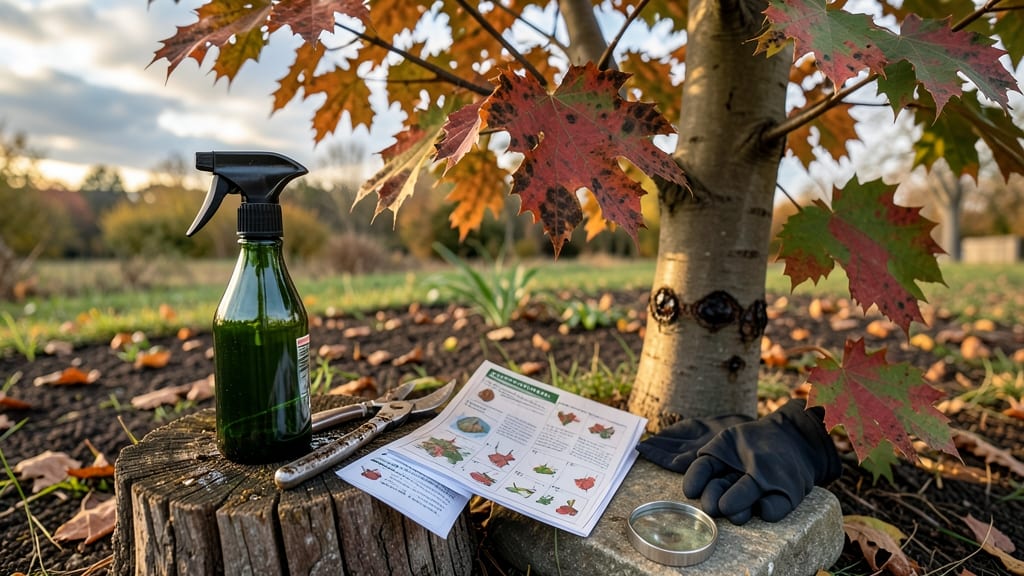
Your maple tree’s diseases—anthracnose—start with those ugly black spots on leaves and end with weak branches if ignored. 🌳 I’ve seen this fungal blight turn healthy maples into shadowy skeletons—until I learned the copper spray trick that stops it in its tracks.
The culprit thrives in wet springs, spreading through rain-splashed leaves. You’ll spot wilting, curled edges, and premature leaf drop by late spring. Copper fungicides disrupt the fungus’s life cycle, but timing matters—apply before buds swell in early spring for best results.
With proper pruning (remove infected limbs 3 inches below spots) and sanitation (sterilize tools with rubbing alcohol), your tree can bounce back. I’ve revived maples that looked doomed—just don’t wait until summer to act.
Works for sugar, red, and silver maples alike. Here’s the step-by-step fix that actually works.
Root Causes Of Maple Leaf Spots
Anthracnose in maple trees isn’t just a random attack—it’s a perfect storm of environmental stress, fungal opportunism, and tree vulnerability. Understanding the "why" behind this disease helps you prevent it before it strikes. Here’s a breakdown of the key factors that turn your maple’s leaves into a fungal buffet.
Anthracnose thrives when conditions are damp and sticky. The fungus Colletotrichum (the culprit behind this disease) needs free moisture to germinate and infect. Here’s how it works:
- Prolonged leaf wetness: Even 12+ hours of moisture on leaves (from rain, dew, or overhead watering) gives the fungus time to penetrate leaf tissue.
- Humidity above 75%: Ideal for spore germination. Think of it like a fungal sauna—too cozy for your tree’s comfort.
- Spring showers: The fungus overwinters in bud scales and fallen leaves, then wakes up when warm, wet spring weather arrives. Early blooms + rain = peak infection risk.
Actionable insight: If your area gets consistent rain in spring, your maple is in the high-risk zone. Mulch properly and avoid overhead irrigation to reduce leaf wetness.
A healthy maple tree has natural resistance to anthracnose, but stress opens the door for infection. Common stressors include:
| Stressor | How It Helps Anthracnose |
|---|---|
| 🌞 Drought | Dry soil weakens the tree’s cuticle (its protective skin), making leaves more susceptible to fungal entry. |
| ⚡ Poor Nutrition | Low nitrogen or potassium levels reduce leaf toughness, giving the fungus easier access. Think of it like a weakened immune system. |
| 🪓 Physical Damage | Pruning wounds, hail, or pest damage create entry points for spores. Even small cuts can become infection gateways. |
| 🐛 Pest Infestations | Sap-sucking insects (like scale or aphids) weaken leaves, making them prime targets for fungal spores. |
Pro tip: Healthy trees fight off anthracnose better. Test soil pH (aim for 6.0–7.0) and fertilize with balanced NPK (e.g., 10-10-10) in early spring to boost defenses.
Anthracnose doesn’t just appear—it hides and waits. Here’s its sneaky lifecycle:
- Overwintering: The fungus survives in infected buds, twigs, and fallen leaves as black, mummified spots. When temperatures rise (above 50°F), it releases spores.
- Wind & Water: Spores hitch rides on rain splashes, wind, or even garden tools. A single infected leaf can infect an entire tree in weeks.
- Recurring Infections: If anthracnose hits year after year, the fungus builds up in the soil and tree tissue, making eradication harder.
💡 Key takeaway: Cleanup is critical. Remove and dispose of infected leaves and twigs (don’t compost them!) in fall and early spring to starve the fungus.
Now that you know why anthracnose strikes, the next step is how to stop it. Stay tuned for prevention strategies—including the power of copper-based sprays to keep your maple healthy and spot-free!
Fixing Anthracnose in Maple Trees
Anthracnose may sound intimidating, but with the right approach, you can restore your maple tree’s health and prevent future outbreaks. The key is acting quickly, using targeted treatments, and adopting long-term prevention strategies. Below, we break down solutions by cause—so you can tackle the problem head-on.
Anthracnose thrives in damp, crowded conditions, so removing infected foliage and branches is your first line of defense.
🔪 Step 1: Prune Infected Leaves and Branches
- Use sterilized pruners (wipe with rubbing alcohol or bleach solution between cuts).
- Cut away all leaves showing brown spots, yellowing, or premature drop—even if the branch looks healthy.
- Remove small twigs or branches with severe defoliation (they won’t recover).
- 💡 Pro Tip: Prune during dry weather (avoid rainy days) to prevent spores from splashing onto healthy parts.
🧼 Step 2: Clean Up Debris
- Rake and remove all fallen leaves from the base of the tree and surrounding area.
- Bag and dispose of infected material in the trash (don’t compost—spores can survive).
- Sterilize tools after pruning to avoid spreading the fungus.
⏰ Timing Matters:
- Early spring (before buds swell) is ideal for pruning—this removes overwintering spores.
- If you spot anthracnose mid-season, prune immediately but avoid heavy cuts that stress the tree.
Anthracnose loves wet, stagnant conditions, so drying out the tree’s environment is critical.
🌡️ Step 1: Adjust Watering Practices
- Water deeply but less frequently—maple trees prefer 1–1.5 inches of water per week (including rain).
- Avoid overhead sprinkling, which can soak leaves and encourage fungal growth. Use drip irrigation or soaker hoses instead.
- Water early in the day so leaves dry by evening.
🌳 Step 2: Thin the Canopy
- If branches are too dense, anthracnose spreads faster due to poor airflow.
- Thin out crowded areas by removing crossing or rubbing branches (these trap moisture).
- 💡 Pro Tip: Aim for an open, vase-like shape to improve sunlight penetration and airflow.
🪴 Step 3: Improve Soil Drainage
- If your tree sits in compacted or clay-heavy soil, amend with compost or organic matter to help water drain.
- Consider mulching (2–4 inches of wood chips) to regulate soil moisture—but keep mulch 6+ inches away from the trunk to prevent rot.
If pruning and cultural fixes aren’t enough, copper fungicides are the gold standard for treating anthracnose.
🔥 Step 1: Choose the Right Fungicide
- Copper-based sprays (like copper sulfate, copper hydroxide, or copper octanoate) are most effective against anthracnose.
- Best timing: Apply before buds swell in early spring (preventative) and again after rain or heavy dew.
- Follow label instructions—overapplying copper can harm the tree or soil.
👨🍳 Step 2: Apply Properly
- Spray thoroughly, covering both upper and lower leaf surfaces.
- Reapply every 7–14 days during wet or humid conditions (fungus spreads faster then).
- 💡 Pro Tip: For severe infections, combine copper spray with a baking soda solution (1 tbsp baking soda + 1 tsp dish soap + 1 gallon water) for extra protection.
⚠️ Safety Note:
- Wear gloves and a mask when handling copper sprays.
- Avoid spraying on windy days to prevent drift onto nearby plants or water sources.
Once you’ve treated the infection, prevent recurrence with these habits:
✅ Monitor for early signs (tiny dark spots on leaves) and act immediately. ✅ Avoid wounding the tree—damaged bark invites fungal entry. ✅ Plant resistant varieties (e.g., Norway maple or Silver Maple are less susceptible than Sugar Maple). ✅ Encourage beneficial microbes—apply compost tea or mycorrhizal fungi to boost tree immunity. ✅ 🌡️ Watch the weather—anthracnose flares up in cool, wet springs.
Plan treatments accordingly.
Final Thought: Anthracnose is manageable—prune, improve airflow, use copper sprays, and stay vigilant. With consistency, your maple tree can bounce back stronger than ever! 🌳✨
Frequently asked questions
What do anthracnose spots look like on maple leaves?
Anthracnose spots start as tiny, dark brown or black spots with yellow halos around them. As they spread, the spots merge, creating large irregular blotches. Infected leaves may curl, wilt, or drop prematurely—especially during wet springs.
Can anthracnose kill my maple tree?
While anthracnose rarely kills mature maples outright, severe or repeated infections can weaken the tree, making it vulnerable to other pests or diseases. Young trees are more at risk. The key is early intervention—prune infected branches and apply copper fungicides to prevent spread.
How often should I spray copper fungicide for anthracnose?
Apply copper fungicide before buds swell in early spring (preventative) and every 7–14 days during wet or humid conditions. For severe cases, reapply after heavy rain. Always follow label instructions—overuse can harm the tree or soil.
Will removing infected leaves stop anthracnose?
Removing infected leaves reduces spores but won’t eliminate the fungus entirely. The spores survive in buds, twigs, and fallen debris, so combine cleanup with copper sprays and proper pruning. Think of it as starving the fungus of its food source.
Are some maple varieties more resistant to anthracnose?
Yes! Norway maples and Silver Maples are generally more resistant than Sugar Maples. If you’re planting new trees, choose disease-resistant varieties or grafted hybrids. Even susceptible types can thrive with proactive care like proper pruning and fungicide use.