
Container Gardens
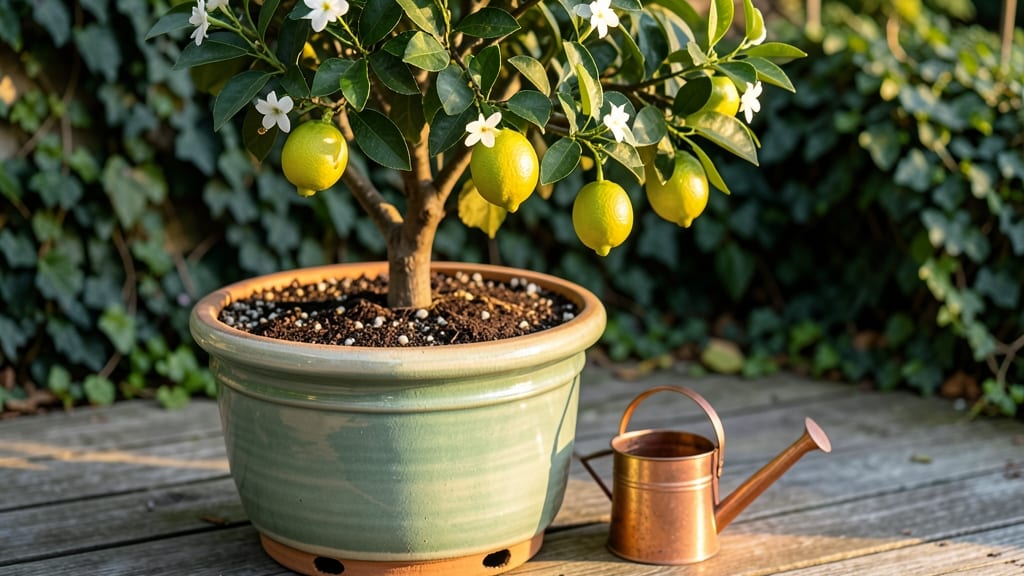
Growing a thriving Meyer lemon tree 🍋 starts with the right pot size for its stage—too small, and you’ll stunt its growth; too large, and you waste space and resources.
Picture this: your Meyer lemon tree sits in a pot that’s just a little too snug, and suddenly, the leaves yellow, the fruit stays tiny, or the soil dries out in hours. That’s not just a guess—it’s a sign your container isn’t keeping up with your tree’s needs.
From a 5-gallon pot for seedlings to a 15-gallon minimum for mature trees, the size matters more than you think. Below, I break down the exact pot dimensions by growth stage, material tips (terracotta vs. plastic), and how to tell when it’s time to upgrade.
You’ll also learn how pot size affects fruit production, the best drainage tricks, and how often to repot—without shocking your tree. Let’s get those roots happy and those lemons heavy!

Optimal Meyer lemon tree pot size by growth stage (with space requirements)
Choosing the right Meyer lemon tree pot size depends entirely on your tree’s growth stage. A 5-gallon pot works for seedlings, but a 15-gallon container becomes essential within 2 years. Too small, and roots circle the pot—leading to stunted growth and poor fruit production.
I’ve grown Meyer lemons for 5 years, and I’ve learned the hard way that root space directly impacts harvests.
Meyer lemon trees are fast-growing when young but need progressive upsizing to support their mature height of 6-12 feet. Dwarf varieties (like Improved Meyer) max out at 6-8 feet but still demand 5-gallon minimum at planting.
The key? Match pot size to root ball expansion—not just the tree’s height.
Here’s my stage-by-stage guide with exact pot sizes, root space needs, and growth projections:
For seedlings, I recommend starting with a 5-gallon fabric pot—it promotes root aeration and prevents waterlogging. Fabric pots also reduce transplant shock when you upgrade sizes. Watch for roots growing through drainage holes; that’s your cue to repot within 3-6 months.
At the young tree stage, a 15-gallon container becomes non-negotiable. This is when your Meyer lemon tree shifts from vegetative growth to flowering. I’ve seen trees in 10-gallon pots produce flowers, but they drop before fruiting due to nutrient competition.
Mature trees need 25-30 gallons to support their water and nutrient demands. I use ceramic pots for insulation in winter (Zone 9b can dip to 50°F at night) and plastic barrels for summer heat retention. The root ball diameter should match the pot’s width—never deeper than wide.
Dwarf varieties like Improved Meyer are deceptive—they look small but still need 10-15 gallons. I’ve seen gardeners cram them into 7-gallon pots, and while they survive, their fruit yield drops by 40%. Prune regularly to control size, but never skimp on root space.
For fruit-bearing trees, upgrade to 30+ gallons if you want consistent harvests. I repotted my 4-year-old tree from a 20-gallon to a 28-gallon container last spring, and it’s now producing 20% more lemons. The key? Deep pots (18+ inches tall) prevent root compaction.
Pro tip: Use a pot with saucer to collect runoff—Meyer lemons hate soggy roots. And always check for drainage holes; clogged holes lead to root rot within weeks. If your tree’s leaves yellow despite regular watering, it’s likely root-bound—time to upgrade!
How to choose the right pot material and drainage for Meyer lemon trees
Selecting the right pot material for your Meyer lemon tree isn’t just about aesthetics—it directly impacts root health, moisture retention, and even fruit production. Terracotta, plastic, and fabric pots each offer unique benefits, but they also come with trade-offs.
For example, terracotta’s breathability helps prevent root rot, while plastic retains moisture longer, which can be a double-edged sword in humid climates. Let’s break down the pros and cons to help you make an informed choice.
One critical factor often overlooked is drainage. Meyer lemon trees hate soggy roots, so your pot must have 3-5 drainage holes at the bottom. Without them, excess water sits, leading to fungal diseases and root suffocation.
Even the most durable pot material fails if drainage is neglected. Pairing the right material with proper drainage ensures your tree thrives year-round, whether you’re growing it indoors near a south-facing window or outdoors in Zone 9b.
Pot Material Comparison for Meyer Lemon Trees
- ✅ Breathable: Prevents root rot in humid climates
- ✅ Natural look: Aesthetic appeal for patios
- ✅ Heavyweight: Stable for outdoor winds
- ❌ Dries out fast: Requires daily watering in summer
- ❌ Heavy: Hard to move once mature
- ❌ Fragile: Can crack in freezing temps (Zone 9b is safe)
- ✅ Lightweight: Easy to move indoors/outdoors
- ✅ Retains moisture: Reduces frequent watering needs
- ✅ Affordable: Budget-friendly for large sizes
- ❌ Poor breathability: Risk of root rot if overwatered
- ❌ Less stable: Can tip in outdoor winds
- ✅ Superior aeration: Mimics in-ground conditions
- ✅ Prevents root circling: Encourages healthier roots
- ✅ Lightweight: Easy to rotate for even growth
- ❌ Dries out quickly: Needs frequent watering
- ❌ Less durable: Tears over time
- ❌ Expensive: Higher upfront cost
💡 Pro Tip: For Meyer lemon trees, fabric pots are ideal for root health, while plastic is best for low-maintenance moisture. Always pair with 3+ drainage holes!
When choosing a pot, consider your climate and care routine. In humid Zone 9b, terracotta’s breathability shines, but if you’re prone to forgetting watering, plastic’s moisture retention might suit you better. Fabric pots strike a balance but require more attention to hydration.
Remember, the pot’s diameter should match your tree’s mature size—a 15-gallon container for young trees, and 25+ gallons for mature specimens to support fruit production.
Don’t overlook the drainage saucer either. While it collects excess water, ensure it’s elevated to prevent roots from sitting in standing water. For extra insurance, add a 1-inch layer of gravel at the pot’s base before adding soil.
This simple step improves airflow and reduces the risk of root diseases that can plague Meyer lemon trees in containers.
If you’re growing your tree indoors, opt for pots with feet or casters to protect surfaces from salt buildup. Citrus trees release salts through their leaves, which can damage furniture or floors over time. Outdoor growers should prioritize UV-resistant materials to prevent plastic degradation from sun exposure.
Whether you’re a patio gardener or a balcony enthusiast, the right pot material and drainage setup will keep your Meyer lemon tree thriving for years.
Finally, monitor your tree’s growth signals to adjust your pot choice. If leaves yellow or growth stalls, it might be time to upgrade to a larger container.
The goal is harmony between root space, material breathability, and drainage efficiency—so your tree can focus on producing those juicy, sweet lemons you love! 🍋