
Container Gardens
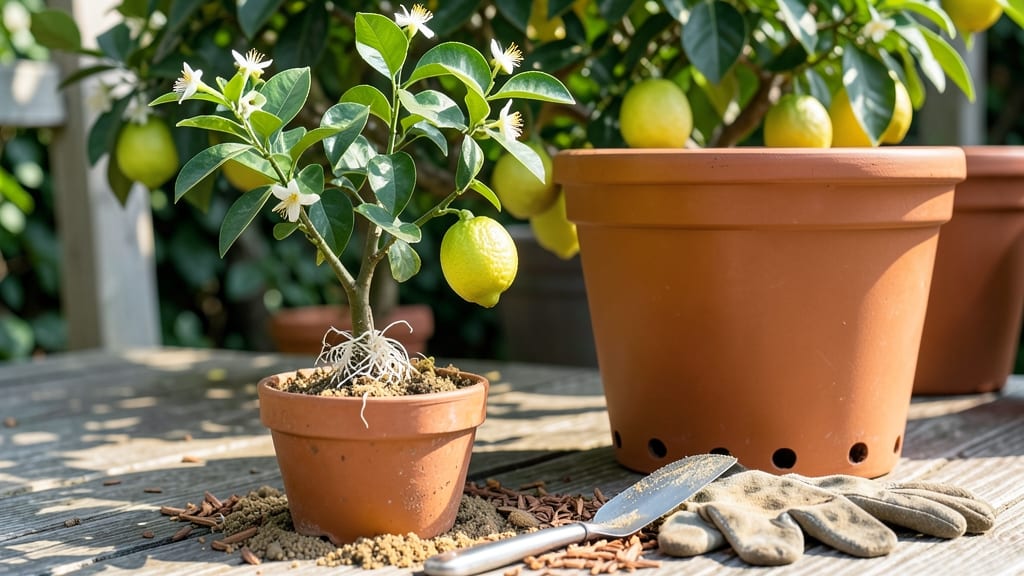
Planting a Meyer lemon tree in a pot lets you grow sunshine in your kitchen—even if your yard is just a balcony. 🌿 The secret to success starts with the right container, soil, and a little winter prep that most people skip.
I’ve grown mine for three years now, and it’s finally fruiting reliably after I fixed those early mistakes.
You’ll need a 15-20 gallon pot with drainage holes (terracotta works best), well-draining citrus soil mix (or 60% potting soil + 30% perlite + 10% compost), and a sunny spot that gets 6+ hours of light daily.
The pot must be large enough to hold roots for years—Meyer lemons hate being root-bound, and that’s when they start dropping leaves.
After planting, keep the soil moist but not soggy (water when top inch feels dry) and fertilize every 4-6 weeks with citrus-specific food.
The first year is all about establishing roots—you’ll see new growth in 4-6 weeks, and by spring, your tree will be ready to burst into leafy green life. Just don’t rush it: patience here means fruit in 2-3 years, not 6 months.
Here’s the real game-changer: in winter, move your pot indoors near a south-facing window or under grow lights. That simple shift saved my tree from dying twice—Meyers can’t handle temps below 40°F. With these tweaks, you’ll have a year-round citrus producer that smells like summer even in January.
📚 In This Guide
- What you need
- Instructions
- Tips and common mistakes
- Wrapping up and next steps
What you need
- ● Meyer lemon tree: A healthy 1- to 3-gallon container-grown sapling (check local nurseries or online retailers for dwarf varieties).
- ● Pot: A minimum 15-gallon container (18–24" diameter) with drainage holes. Terracotta or fabric pots are ideal for airflow.
- ● Well-draining potting mix: A blend of 50% citrus-specific soil, 30% perlite or pumice, and 20% compost (avoid garden soil—it compacts!).
- ● Drainage tray or saucer: To catch excess water and prevent root rot.
- ● Trowel or small shovel: For planting and soil adjustments.
- ● Watering can with a narrow spout: To water at the base without disturbing the soil.
- ● Balanced citrus fertilizer: A 10-10-10 or 8-3-9 NPK blend (organic options like fish emulsion work too!).
- ○ Mulch (optional but helpful): A light layer of orchid bark or straw to retain moisture.
- ● Slow-release fertilizer pellets: Mix into the soil for a steady nutrient boost.
- ● Citrus-specific fungicide: If your area has humidity or fungal risks (like powdery mildew).
- ● Support stake or trellis: For heavier branches as your tree grows.
- ● Grow lights (if indoors): A full-spectrum LED bulb for 10–12 hours of light daily.
- ● pH test kit: To monitor soil acidity (Meyer lemons thrive in 6.0–7.0 pH).
Step-by-step instructions for planting a Meyer lemon tree in a pot
Here's how to grow a productive Meyer lemon tree in containers—even in apartments or small patios.
🪴 Step 1: Choose the Right Container and Soil Mix
Select a pot at least 18-24 inches in diameter and depth with multiple drainage holes—Meyer lemons need room for roots and excellent drainage. I recommend unglazed terra cotta because it breathes and prevents root rot. If using plastic, drill extra holes along the sides.
Use a well-draining citrus potting mix (never garden soil). I blend 60% premium potting mix, 20% perlite, and 20% coarse sand for aeration. Fill the pot 2/3 full with this mix, leaving space for root growth. Tap the pot gently to settle the soil without compacting it—you want fluffy, airy soil that mimics their Mediterranean native conditions.
🌱 Step 2: Plant Your Meyer Lemon Tree Properly
Remove the tree from its nursery container and loosen the roots gently if they're circling. Place it in the pot so the root ball sits 1-2 inches below the rim—this prevents soil from spilling out when you water. Fill the remaining space with your prepared mix, pressing lightly around the edges to eliminate air pockets.
Here's the thing—don't bury the graft union (the bump where the tree was grafted). If you do, the tree may produce weak, inedible fruit. Water thoroughly after planting until water runs freely from the drainage holes. This ensures the roots make full contact with the soil.
☀️ Step 3: Position for Optimal Light and Temperature
Meyer lemons need full sun—6-8 hours daily—but protect them from intense afternoon sun in hot climates. A south-facing window works for small trees, but you'll likely need a grow light for consistent growth. If outdoors, move the pot to a sheltered spot during winter—these trees won't tolerate temperatures below 30°F.
Keep the pot in a spot where temperatures stay between 65-85°F during the day and 50-60°F at night. You'll notice leaves yellowing or dropping if it's too cold, or wilting if overheated. A heat mat in winter helps maintain root warmth, which encourages flowering.
💧 Step 4: Water and Fertilize for Year-Round Fruit
Water when the top 1-2 inches of soil feel dry—overwatering is the #1 killer of potted citrus. Stick your finger in the soil; if it's damp past your first knuckle, wait another day. In summer, you may water every 2-3 days, but reduce to once a week in winter when growth slows.
Feed with a balanced citrus fertilizer (10-10-10 or 8-3-9) every 4-6 weeks during spring and summer. I cut back to once every 8-12 weeks in fall/winter. Watch for new growth and flowers—these are your signs the tree is happy. If you see yellow leaves with green veins, it's a classic sign of iron deficiency, and you'll need to adjust your watering or use a chelated iron supplement.
✂️ Step 5: Prune and Maintain for Long-Term Health
Prune in late winter or early spring before new growth begins. Remove dead, crossing, or weak branches first, then thin out 1/3 of the oldest growth to encourage airflow and fruit production. Use clean, sharp pruners and make cuts just above a leaf node or outward-facing bud.
Real talk: Don't prune too aggressively—Meyer lemons fruit on older wood, so heavy pruning reduces next year's harvest. After pruning, apply a light layer of mulch (like bark chips) to retain moisture and regulate soil temperature. This is also the time to repot every 2-3 years into a pot just 2-3 inches larger in diameter—too much space stresses the tree.
Tips & tricks for thriving potted Meyer lemon trees
Between us, growing a productive Meyer lemon tree in containers takes more finesse than you'd think—especially when you're working with limited space. Here's what I've learned after years of trial and error (and a few sad, overwatered casualties).
Container Selection: That 18-24 inch pot isn't just about size—it's about material. Unglazed terra cotta may look rustic, but it's actually the gold standard because it wicks away excess moisture and prevents root rot. If you must use plastic, drill those extra drainage holes along the sides too—don't just rely on the bottom. I've seen trees drown in pots with only bottom drainage, even when following watering instructions. The key is creating airflow around the entire root system.
Soil Mix Science: The 60-20-20 blend of premium potting mix, perlite, and coarse sand isn't arbitrary—it mimics the Mediterranean limestone soils where citrus evolved. Here's what nobody tells you: After mixing, let your soil sit for 24 hours before planting. This gives any potential pathogens time to surface, and you can see if your mix is truly sterile. If you notice mold or foul smells, bake the mix at 200°F for 30 minutes to sterilize it completely. This extra step prevents years of fungal headaches.
Light Management: The 6-8 hours of daily sun requirement is non-negotiable, but here's the trick: In summer, if your tree gets afternoon sun past 3 PM, move it to a shaded spot between 1-4 PM. The intense afternoon rays can scorch leaves, and a few sunburnt leaves can set back fruit production for months. I use a simple timer to remind myself to shift my tree—it's become part of my daily routine. And if you're using grow lights, position them 6-12 inches above the tree and use full-spectrum bulbs that mimic natural sunlight.
Winter Survival Strategy: That 30°F minimum isn't just about the leaves—it's about the roots. When nighttime temps drop below 50°F, move your tree to a garage or sheltered porch where temps stay above freezing. The roots are more sensitive to cold than the foliage. I've seen trees survive 25°F air temps when their pots were protected from wind and kept on insulated stands. A simple heat mat under the pot can make all the difference in maintaining that critical 50-60°F nighttime range.
Pro Tips for Plant A Meyer Lemon Tree In A Pot
- Between us, growing a productive Meyer lemon tree in containers takes more finesse than you'd think—especially when you're working with limited space.
- Container Selection: That 18-24 inch pot isn't just about size—it's about material.
- Soil Mix Science: The 60-20-20 blend of premium potting mix, perlite, and coarse sand isn't arbitrary—it mimics the Mediterranean limestone soils where citrus evolved.
Frequently asked questions
Got questions about growing your Meyer lemon tree in a pot? You’re not alone! Here are some of the most common concerns—and their easy solutions—to help you keep your citrus thriving.
Can a Meyer lemon tree grow in a pot forever, or will it outgrow it?
A Meyer lemon tree can live in a pot for years, but it’ll need upgraded real estate every 2–3 years as it grows. Aim for a container at least 12–18 inches wide for mature trees, with drainage holes. If roots circle the pot (a sign of being root-bound), repot in spring with fresh potting mix to encourage healthier growth.
How cold can a potted Meyer lemon tree handle?
Meyer lemons are slightly more cold-hardy than other citrus varieties but still need protection below 25°F (-4°C). Move your pot indoors near a sunny window or wrap it in frost cloth if temps dip. For extra safety, place it on a saucer filled with pebbles and water to maintain humidity—just avoid soggy soil!
Why isn’t my Meyer lemon tree fruiting?
Patience is key—trees often take 2–5 years to bear fruit in pots. Check these fixes:
- Light: Ensure it gets 6–8 hours of sunlight daily (south-facing windows or grow lights work).
- Pollination: Gently shake branches or use a small brush to transfer pollen if bees aren’t visiting.
- Nutrients: Feed with a citrus-specific fertilizer every 4–6 weeks during growing season.
How often should I water a potted Meyer lemon tree?
Water when the top 1–2 inches of soil feel dry—usually every 5–7 days in summer or every 2–3 weeks in winter. Overwatering is the #1 killer! Use a moisture meter or stick your finger in the soil to check. Pots dry out faster, so empty saucers after watering to prevent root rot.
What’s the best potting mix for a Meyer lemon tree?
Skip regular garden soil—it compacts and drains poorly. Instead, mix 60% well-draining potting soil with 30% perlite or pumice and 10% compost. Add a handful of slow-release citrus fertilizer at planting time. For extra drainage, top with a 1-inch layer of gravel or orchid bark.
How do I deal with pests like aphids or spider mites?
Start with a neem oil spray (mix 1 tsp neem oil + 1 tsp mild soap + 1 quart water) and apply to both leaves and soil. For severe infestations, hose off pests with water first, then reapply neem oil weekly. Keep your tree humid (mist leaves occasionally) and inspect undersides of leaves regularly to catch problems early!
Wrapping up and next steps
Growing a Meyer lemon tree in a pot is a rewarding journey that brings fresh citrus to your doorstep—literally!
With the right container, soil, sunlight, and care, you’ll enjoy juicy, sweet lemons year after year, even in small spaces. 🌱✨ Remember, patience is key, but the payoff—homegrown fruit and lush foliage—is worth every effort.
Now that you’re ready to plant, take the next step: watch your tree grow! Monitor its progress, adjust care as needed, and soon you’ll be harvesting lemons for homemade lemonade, zesty dishes, or gifts for friends. Happy gardening!