
Pruning
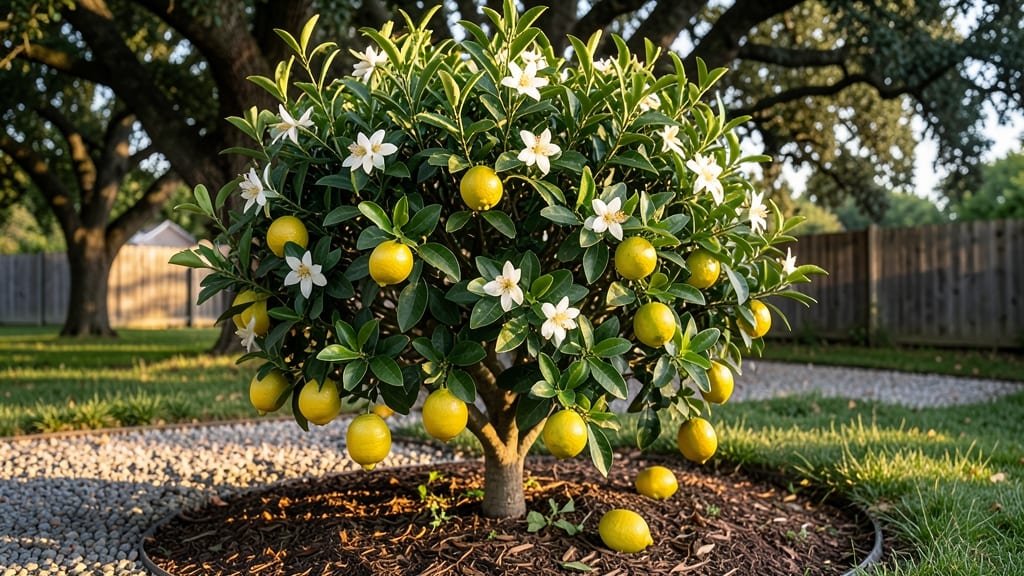
Meyer lemon trees grow best in USDA hardiness zones 9-11, where they can handle brief dips to 25°F (-4°C) with proper protection. For colder climates, container cultivation or frost blankets are essential to prevent root and foliage damage.
Meyer lemon trees are tropical evergreens that struggle with prolonged cold exposure, especially below 28°F (-2°C). 🌱 Unlike their citrus cousins, they lack the protective wax coating that helps true lemons survive slightly cooler temperatures.
The key to winter survival lies in protecting the roots—where most damage occurs—while shielding foliage from windburn. In zones 8 and below, I've had success moving potted trees to unheated garages or sheds during freezes, then returning them to sunlight once temperatures stabilize above 50°F (10°C).
What many gardeners overlook is the importance of gradual acclimation in fall. Reducing watering by 50% two weeks before the first frost helps harden the plant, while a thick layer of straw mulch around the base can add 5-10°F of protection.
For in-ground plants, wrapping the trunk with bubble wrap creates an insulating barrier that prevents temperature swings from cracking the bark.
💡 In This Article
- Understanding Meyer Lemon Tree Cold Tolerance Limits
- Protecting Meyer Lemon Trees in Non-Native Zones
Understanding Meyer lemon tree cold tolerance limits
Meyer lemon trees have a delicate biological threshold at 25°F (-4°C), where cellular damage begins. The key issue is ice crystal formation within plant tissues—particularly in the roots and leaf veins—which ruptures cell membranes and disrupts nutrient transport.
Unlike true lemon trees (Citrus × limon), which have a slightly thicker waxy cuticle, Meyer lemons (Citrus × meyeri) lack this natural frost resistance. Their hybrid genetics prioritize sweetness and thin-skinned fruit over cold endurance.
Roots are the most vulnerable component, suffering irreversible damage when soil temperatures drop below 32°F (0°C). The fibrous root system, which absorbs water and minerals, becomes brittle and blackens—a condition called "root rot" that mimics fungal infection but is actually cold-induced.
Leaf burn appears first as brown edges on older foliage, progressing to crispy, papery textures when temperatures fall to 28°F (-2°C) for more than 4 hours. The flowers and young fruit are equally sensitive, often dropping prematurely if exposed to even mild frost.
Chilling hours—prolonged exposure to temperatures between 32-45°F (0-7°C)—trigger dormancy in many citrus varieties. However, Meyer lemons require fewer than 100-200 hours annually, making them poorly adapted to temperate climates where winters exceed this threshold.
In zones 9-11, they remain evergreen, but in colder regions, insufficient chilling can lead to erratic flowering or fruit that fails to set properly. This is why gardeners in zone 8 often see better results with container-grown trees—they can be moved to sheltered locations during winter's chillest periods.
What's fascinating is how Meyer lemons handle humidity differently than true lemons. High atmospheric moisture (above 60% relative humidity) actually exacerbates cold damage by creating a thin ice layer on leaves that acts like a magnifying glass, focusing sunlight and causing localized burns.
This is why growers in coastal zones 9-11 often see more frost damage than their inland counterparts, despite similar temperature readings. The solution? Strategic placement near south-facing walls or under deciduous trees that drop leaves in winter can create a 5-8°F (3-4°C) warmer microclimate.
For those pushing the limits in zone 8, consider the "Russian winter" technique used by some commercial growers.
This involves burying the container (including the drainage holes) in a pit filled with 6 inches of straw and 12 inches of soil, then covering with a clear plastic dome secured with bricks. This setup can maintain root-zone temperatures 10-15°F (5-8°C) warmer than ambient air during light freezes.
The trade-off? You'll need to monitor for condensation buildup inside the dome, which can promote fungal growth if not ventilated properly.
One common misconception is that Meyer lemons can "toughen up" like other citrus varieties with gradual exposure to cooler temps. While reducing water and fertilizing in fall does help, the biological reality is that their tropical heritage means they'll always be more sensitive than, say, a Satsuma mandarin.
The 25°F (-4°C) threshold isn't arbitrary—it's the point where their cellular structure fundamentally changes, making protection essential rather than optional.