
Pruning
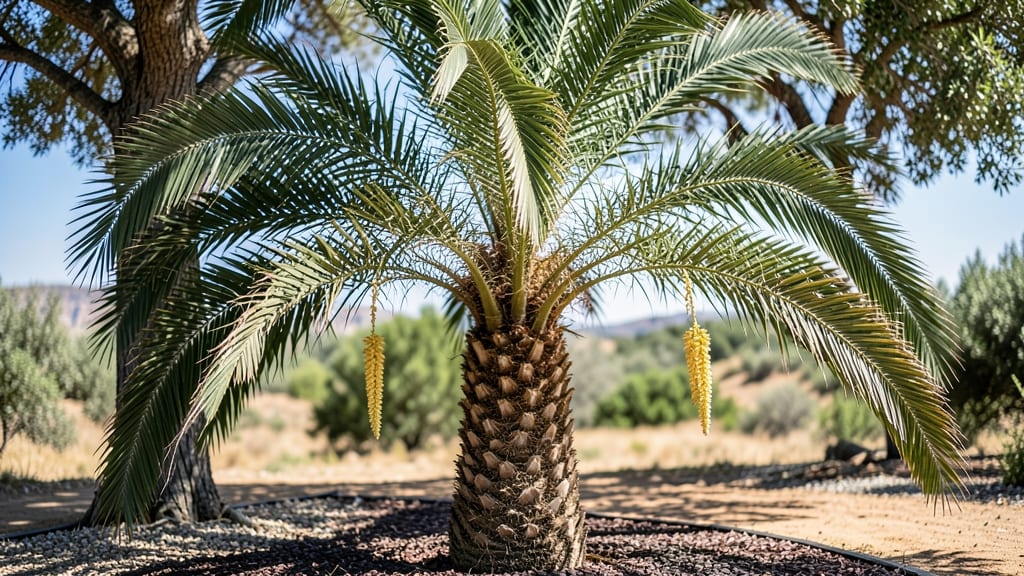
To identify male palm trees, examine their flower clusters (inflorescences) for pollen sacs instead of fruit, and note their thin, elongated trunks and slower growth compared to females, which develop swollen trunk bases over time.
Male palm trees stand out because they never produce coconuts or dates—their flower clusters, or inflorescences, only develop pollen sacs that eventually drop as yellow dust. 🌿 Unlike female palms, which grow thicker trunks to support heavy fruit, male palms maintain slender trunks their entire lives.
This difference becomes especially noticeable in species like the date palm (Phoenix dactylifera), where males grow 20-30% taller but never develop the iconic swollen trunk bases.
Another key clue is their growth rate: male palms typically grow more slowly and develop longer, arching fronds compared to females. For example, a male Mexican fan palm (Washingtonia robusta) might take 5-7 years to reach maturity, while females start bearing fruit by year 3.
If you're unsure, check the leaf bases—males often have smoother, less fibrous bases than females, which accumulate scar tissue from fruit production.
Pro tip: Young palms can be tricky to sex until they flower, which usually happens between 3-10 years depending on the species. If you're planting for fruit, opt for female palms—but if you want ornamental value without fruit mess, males are the way to go.
Just be prepared for their pollen to spread when flowering season arrives!
💡 In This Article
- Botanical Differences Between Male and Female Palm Flowers
- Visual and Structural Clues for Male Palm Identification
Botanical differences between male and female palm flowers
The core difference between male and female palm flowers lies in their reproductive structures. Male palms produce inflorescences that develop into pollen sacs (called spathe), while female palms develop fruit clusters like coconuts or dates.
These pollen sacs are visible as elongated, yellowish structures that eventually release pollen into the wind—similar to how corn plants release pollen but on a much grander scale. 🌸 The male inflorescence typically appears as a 1-3 foot long cluster of tightly packed, finger-like structures that never swell or develop into fruit.
Female palms, on the other hand, develop berry-like fruits from their inflorescences, which require fertilization by male pollen. This process causes the female flower clusters to thicken and develop into the familiar fruits we associate with palms.
For example, in date palms, female flowers form small, green drupe fruits that grow over months, while male flowers remain slender and pollen-filled.
The female's trunk also adapts by developing thicker, fibrous bases to support the weight of fruit clusters, which can weigh up to 100 pounds in mature palms.
Seasonal flowering patterns also differ significantly. Male palms often flower earlier in the year (spring to early summer) and more frequently—sometimes annually—to maximize pollen distribution.
Female palms tend to flower later in the season (late summer to fall) and may take 2-3 years between flowering cycles, especially in species like the coconut palm.
This timing difference is crucial for identifying sex in young palms before they reach maturity, as males may show early flowering signs while females remain dormant.
The biological mechanism behind these differences stems from palm trees' monoecious nature—each tree has separate male and female flowers, but they're never on the same plant. Male palms allocate energy to producing pollen-heavy flowers, while females invest in nutrient-rich fruits.
This division explains why male palms grow taller and thinner (up to 100 feet in species like Washingtonia) to disperse pollen efficiently, whereas females develop sturdier trunks to support fruit production.
One fascinating detail is how palm trees determine sex. In many species, sex is not genetically fixed at germination—young palms can develop as either male or female based on environmental factors like sunlight, water availability, and even soil nutrients.
This means a 5-year-old palm might still be indeterminate, and its first flowers could reveal its true sex. For gardeners, this explains why some "male" palms in nurseries might later switch sex if conditions change dramatically.
Understanding these botanical differences helps explain why male palms are often preferred for ornamental landscapes—they require less maintenance (no fruit cleanup) and provide consistent, pollen-rich blooms that attract wildlife.
Meanwhile, female palms are prized for their edible or decorative fruits, but only if you're prepared for the mess and weight they bring. 🌿