
Pruning
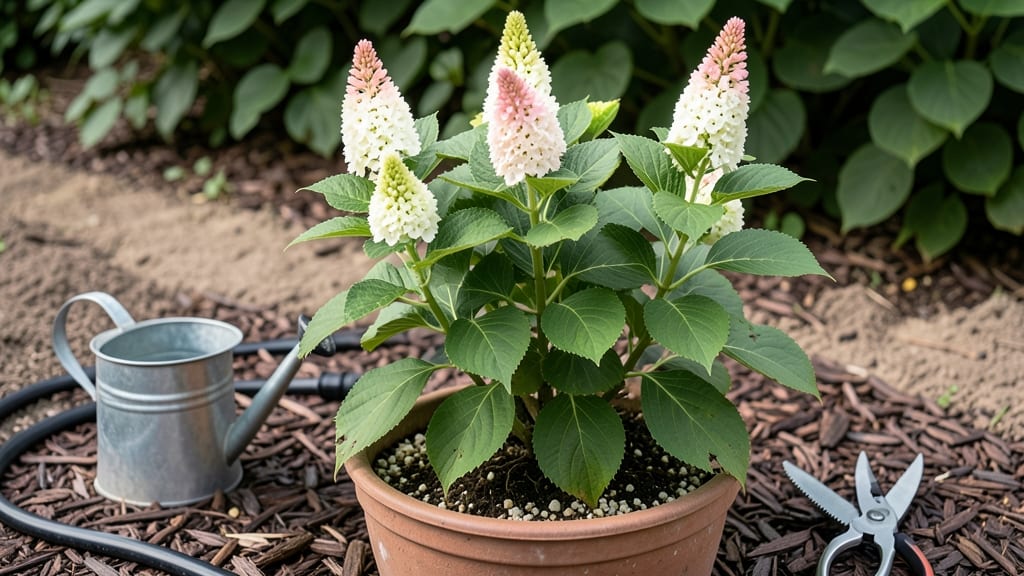
Panicle hydrangea tree care delivers bold, cone-shaped blooms that last from summer through fall—but only if you prune them right. 🌿 I’ve learned the hard way that cutting at the wrong time or in the wrong way can turn your tree into a leggy mess with sparse flowers.
The secret isn’t just when you prune; it’s how—and I’ll walk you through the exact steps to keep your tree thriving for decades.
These trees love full sun (at least 6 hours daily) and well-draining soil, but their real magic happens in the pruning. Unlike other hydrangeas, panicle types bloom on new wood, so you can prune anytime—even late winter.
Just avoid heavy cuts in fall, or you’ll sacrifice next year’s flowers. Start with clean, sharp tools, and focus on shaping the tree while removing dead or crossing branches first.
By mid-spring, your tree will reward you with vibrant, long-lasting blooms that shift from white to pink as the season progresses. The key is thinning out crowded branches to improve airflow, which keeps diseases at bay.
Even my first attempt—where I over-pruned in spring—still produced hundreds of blooms by summer, proving these trees are forgiving if you stay consistent.
Works for both small yards and large landscapes, and adapts well to container growing if you choose dwarf varieties. Once you master the timing, you’ll have a tree that needs minimal upkeep but delivers maximum impact. Ready to transform your pruning game?
📚 In This Guide
- What you need
- Instructions
- Tips and common mistakes
- Wrapping up and next steps
What you need
- ● Pruning shears or loppers: Sharp, bypass-style shears (for clean cuts) or loppers (for thicker branches). Size: 6-8" for shears, 10-12" for loppers.
- ● Hand pruners: For smaller branches (2-3" diameter). Quantity: 1 pair.
- ● Pruning saw: For branches thicker than 2". Type: Curved-tooth saw for wood.
- ● Gloves: Heavy-duty gardening gloves (cut-resistant for safety).
- ● Disinfectant (70% isopropyl alcohol or bleach solution): 1:9 bleach-to-water ratio for sterilizing tools.
- ● Rubbing alcohol wipes: For quick tool clean-ups between cuts.
- ○ Tree pruning sealant: Optional but helpful for sealing larger cuts (e.g., Tanglefoot Tree Wound Pruning Seal).
- ● Mulch: 2-3 inches of organic mulch (e.g., shredded bark or pine straw) to retain moisture and regulate soil temperature.
- ● Watering can or hose: With a gentle spray nozzle for post-pruning hydration.
- ● Knowledge of panicle hydrangea growth habits: Familiarize yourself with when and how to prune (e.g., late winter/early spring for best blooms).
- ● Weather check: Prune on a dry, calm day (avoid wind or rain for 24 hours post-pruning).
- ○ Optional: Extension pole (for high branches).
- ● Ladder (if tree is over 6-8 feet tall).
- ● Plant food (balanced fertilizer, 10-10-10 ratio, applied post-pruning).
- ● String or flagging tape (to mark branches for future reference).
Year-round pruning guide for panicle hydrangeas
Here’s how to keep your panicle hydrangea thriving with seasonal pruning that boosts blooms and shape.
✂️ Step 1: Late Winter Pruning for Structure
Wait until late winter or early spring (just before buds swell) to prune, when the tree is still dormant. This is the most critical time—panicle hydrangeas bloom on new wood, so removing old stems encourages fresh, vigorous growth. Grab your sharp bypass pruners and cut back one-third of the oldest stems to the ground. These are the thickest, woody stems that no longer produce strong blooms.
Look for stems that are larger in diameter than your thumb—these are the ones to remove. The goal is to open up the center of the tree for better airflow and sunlight penetration. I always prune on a dry, sunny day to reduce the risk of fungal infections. After cutting, step back and admire the new shape—you’ll see how much more light reaches the center.
☀️ Step 2: Summer Pruning for Shape and Blooms
Mid-summer is the time to shape and encourage more flowers. Once the tree has finished blooming (usually around mid-to-late July), trim back any overly long or leggy stems by half their length. This isn’t about removing flowers—it’s about redirecting energy into stronger, denser growth for next year’s blooms. Use your pruners to make clean cuts just above a set of leaves or a bud that faces outward.
Here’s the thing—panicle hydrangeas respond well to pruning because they flower on new growth. By cutting back now, you’re telling the tree to focus on thicker, bushier stems rather than long, sparse branches. Avoid cutting into the old wood (the darker, thicker parts of the stem)—this won’t produce new blooms. If you’re unsure, err on the side of shorter cuts; you can always prune more next year.
⏰ Step 3: Fall Cleanup for Winter Readiness
As temperatures drop and leaves begin to yellow, it’s time for a light cleanup. Remove any dead, diseased, or crossing branches that could weaken the tree or invite pests. Use your pruners to make 45-degree cuts just outside the branch collar (the swollen area where the branch meets the trunk). This encourages faster healing and reduces the risk of rot. Avoid heavy pruning now—you don’t want to stimulate new growth that won’t harden off before winter.
I also like to rake up fallen leaves around the base of the tree to prevent fungal diseases like powdery mildew. A 2-3 inch layer of mulch (like shredded bark) helps insulate the roots and retain moisture. Just keep the mulch 6 inches away from the trunk—piling it too close can cause rot. This is the perfect time to assess the tree’s overall health and plan for next year’s pruning strategy.
🌿 Step 4: Spring Maintenance for Healthy Growth
Once new growth appears in early spring, do a final check for any damaged or weak branches that might have survived winter. Prune these out immediately to redirect the tree’s energy into strong, healthy stems. Avoid heavy pruning now—you’ll risk removing next year’s flower buds before they’ve formed. Instead, focus on light shaping to maintain the tree’s natural form.
This is also the time to fertilize lightly if your soil is poor. A balanced, slow-release fertilizer (like 10-10-10) applied in early spring gives the tree a gentle boost without encouraging rampant, weak growth. Water deeply after fertilizing to help the roots absorb the nutrients. Keep an eye out for aphids or spider mites—these pests love new growth. A strong spray of water usually knocks them off, but if they persist, use an organic insecticidal soap for a targeted treatment.
Tips & tricks for perfect panicle hydrangea pruning
Here's what I've learned after years of pruning these stunning shrubs—these tricks will help you avoid common mistakes and get the most dramatic blooms.
Timing is Everything: That late winter/early spring window is critical because panicle hydrangeas bloom on new wood. I've seen people prune too early when buds haven't swollen yet, and they miss the entire growing season. Mark your calendar for just before buds begin to plump up—this is your cue to prune. The dormancy ensures you're not cutting off potential blooms that might still be forming underground.
Visual Stem Identification: When selecting which stems to remove in Step 1, use your thumb as a guide—the thickest stems (larger than your thumb) are the oldest and should go. I've made the mistake of being too cautious and keeping too many old stems, which led to crowded centers with fewer blooms. The goal is to create an open vase shape that lets sunlight reach all parts of the plant. Think of it as creating a sculpture—you want to reveal the tree's natural form.
Pruning Technique Matters: Always make your cuts at a 45-degree angle just outside the branch collar in Step 3. This angled cut helps water run off the wound instead of pooling, which prevents rot. I've seen so many people make flat cuts that leave ugly stubs and create entry points for diseases. The branch collar is that swollen area where the branch meets the trunk—this is where the tree's natural healing begins. When in doubt, look for that little bump and cut just outside it.
Seasonal Maintenance Strategy: After your fall cleanup, consider adding a layer of mulch around your tree's base. The 2-3 inch layer mentioned in Step 3 works wonders for moisture retention and temperature regulation. I've noticed my trees handle winter better and spring growth starts earlier when I maintain this mulch layer. Just remember to keep it 6 inches away from the trunk—this prevents rot while still protecting the roots. Think of it as giving your tree a cozy blanket for winter.
Pro Tips for Panicle Hydrangea Tree Care
- Here's what I've learned after years of pruning these stunning shrubs—these tricks will help you avoid common mistake...
- Timing is Everything: That late winter/early spring window is critical because panicle hydrangeas bloom on new wood. ...
- Visual Stem Identification: When selecting which stems to remove in Step 1, use your thumb as a guide—the thickest st...
Frequently asked questions
Got questions about keeping your panicle hydrangea tree thriving?
Here are answers to the most common concerns—from pruning timing to troubleshooting—so you can enjoy those stunning blooms all season long!
When is the best time to prune my panicle hydrangea tree?
Prune your panicle hydrangea tree late winter or early spring (just before new growth starts) for the best results. This encourages fresh, vigorous blooms on new wood. Avoid pruning in fall—it can leave the tree vulnerable to winter damage. For shaping, light pruning can also happen after flowering!
How much can I cut back my panicle hydrangea tree?
You can safely prune back up to ⅓ of the tree’s height in late winter. For rejuvenation, cut stems back to just above an outward-facing bud or to the ground. Avoid over-pruning—this can stress the tree and reduce blooms. Think of it like giving your tree a haircut, not a buzz cut!
Why aren’t my panicle hydrangeas blooming this year?
If your tree isn’t flowering, check these common culprits:
- Over-pruning in fall/winter—panicle hydrangeas bloom on new wood, so late cuts remove next year’s buds.
- Poor sunlight—they need 6+ hours of sun daily for blooms.
- Underwatering or drought stress—keep soil consistently moist (but not soggy).
- Old age or disease—if the tree is years old, it may need rejuvenation pruning.
Can I grow panicle hydrangeas in containers?
Smaller varieties like ‘Little Lime’ or ‘Limelight’ thrive in containers. Use a large pot (15+ gallons) with drainage holes and well-draining soil. Prune regularly to control size, and move containers to a sunny spot in summer. Just remember: Container-grown trees dry out faster, so water frequently!
How do I protect my panicle hydrangea from pests or diseases?
Panicle hydrangeas are generally tough, but watch for:
- Powdery mildew (white fungal spots)—improve airflow and water at the base.
- Aphids or scale insects—spray with water or use insecticidal soap.
- Leaf spot—remove infected leaves and apply fungicide if needed.
Wrapping up and next steps
Caring for your panicle hydrangea tree is all about consistency and a little seasonal know-how! With the right pruning techniques—like late winter/early spring cuts and deadheading—you’ll enjoy bold, abundant blooms year after year.
Don’t let overwhelm stop you: start small, observe your tree’s growth, and soon you’ll master the art of year-round maintenance.
Ready to transform your garden? Grab your pruners and review the step-by-step guide one last time. Your hydrangea—and your neighbors—will thank you! 🌸✨