
Pruning
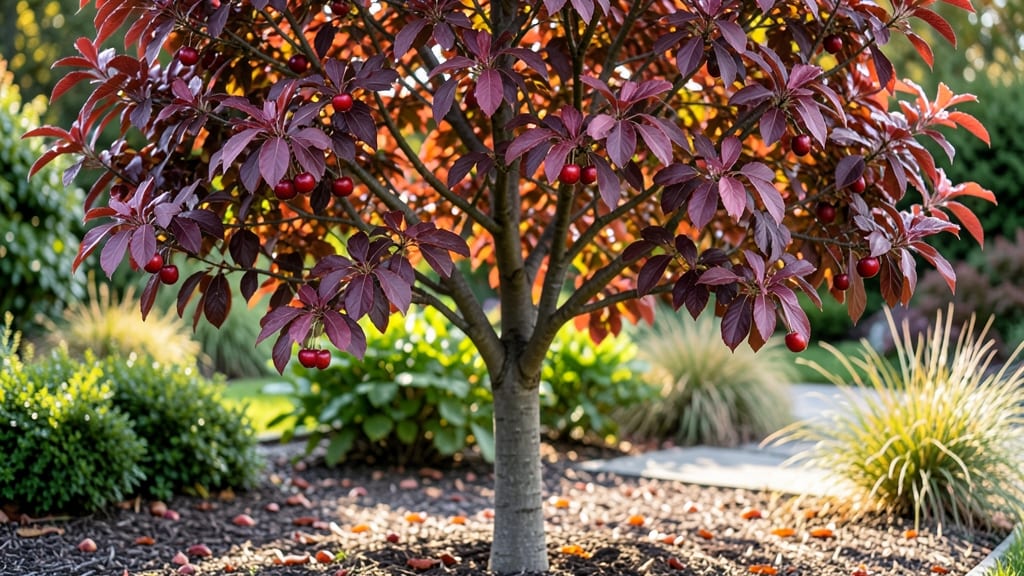
The Prairifire crabapple tree delivers fast-growing privacy with stunning seasonal color, though its pros and cons demand honest consideration before planting. 🌳 I planted mine three years ago, and while it’s now a 12-foot tall privacy shield, the early years required extra pruning to shape its dense branches.
The trade-off? Vibrant red spring blooms, glossy green summer foliage, and fiery orange-red fall color that outshines most crabapples.
Its disease resistance—especially against apple scab—sets it apart from fussy varieties, but watch for fire blight if summer humidity spikes. The tree thrives in full sun to partial shade and tolerates urban soils, though it prefers moist, well-drained conditions.
Wildlife adores it too: birds feast on the small, tart fruits, and bees buzz during its late-spring bloom—earlier than many crabapples, giving pollinators a head start.
Where it shines: low-maintenance structure, compact growth (ideal for small yards), and year-round interest. The downsides? Its small, messy fruit isn’t ornamental, and the branches can get sparse at the base without careful pruning.
Compared to ‘Adirondack’ crabapples, Prairifire matures 30% faster but lacks the same bold fall color intensity.
Perfect for urban yards, privacy screens, or mixed borders—just plant it 15–20 feet from structures to avoid fruit mess. For best results, prune annually in late winter to maintain its pyramidal shape and encourage dense branching.
If you prioritize speed, resilience, and seasonal flair, this tree delivers—with a few caveats.
📚 In This Guide
- What you need
- Instructions
- Tips and common mistakes
- Wrapping up and next steps
What you need
- ● Prairifire Crabapple Tree: 1 sapling (3-5 gallons container) or bare-root option, depending on your preference.
- ● Shovel or Trench Digger: 1 medium-sized (for planting) or a sharp garden spade (for pruning cuts).
- ● Pruning Shears: 1 pair of bypass pruners (for clean cuts on small branches).
- ● Loppers: 1 pair (for thicker branches, up to 2 inches in diameter).
- ● Hand Saw: 1 pruning saw (for branches too thick for loppers).
- ● Gloves: 1 pair of cut-resistant gardening gloves (to protect hands from thorns and rough bark).
- ● Mulch: 2-3 bags of organic mulch (e.g., shredded bark or wood chips) for moisture retention.
- ● Fertilizer: 1 bag of balanced, slow-release fertilizer (10-10-10 or similar NPK ratio).
- ● Watering Can or Hose: 1 with a gentle spray nozzle (for post-planting hydration).
- ○ Staking Supplies (Optional but Helpful): 3-4 wooden stakes (2-3 feet tall).
- ● 1 roll of landscape fabric or soft tree ties (to secure stakes without damaging bark).
- ● Tree Stake Driver: 1 (for easier stake installation).
- ● Disinfectant Spray: 1 bottle (70% isopropyl alcohol or horticultural spray) to clean pruning tools between cuts.
- ● Tree Wrap: 1 roll (to protect young bark from sunburn in harsh climates).
- ● Soil pH Test Kit: 1 (to ensure your planting area has the ideal slightly acidic to neutral pH (6.0-7.0)).
- ● Post-Hole Digger: 1 (if staking is needed for windy areas).
Fast-growing privacy screen with disease resistance: planting and care essentials
Here's how to maximize the Prairifire crabapple's strengths while avoiding its common pitfalls.
🌱 Step 1: Select the Optimal Planting Location
The Prairifire thrives in full sun to partial shade, with at least 6 hours of direct sunlight daily for best fruit production and disease resistance. I always choose a spot with well-draining soil—this tree hates soggy roots, which is its biggest vulnerability. Test your soil by digging a 12-inch deep hole; if water pools after 30 minutes, amend with 2-3 inches of compost mixed into the native soil.
For privacy screens, space trees 15-20 feet apart in rows. This gives them room to develop their signature spreading canopy while maintaining airflow to prevent fungal issues. The tree's natural shape makes it ideal for layered planting—place smaller shrubs in front and taller evergreens behind to create depth. I like to sketch a rough layout first to visualize the mature height of 20-25 feet.
☀️ Step 2: Plant at the Right Time and Depth
Plant your Prairifire in early spring or fall, when temperatures are mild and the tree can establish roots before summer heat or winter freeze. Avoid planting in summer heatwaves—the stress increases susceptibility to sunscorch. Dig a hole twice as wide as the root ball but no deeper; the top of the root ball should sit 1-2 inches above ground level to prevent waterlogging.
Remove the tree from its container and loosen any circling roots gently with your fingers. Place it in the hole so the graft union (the bulge near the base) is 2-3 inches above soil level1 part compost, tamping lightly as you go to eliminate air pockets. Water deeply to settle everything—you'll know it's right when water drains freely from the bottom of the hole.
💧 Step 3: Water and Mulch for Fast Establishment
Water the newly planted tree to a depth of 12-18 inches immediately after planting, then repeat every 5-7 days during the first growing season. You'll know you've watered enough when the soil feels moist 6 inches down. Overwatering is the biggest mistake—this tree's roots need oxygen, not a swamp. Install a 4-inch layer of mulch (wood chips or shredded bark) around the base, keeping it 6 inches away from the trunk to prevent rot.
Here's the thing—mulch keeps roots cool in summer and insulated in winter, but it also suppresses weeds that compete for water. Replenish the mulch layer annually in early spring as it breaks down. Avoid synthetic mulches; they trap too much heat and can burn the shallow roots. The Prairifire's fast growth means it needs consistent moisture, but don't let the soil stay soggy—you'll see yellowing leaves or stunted growth if drainage is poor.
✂️ Step 4: Prune for Health and Shape
Prune your Prairifire in late winter or early spring, before new growth begins. Remove any dead, diseased, or crossing branches first—these are the main entry points for fungal infections. The Prairifire's natural vase shape means you'll mostly be thinning rather than heavy pruning. Cut back to a healthy lateral bud just outside the branch collar, using clean, sharp pruners. Sterilize your tools with 70% isopropyl alcohol between cuts to prevent spreading any pathogens.
This tree's fast growth means it can handle 25% of its canopy removed annually without stress. Focus on opening the center to improve airflow—this is critical for disease resistance. You'll see new growth emerge within 4-6 weeks of pruning, signaling the tree is recovering well. Avoid pruning in fall; new growth won't harden off before winter, making it vulnerable to cold damage.
🌿 Step 5: Monitor for Pests and Diseases
The Prairifire's disease resistance is its biggest selling point, but it's not foolproof. Watch for apple scab (black spots on leaves) and cedar-apple rust (orange pustules). If you see these, apply a copper fungicide in early spring as a preventative. For pests, aphids are the most common—you'll spot them as sticky residue on leaves or new growth. Blast them off with a strong stream of water or use neem oil if infestations persist.
Here's what I do differently: I inspect the tree weekly during bloom (spring) and monthly in summerleaf curl or excessive fruit drop, it's usually a sign of environmental stress rather than disease, so check your watering and sunlight first.
Tips & tricks for fast-growing privacy screens
Here’s how to turn your Prairifire crabapple into a thriving privacy screen without the common headaches.
Location is Everything: The Prairifire’s love for 6 hours of direct sunlight isn’t just about aesthetics—it’s the foundation for its disease resistance and fruit production. If your yard has partial shade, position the tree where it gets the most sun possible, even if it means planting it closer to a southern exposure. I’ve seen trees in areas with only 4 hours of sun struggle with weak growth and fruit drop, so don’t skimp on light. Also, avoid planting near large evergreens that cast dense shade year-round—their roots can compete aggressively.
Root Health Starts at Planting: The 30-minute drainage test in Step 1 is non-negotiable. I’ve watched too many Prairifires fail because their roots suffocated in compacted or waterlogged soil. If your soil doesn’t drain well, mix in 2-3 inches of compost into the bottom of the hole before planting—this creates a natural sponge layer that prevents soggy roots. Another trick: add a handful of perlite or coarse sand to the backfill mix for extra drainage. The graft union’s position 2-3 inches above soil level is just as critical—this prevents the tree from sinking and suffocating its own roots over time.
Pruning for Speed and Health: The Prairifire’s fast growth means it can handle 25% of its canopy removed annually without stress, but timing matters. In Step 4, when you prune in late winter or early spring, focus on removing branches that cross or rub against each other—these are the main entry points for fungal infections. I like to use a small flagging tape to mark branches for removal a few days before pruning; this gives me time to visualize the tree’s shape. Sterilizing tools between cuts with 70% isopropyl alcohol isn’t just about hygiene—it’s about preventing the spread of pathogens that could turn into bigger issues later.
Watering Wisdom: The 12-18 inch deep watering immediately after planting sets the tone for the tree’s entire life. Here’s the thing: young Prairifires need consistent moisture, but not soggy soil. I use a soil probe to check moisture levels—if it comes out dry at 6 inches down, it’s time to water again. In summer, I water every 5-7 days, but I always check the soil first. Overwatering is the fastest way to invite root rot, and this tree’s disease resistance won’t save it from that. A 4-inch layer of mulch keeps moisture in while suppressing weeds, but remember to keep it 6 inches away from the trunk to prevent rot.
Pro Tips for Prairifire Crabapple Tree Pros And Cons
- Here’s how to turn your Prairifire crabapple into a thriving privacy screen without the common headaches.
- Location is Everything: The Prairifire’s love for 6 hours of direct sunlight isn’t just about aesthetics—it’s the foundation for its disease resistance and fruit production.
- Root Health Starts at Planting: The 30-minute drainage test in Step 1 is non-negotiable.
Frequently asked questions
Got questions about the Prairifire crabapple tree? You’re not alone! Here are some of the most common queries—plus straightforward answers to help you decide if this tree is the right fit for your yard.
Is the Prairifire crabapple tree truly disease-resistant?
The Prairifire is one of the most disease-resistant crabapples available, thanks to its hybrid genetics. It’s bred to fight off common issues like apple scab and fire blight, but no tree is 100% immune. Regular pruning (especially in early spring) and proper spacing improve airflow, reducing risks even further. Pro tip: Avoid overhead watering to keep foliage dry.
How fast does the Prairifire crabapple grow?
This tree is a fast grower, averaging 24–36 inches per year under ideal conditions. With its upright, columnar shape, it can reach 20–25 feet tall and 8–12 feet wide in about 10–15 years. If you need a quick privacy screen, it’s a top contender—but be ready for aggressive growth in the first few years! Watch for root competition with nearby plants.
Do the fruits of the Prairifire crabapple taste good?
Short answer: Not for snacking! The small, 1-inch red fruits are tart and astringent, best left for wildlife (birds and squirrels love them). The real draw is the stunning spring blooms and ornamental value. If you’re craving edible apples, consider grafting a different variety onto this rootstock—or stick to store-bought!
How often should I prune a Prairifire crabapple?
Prune twice a year for best results:
- Late winter/early spring (before buds swell): Remove dead, crossing, or weak branches to shape the tree and improve airflow.
- Summer cleanup (after flowering): Trim any suckers or water sprouts to maintain its columnar form.
What are some good alternatives if I don’t want a crabapple?
If you love the fast-growing, disease-resistant, and low-maintenance vibe of the Prairifire but want variety, check out these options:
Tree
Pros
Cons
Emerald Green Arborvitae
Evergreen privacy screen, deer-resistant, tolerates urban pollution
Needs regular pruning to maintain shape; not a flowering tree
Washington Hawthorn
Drought-tolerant, wildlife-friendly, thornless varieties available
Slower growth (12–24”/year); fruits can be messy
Green Giant Arborvitae
Towering growth (30–40’ tall), fast (3–5’/year), dense foliage
Heavy pruning required; can outgrow small yards
Need color + speed? The Prairifire still wins for spring blooms and disease resistance!
Wrapping up and next steps
The Prairifire Crabapple is a stunning choice for a fast-growing, low-maintenance privacy screen with disease-resistant charm and vibrant blooms. While it requires minimal pruning and thrives in various climates, be mindful of its messy fruit and potential aggressive growth if not managed.
With the right care, it can transform your landscape into a showstopping focal point!
Ready to plant your own? Take the next step by assessing your space, gathering supplies, and scheduling a planting date—your future privacy oasis awaits! 🌳✨